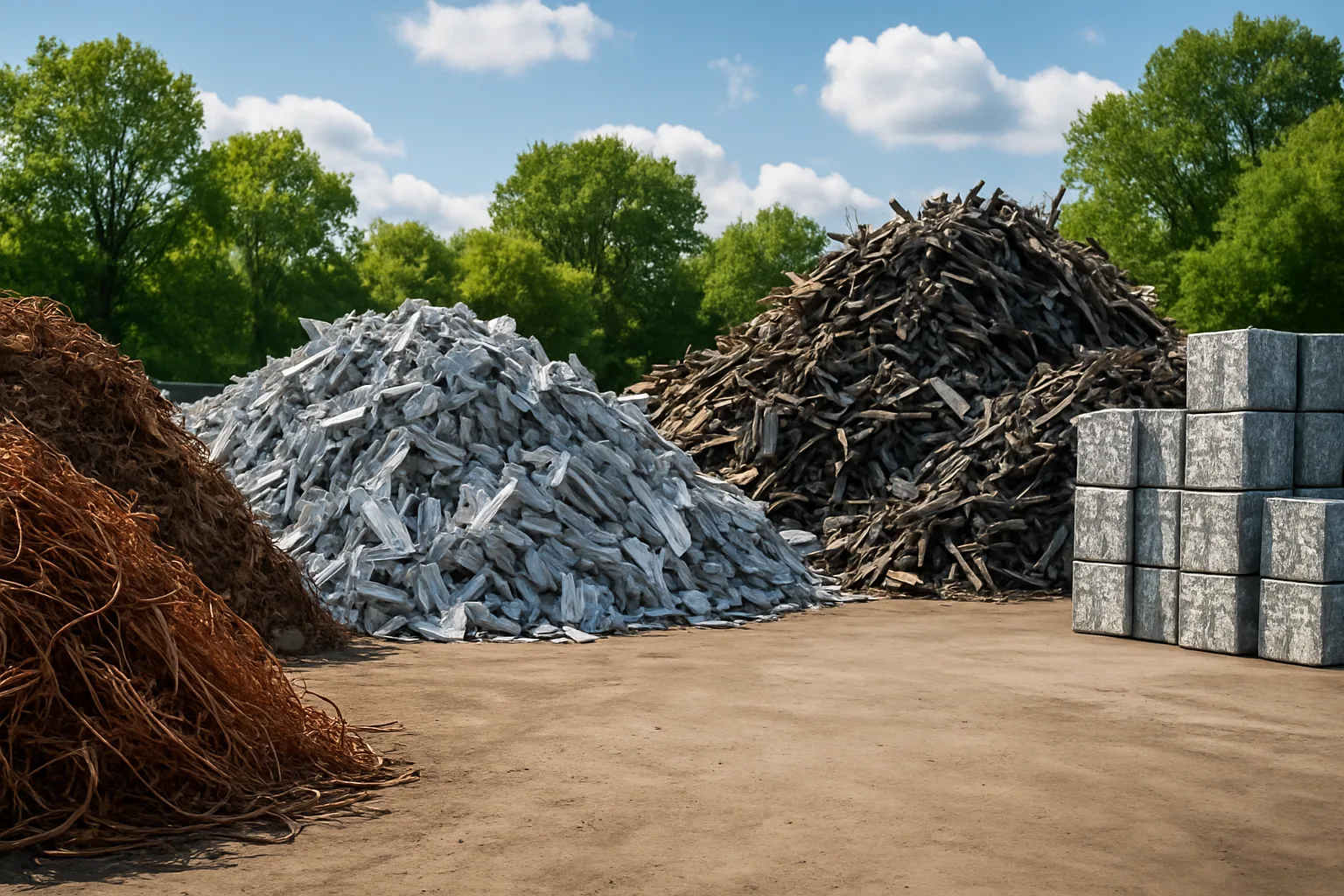
What's Happening in the Global Economy Right Now — and Why It Shows Up in Your Scrap Yard Prices
The aluminum scrap price today doesn't start at your local yard. It starts in manufacturing hubs across Asia, on the floors of commodity exchanges, and in the trade policy decisions made in Washington. By the time it reaches a yard in Rochester, New York, that number has been shaped by forces most sellers never think about. Understanding those forces doesn't just make you smarter — it helps you time your loads better and walk away with more money.
This week's roundup breaks down what's driving scrap metal prices right now, what it means for sellers across the U.S., and how to stop leaving money on the table when markets move.
The Global Demand Machine: How Overseas Activity Moves Local Scrap Prices
China is still the world's largest consumer of recycled metals. When Chinese manufacturing output rises — driven by infrastructure spending, export demand, or domestic construction — global scrap demand climbs with it. That pulls aluminum, copper, and steel prices upward on international benchmarks, and those benchmarks directly influence what yards are willing to pay in places like Rochester.
But it runs both ways. A slowdown in Chinese factory activity, a drop in construction starts, or currency shifts that make imported scrap more expensive can push those same prices lower within weeks. In August 2026, global aluminum demand remains uneven — strong in some industrial segments, softer in others — which is why the aluminum scrap price today can feel like a moving target even to experienced sellers.
- Manufacturing output in Asia: Higher output = higher scrap demand = better local prices
- Shipping and logistics costs: Elevated freight costs tighten margins and can reduce what buyers pay at origin
- Currency exchange rates: A strong U.S. dollar makes American scrap more expensive for foreign buyers, softening export demand
- Energy prices: Smelting aluminum from scrap requires far less energy than virgin production — when energy costs rise, recycled metal becomes more competitive
None of these factors operate in isolation. They stack, offset, and amplify each other constantly. That's why checking scrap prices once a month — or worse, just taking whatever one buyer offers — puts real money at risk.
U.S. Trade Policy and Tariffs: The Local Impact on Scrap Metal Prices in New York
Trade policy is one of the most direct levers connecting global economics to the aluminum scrap price today. Tariffs on imported steel and aluminum, export restrictions, and bilateral trade agreements all affect where American scrap flows and what buyers will pay for it.
In 2026, U.S. trade relationships with major metals-consuming nations remain in flux. Ongoing adjustments to Section 232 tariff structures have created pockets of opportunity and uncertainty across the scrap market. For sellers in New York — including yards in and around Rochester — this means the spread between a good price and a mediocre one can be significant depending on when and how you sell.
Here's what that means practically:
- Tariff-driven demand spikes: When domestic manufacturers can't source cheap imported metal, they turn harder to domestic scrap — which temporarily pushes local prices up
- Export restrictions: Limits on scrap exports to certain countries can flood the domestic market, putting downward pressure on prices
- Regulatory compliance costs: More documentation requirements (BOLs, packing lists, material certifications) add friction — but platforms that handle this automatically reduce your burden
That's exactly where platforms like SMASH change the game. Instead of calling one buyer and hoping their margin reflects the current market, you get competitive bids from vetted buyers who are actively tracking these macro shifts. Find the best price for your scrap on SMASH and let the market — not one buyer's offer — set your price.
What This Week's Market Signals Mean for Copper, Aluminum, and Catalytic Converter Sellers
Let's get specific. Different metals are responding differently to current global conditions, and knowing which way the wind is blowing for your material type matters.
Scrap Copper
Copper continues to be driven by the global energy transition — EV infrastructure buildout, grid upgrades, and renewable energy installations all consume significant copper. Demand signals remain relatively firm in 2026, though inventory levels at major warehouses have moderated some of the price spikes seen earlier in the decade. If you're sitting on scrap copper, the market is active. Don't let it sit.
Scrap Aluminum
The aluminum scrap price today reflects a tug-of-war between solid industrial demand and softness in certain consumer markets. Automotive-grade aluminum remains in strong demand as manufacturers push to reduce vehicle weight for efficiency targets. Old sheet and cast grades are more price-sensitive to general economic sentiment. Know your grade before you sell — the difference in per-pound value between grades can be meaningful.
Catalytic Converters
The catalytic converter market in 2026 is tighter and more regulated than it was even two years ago. Platinum group metals (PGMs) — palladium, platinum, and rhodium — remain volatile. Serial tracking and photo documentation requirements are now table stakes for legitimate buyers. If you're trying to sell catalytic converters online, work with buyers who require proper documentation. It protects you legally and signals a legitimate transaction. Sell your scrap metal at top prices on Sell Scrap Metal and access buyers who handle cats properly.
Scrap Steel
Steel pricing is closely tied to domestic construction activity and manufacturing output. In August 2026, both sectors are showing moderate activity, keeping scrap steel prices in a reasonable range — not a windfall, but not a disaster either. If you have bulk steel loads, preparation matters: clean, sorted loads with proper packing lists get better bids than mixed, contaminated material.
Why Rochester Sellers Leave Money on the Table — and How to Stop
Rochester has a real industrial heritage — manufacturing, automotive supply chains, and a dense enough population to generate meaningful volumes of non-ferrous scrap, catalytic converters, and ferrous material. Yet too many sellers in the area still default to calling one local yard, taking a single quote, and walking away without knowing if that number reflects anything close to the current market.
The old way of selling scrap in Rochester — one call, one buyer, one price — made sense when information was hard to get. That's no longer the case. Today, a documented load with photos, accurate weights, and clean sorting can attract competitive bids from multiple vetted buyers across the region and beyond. That competition does what competition always does: it reveals the actual market price, not just what one buyer wants to pay today.
The practical difference between sellers who use that competition and sellers who don't can be significant. Not because anyone is being cheated — most local buyers are operating legitimately — but because a single quote simply isn't a market. It's one data point. Explore scrap metal selling guides to learn how to prepare your loads for maximum competitive value.
If you're in Rochester and regularly moving loads of copper, aluminum, or cats, getting serious about price discovery isn't a nice-to-have. It's the difference between a margin and a mediocre return on material you worked to collect.
How SMASH Connects Global Market Conditions to Your Next Sale
Here's the honest version: the global economy will keep shifting. Trade policy will keep evolving. Metal prices will keep moving. You can't control any of that.
What you can control is how you sell. SMASH brings vetted buyers to your material through a transparent auction format. Inventory tools let you document loads with photos, weights, and serial tracking before the auction even starts. That documentation builds buyer confidence, which drives stronger bids. Auto-invoicing and compliance documentation — including all required BOL and packing list handling — take the administrative burden off your plate.
No subscription fees. No guessing games. You only pay when the sale happens, which means SMASH only wins when you win. That alignment matters, especially in a market where global signals are shifting week to week. Get a fair price for your scrap today through a process built on competition and transparency, not a single phone call.
If you've got a load sitting in Rochester right now — aluminum, copper, cats, or steel — this is a good time to put it through a process that lets the market speak for itself.
Disclaimer: Scrap metal prices fluctuate daily based on global commodity markets, local demand, and material grade. Always verify current rates before selling. Nothing in this article constitutes a guaranteed price.
Frequently Asked Questions
Q: What is the aluminum scrap price today in Rochester, New York?
Aluminum scrap prices change daily based on commodity markets, material grade, and local demand. Clean, sorted aluminum (like extrusions or breakage) commands higher prices than mixed or contaminated material. Check with multiple buyers or use a competitive auction platform to get an accurate current rate for your specific grade.
Q: How does the global economy affect local scrap metal prices?
International manufacturing demand, trade policy, energy prices, and currency exchange rates all flow directly into the benchmarks that local scrap yards use to set their prices. A slowdown in overseas industrial activity can drop your local aluminum or copper price within days. Staying informed and selling competitively — rather than accepting a single quote — helps offset this volatility.
Q: Can I sell catalytic converters online in Rochester, NY?
Yes. Selling catalytic converters online is increasingly common, and it opens up access to specialized buyers who pay competitive rates for PGM content. Proper documentation — including photos, serial numbers, and legal seller identification — is required by reputable buyers and is now standard practice in 2026. Avoid any buyer who doesn't ask for documentation.
Q: What are the best scrap metal prices in Rochester right now?
The best prices are found through competition, not through a single call to one yard. Current rates depend on material type, grade, and volume. Using a platform that puts your load in front of multiple vetted buyers gives you real price discovery rather than one buyer's margin-adjusted offer.
Q: Is there a benefit to selling scrap during certain market conditions?
Yes — timing matters. When domestic manufacturers face higher import costs due to tariffs, demand for local scrap typically increases, which can push prices higher. Monitoring trade news and global commodity signals helps you decide whether to sell now or hold a load for a better window. That said, holding material too long carries its own risk if markets move against you.
When you're ready to move your material, sell your scrap metal at top prices on Sell Scrap Metal — or go straight to the auction and find the best price for your scrap on SMASH. No subscriptions. No guessing. Just competition doing what it's supposed to do.
Follow SMASH on LinkedIn for weekly market insights, scrap price trends, and updates on what's moving in the North American recycling market.