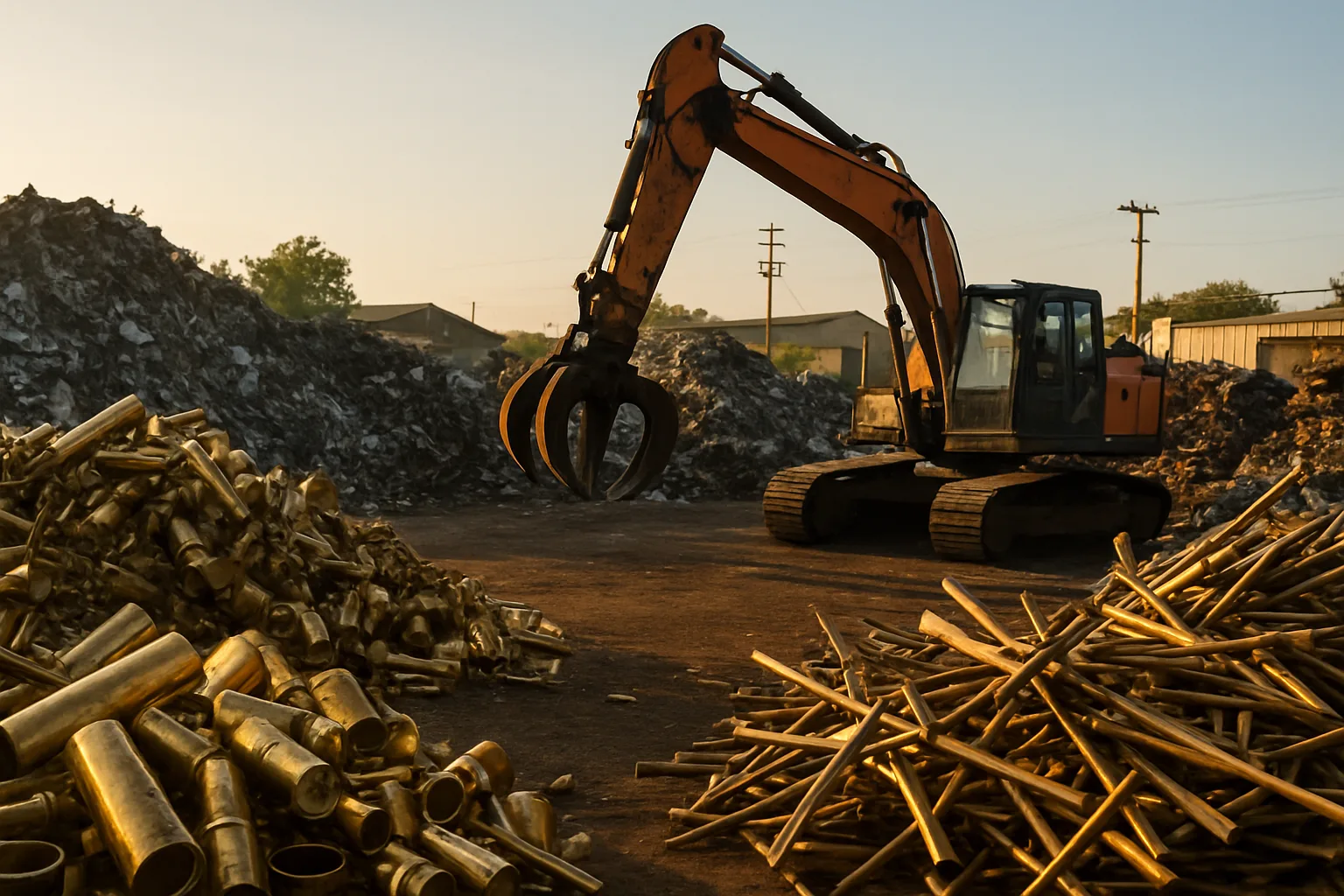
Brass and Bronze Scrap in Dearborn: What It's Worth and Where to Find It
Most people walk past brass and bronze every day without realizing they're looking at serious money. These alloys sit quietly in old plumbing fixtures, industrial fittings, and worn-out machine components — and in a heavy manufacturing region like Michigan, they show up in volume. If you're running a yard, a demo crew, or a salvage operation and you're not tracking your brass and bronze separately, you're leaving real margin on the table.
This guide breaks down what brass and bronze actually are, where to find them in commercial quantities, what they're worth on the current market, and how a B2B scrap metal marketplace changes the way you move these loads.
What Is Brass and What Is Bronze — And Why Does It Matter?
Brass is a copper-zinc alloy. Bronze is a copper-tin alloy. Both are non-ferrous, both command strong prices compared to steel or aluminum, and both are worth sorting carefully before you sell. The distinction matters because buyers price them differently, and lumping them together as "yellow metal" leaves you exposed to low-ball offers.
Here's a quick breakdown of the most common grades you'll encounter:
- Yellow brass — faucets, valves, fittings, light fixtures. The most common grade you'll pull from renovation and demolition work.
- Red brass — higher copper content, often found in older pipes, fire suppression systems, and hydraulic fittings. Worth more per pound than yellow brass.
- Bronze bushings and bearings — machined components from industrial equipment. Dense, heavy, and buyers love clean loads.
- Brass radiators — older vehicle and industrial radiators. Often processed with steel ends attached, so prep matters.
- Cartridge brass — spent shell casings. Uniform composition, easy to sort, consistent pricing.
- Plumbers brass — mixed brass hardware with some lead content. Priced slightly below clean yellow brass.
Knowing your grades before you walk into a negotiation — or before you list on a scrap metal auction platform — puts you in a stronger position. Buyers bid more confidently on documented, graded loads than on mystery bins of mixed non-ferrous.
Where Brass and Bronze Show Up in Commercial Quantities
Dearborn and the surrounding Michigan industrial corridor are productive hunting grounds for non-ferrous scrap. The region's deep roots in automotive manufacturing, heavy industry, and aging commercial infrastructure mean brass and bronze move through the supply chain regularly.
Here's where to focus your sourcing efforts:
- Plumbing and HVAC demolition — Commercial building teardowns are the single best source of yellow and red brass. Older buildings in the Detroit metro area often have copper and brass plumbing that newer construction replaced decades ago with PVC.
- Automotive plants and Tier 1 suppliers — Machining operations generate bronze chips, brass fittings, and hydraulic components as process scrap. These come out clean and graded, which is ideal for auction.
- Municipal and utility infrastructure — Water meters, valve assemblies, and hydrant components are almost always brass. Utility contractors doing infrastructure upgrades are a consistent source.
- Machine shops and job shops — Turning and milling operations on brass rod or bronze bar stock produce chips and offcuts. Small shops often don't track this carefully — that's your opportunity.
- Marine and industrial equipment salvage — Propellers, shaft bushings, and marine hardware run bronze almost exclusively. If you're working salvage near the Great Lakes corridor, flag this material separately.
- Electrical contractors — Terminal blocks, connectors, and grounding hardware are frequently brass. Not always high volume per job, but it adds up across multiple sites.
The key is building relationships with the right contractors and facilities before the material gets aggregated into a mixed load. Once it's mixed, you've lost the grade premium. Explore scrap metal selling guides if you want to dig deeper into how to sort and prep non-ferrous loads for maximum value.
What Brass and Bronze Scrap Is Worth Right Now
Brass and bronze prices track copper, because copper makes up the majority of both alloys. When copper moves, so does your non-ferrous inventory value. As of mid-2026, the non-ferrous market has held relatively firm, driven by ongoing demand in electrical infrastructure, EV manufacturing, and global construction activity.
General price ranges to know (always verify current rates before you sell — prices fluctuate daily):
- Yellow brass — typically trades in a range tied to copper but discounted for alloy content and mixed grades
- Red brass — commands a premium over yellow brass due to higher copper percentage
- Bronze bushings (clean) — one of the stronger per-pound values in the non-ferrous category
- Brass radiators — priced as a processed grade; steel end removal affects value significantly
- Cartridge brass — clean, consistent, and reliable — often benchmarked closely to yellow brass
Disclaimer: All scrap metal prices fluctuate based on commodity markets, grade, and buyer demand. Do not rely on any figures in this article as current pricing. Check live rates through a verified buyer or platform before selling.
The bigger issue isn't the posted rate — it's whether you're actually getting the market rate. Calling one buyer and taking their number is how yards undercut their own margins. A B2B scrap metal marketplace like SMASH puts your load in front of multiple vetted buyers simultaneously. Competition can help reveal the market. More buyers means better price discovery — that's not a sales pitch, that's basic economics.
How the Right Platform Changes What You Get Paid
The old playbook for selling non-ferrous scrap goes like this: call your regular buyer, quote them the load, take what they offer, move on. If you've been doing this for years, it feels normal. But "normal" and "optimal" aren't the same thing.
When you list a brass or bronze load on a platform like SMASH, you document the material — weight, grade, photos, condition. That documentation does two things. First, it tells buyers exactly what they're bidding on, which increases their confidence and their willingness to bid competitively. Second, it creates a record that protects you if there's a dispute at settlement.
SMASH handles the back end too — auto-invoicing, BOL documentation, buyer vetting. You don't chase paperwork. You move metal.
If you're ready to stop guessing at your own prices, get competitive bids for your scrap metal and see what a vetted buyer network actually delivers for your non-ferrous loads.
Prepping Your Brass and Bronze Load Before You Sell
How you prep a load directly affects what you get paid. Buyers discount for contamination, mixed grades, and poor documentation. Here's how to maximize the value of your brass and bronze before it goes to market:
- Sort by grade, not just by "brass" or "bronze." Yellow brass, red brass, and bronze are not the same. Separate them at the point of collection if possible.
- Remove steel attachments. Brass valves with iron bodies, radiators with steel end tanks — these drop your grade if you sell them unseparated. Remove what you can.
- Clean the material. Grease, oil, and dirt aren't neutral — buyers price them in as a negative. Clean loads get cleaner bids.
- Photograph before you load. Documented loads sell faster and with less back-and-forth. A few photos at the yard saves time at settlement.
- Weigh it yourself. Know your numbers before you enter any negotiation. If a buyer's scale and your scale don't agree, you want to know that before you've already agreed to a price.
- Track serial numbers on industrial components. Some bronze and brass components — especially from utilities or government contracts — require chain-of-custody documentation. SMASH's serial tracking handles this cleanly.
Yards in Dearborn and across scrap metal recycling Michigan operations already know that prep work pays back. A well-documented, clean-graded non-ferrous load doesn't just sell faster — it sells better.
Why Dearborn Yards Have an Edge on Non-Ferrous
Dearborn sits at the center of one of the densest industrial zones in North America. Automotive assembly, parts manufacturing, steel processing, and a massive commercial real estate base all generate non-ferrous scrap at scale. That's an advantage — but only if you're moving the material efficiently and getting the price it deserves.
Too many yards in this region are still running on relationships from twenty years ago. One buyer, one price, one call. That model made sense when information was slow. In 2026, there's no reason to operate that way.
Platforms built for the scrap industry — like SMASH — give Dearborn operators access to a vetted buyer network that extends well beyond the local market. Your bronze bushings don't have to sell to the nearest yard if a buyer in another state is willing to pay more and cover logistics. That's the leverage a B2B scrap metal marketplace gives you.
If you're ready to stop leaving margin behind, sell your scrap metal at top prices on Sell Scrap Metal and find out what your brass and bronze loads are actually worth in a competitive market. Or get a fair price for your scrap today — no subscription required, no guesswork.
Sell your scrap metal at top prices — request a pickup at sell-scrapmetal.com and put your non-ferrous inventory to work.
Frequently Asked Questions
Q: What's the difference between brass and bronze scrap, and does it matter for pricing?
Yes, it matters significantly. Brass is a copper-zinc alloy; bronze is a copper-tin alloy. Bronze — especially clean machined bushings and bearings — often commands a higher per-pound price than yellow brass. Sorting and identifying your material before selling is one of the fastest ways to increase your return.
Q: Where can I sell brass and bronze scrap in Dearborn, Michigan?
Local scrap yards in Dearborn and the greater Detroit metro area accept brass and bronze, but you're not limited to your nearest buyer. A B2B scrap metal marketplace like SMASH connects you with vetted buyers across North America, which means more competition for your load and better price discovery than a single local quote.
Q: How do I know if I'm getting a fair price for my brass scrap?
The best way is to get multiple bids. Brass prices track copper markets, which fluctuate daily. Calling one buyer and accepting their number gives you no reference point. Using a scrap metal auction platform puts your load in front of multiple buyers simultaneously — the bids tell you what the market is actually paying.
Q: Do I need to sort my brass and bronze before listing it on a B2B scrap metal marketplace?
Sorted, graded loads get stronger bids than mixed non-ferrous bins. Buyers bid more confidently when they know exactly what they're buying. That said, even a mixed non-ferrous load can be listed — just document what you have accurately with photos and weight, and let the market respond.
Q: Does SMASH charge a subscription fee to sell brass and bronze scrap?
No. SMASH operates on a no-subscription-fee model. There's no upfront cost to list your load. SMASH only wins when you win — the platform is built around moving your material at the best available price, not charging you to access buyers.
Stay current on non-ferrous prices, market shifts, and scrap industry news — follow SMASH on LinkedIn for regular updates and insights built for the people actually moving metal.