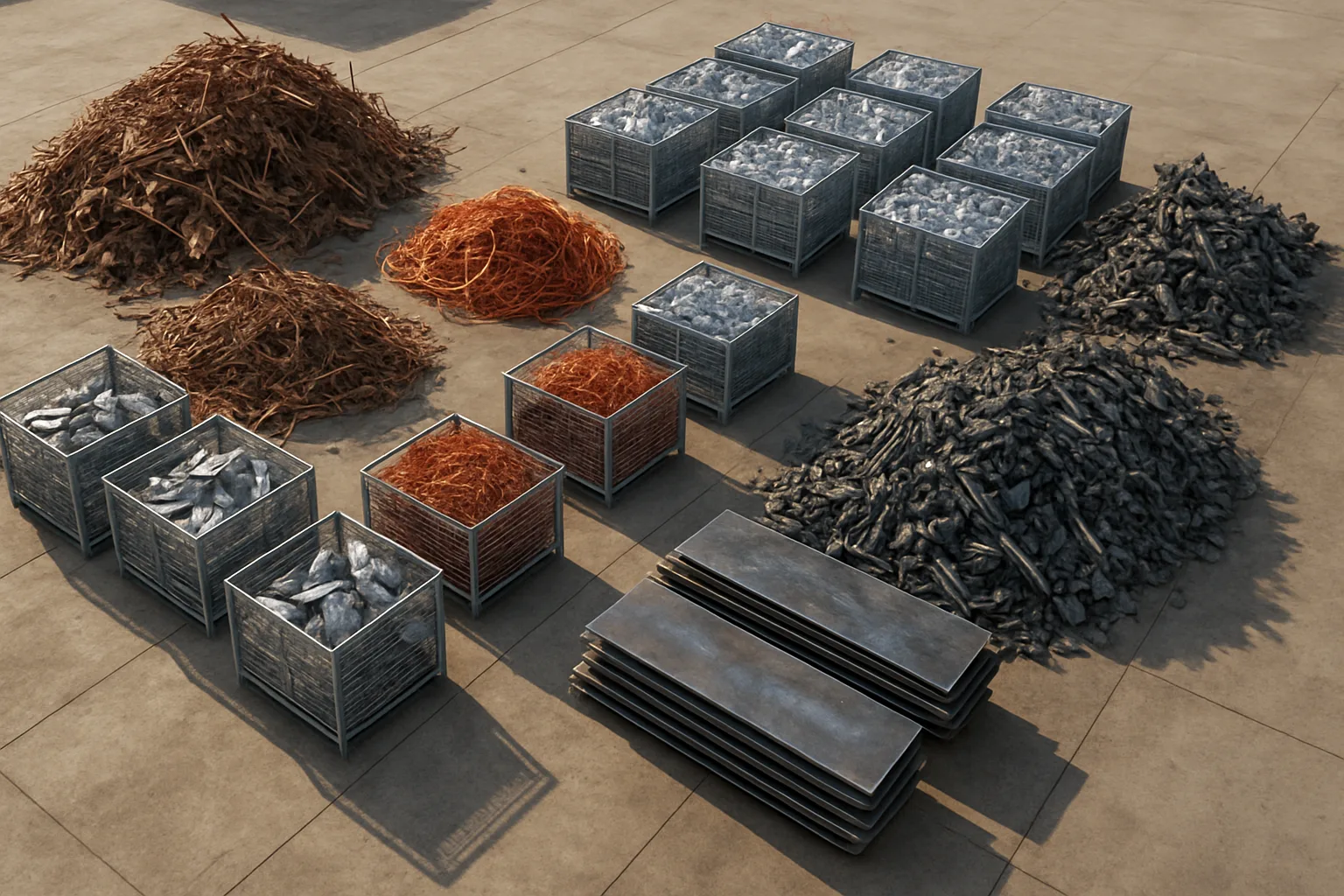
Copper Scrap Prices in 2026: What Your Grade Is Actually Worth
Most people selling copper scrap leave money on the table before they even walk through the gate. Not because the market is bad — because they don't know what grade they're holding. A pound of bare bright copper and a pound of insulated wire are not the same thing. Not even close. If you're in Warren or anywhere across Michigan trying to sell scrap metal, knowing your copper grades is the difference between getting paid and getting shortchanged.
This guide breaks down copper grading, what drives price trends in 2026, and how to make sure you're getting a real market price — not whatever one buyer decides to offer you on a slow Tuesday.
Why Copper Prices Move So Fast — and What's Driving Them in 2026
Copper is one of the most electrically conductive metals on Earth. That makes it essential for EV charging infrastructure, power grids, data centers, and industrial equipment. In 2026, demand from grid modernization projects across North America is putting real upward pressure on copper pricing. When the grid needs copper, so does every other buyer in the chain — and that affects what you see at the yard gate.
A few factors drive copper scrap prices at any given moment:
- COMEX copper futures — the benchmark that most yards use to set their daily buy rates
- Scrap supply volume — when demolition or construction activity slows, less copper hits the market, which can support prices
- Export demand — overseas mills and refiners compete with domestic buyers; that competition shows up in your price
- Grade mix — a load of #1 copper moves faster and commands more than a mixed load with heavy insulation
- Tariffs and trade flows — cross-border scrap trade continues to shift in 2026 as North American recycling networks adjust to evolving trade policy
The point is simple: copper pricing isn't static, and neither is what your load is worth. Platforms like smashscrap.com help sellers get real competitive bids based on current market conditions — not a single buyer's posted rate that may not reflect what the market will actually pay.
The Copper Grading Guide: Know Your #1 from Your Birch Cliff
Copper grading isn't complicated once you understand the logic: the cleaner and purer the copper, the higher the grade, the better the price. Here's a straightforward breakdown of the most common copper grades you'll encounter when you sell scrap copper.
#1 Bare Bright Copper
This is the top grade. Bare bright is uncoated, unalloyed copper wire or bus bar with no insulation, no solder, no paint, and no tin coating. It should be shiny and clean. This is what buyers want most, and it commands the highest price per pound. If your wire has any oxidation or coating on it, it drops to #1 at best.
#1 Copper (Heavy)
Clean copper pipe, bus bar, or wire that may have a small amount of oxidation, but no fittings, solder, or insulation. This includes clean copper tubing from plumbing tear-outs. It pays well — typically just below bare bright. If you're doing a renovation in Warren and pulling clean copper pipe, you're holding #1.
#2 Copper
Copper that's slightly contaminated — painted, coated, soldered at joints, or mixed with small amounts of other metals. This is the most common grade that comes from older buildings and industrial equipment. The spread between #1 and #2 copper can be significant, so if you can clean your material, it's worth doing before you sell.
Insulated Copper Wire (ICW)
The grade varies by the percentage of copper inside the insulation — called the "recovery rate." Thick-jacketed wire (like THHN) recovers more copper per pound than thin communications wire. Yards typically break ICW down into subcategories: Romex, THHN, Christmas lights, extension cords, etc. Each pays differently. Don't mix them in one box if you want accurate grading.
Copper Breakage / #3 Copper
Heavily contaminated copper with significant amounts of non-copper materials attached. Burnt wire (stripped by burning, which most yards now reject or heavily discount), copper with iron, or mixed alloy pieces fall here. Expect the lowest payout in the copper category.
Brass and Copper Alloys
Brass (a copper-zinc alloy) is not copper, but it's worth tracking separately. Yellow brass, red brass, and bronze all pay different rates. If you're selling fittings, valves, or plumbing hardware, separate your brass from your copper before you show up. Mixed loads get graded down.
How to Prep Your Copper Load Before You Sell Scrap Metal in Warren
Prep work before the yard visit pays off directly. You're not being paid for the insulation, the paint, or the iron fittings — you're being paid for the copper. Here's what to do before you sell your scrap metal at top prices on Sell Scrap Metal:
- Strip what you can. Removing insulation from large-gauge wire manually bumps it from ICW pricing to #1 or #2 copper pricing. On larger loads, this is worth the labor.
- Separate by grade. Don't mix bare bright with coated wire or #1 with #2. Mixed loads default to the lowest grade in the mix.
- Remove iron and steel fittings. Copper pipe with brass fittings still attached will get knocked down. Pop off what you can.
- Keep insulated wire sorted by type. THHN in one pile, Romex in another, communications wire separate. Each pays its own rate.
- Document your load. Especially if you're running commercial volumes. Photo documentation and accurate weights before you arrive mean fewer surprises at the scale.
Michigan yards, including those in Warren, see a lot of mixed loads from contractors and demo crews. The yards that pay top dollar expect you to do the sorting work — and the ones that don't ask questions about grades are often the ones giving you the worst price.
Comparing Copper to Other Scrap Metals: Where Does It Rank?
If you're deciding what to prioritize when prepping a mixed load, copper should almost always come first. Here's a rough hierarchy of common scrap metal values in 2026 — not specific prices, since those shift daily, but relative standing:
- Bare bright copper — top of the price list, consistently
- #1 and #2 copper — close behind, depending on cleanliness
- Insulated copper wire — middle tier, varies by recovery rate
- Brass and bronze — solid performers, but below clean copper
- Aluminum (non-ferrous) — valuable, especially clean sheet and extrusion grades
- Catalytic converters — high-value items with their own pricing logic (PGM content drives it)
- Stainless steel — lower than copper, but better than most steel grades
- Scrap steel and iron — high volume, lower per-pound value
If you're also moving scrap aluminum, check the aluminum scrap price today before you go — it fluctuates like copper and the spread between cast and extrusion aluminum can surprise you. And if you have cats in your load, make sure you're dealing with a serious catalytic converter buyer — it's one of the easiest categories to get underpaid on without transparent pricing and a vetted buyer network.
SMASH connects sellers with buyers across North America who compete for your loads — whether that's copper, aluminum, or cats. More buyers in the room means better price discovery for your material. That's the whole idea. You can explore scrap metal selling guides to get up to speed on other material categories too.
Getting the Best Price for Copper in Warren, Michigan
Warren is one of the most industrially active cities in Michigan — a lot of construction, manufacturing, and fleet activity means a steady flow of scrap copper hitting the local market. That's good news if you're a seller, because it means buyers are active and competitive. But a busy market can also mean yards lean on sellers who don't know their grades.
Here's how to make sure you're getting a real market price when you sell in Warren:
- Call two or three yards before you load up. Rates can vary between buyers even within the same city.
- Ask for the posted rate by grade — not a blended "copper price." Know what each grade you're bringing is worth.
- Weigh your load before you go if you can. An independent weight gives you a baseline to check against the yard's scale ticket.
- Consider a platform like SMASH for larger or higher-value loads. Auction-style pricing means competition among vetted buyers — not a take-it-or-leave-it offer from one yard.
If you're ready to stop guessing and start selling with real market transparency, get a fair price for your scrap today and see what competitive bidding actually looks like for your material.
Disclaimer: Copper and scrap metal prices fluctuate daily based on market conditions, commodity futures, and buyer demand. Always verify current rates before selling.
Frequently Asked Questions
Q: What is the best copper grade to sell scrap metal in Warren?
Bare bright copper commands the highest price per pound at any yard in Warren or across Michigan. If you can strip insulation and remove coatings before you go, you'll move your material into a higher-paying grade and see a real difference in your payout.
Q: How do I know if my copper wire qualifies as #1 or #2?
The main factors are coating, solder, and oxidation. Clean, uncoated, unsoldered copper with minor oxidation is typically #1. If it has paint, tin coating, or soldered joints, it grades as #2. When in doubt, ask the yard before you show up — they can tell you what they need to see for each grade.
Q: Can I sell mixed loads of copper and aluminum together in Warren?
You can, but you shouldn't if you want to maximize payout. Yards price mixed loads at the lowest grade in the mix. Separate your copper from your aluminum scrap and keep grades sorted within each category — it takes a few extra minutes but it directly affects what you get paid.
Q: Does SMASH work for individual sellers or just businesses?
SMASH works for both. Whether you're a homeowner with a few hundred pounds of copper from a reno or a contractor moving regular loads, the platform connects you with vetted buyers who compete for your material. No subscription required — you only pay when you sell.
Q: How often do copper scrap prices change in Warren, Michigan?
Copper prices at most yards update daily, sometimes more frequently when COMEX futures move significantly. Always call ahead or check posted rates the morning you plan to sell. A price you saw online or heard about yesterday may not be what the yard is paying today.
---If you've been holding copper and waiting for the right moment — prep your load, know your grades, and stop leaving money with one buyer who has no competition. Sell your scrap metal at top prices by requesting a pickup at sell-scrapmetal.com and let the market work for you instead of against you.
Stay sharp on scrap metal pricing and market moves — follow SMASH on LinkedIn for industry updates, scrap metal market insights, and no-fluff intel from across the North American recycling market.