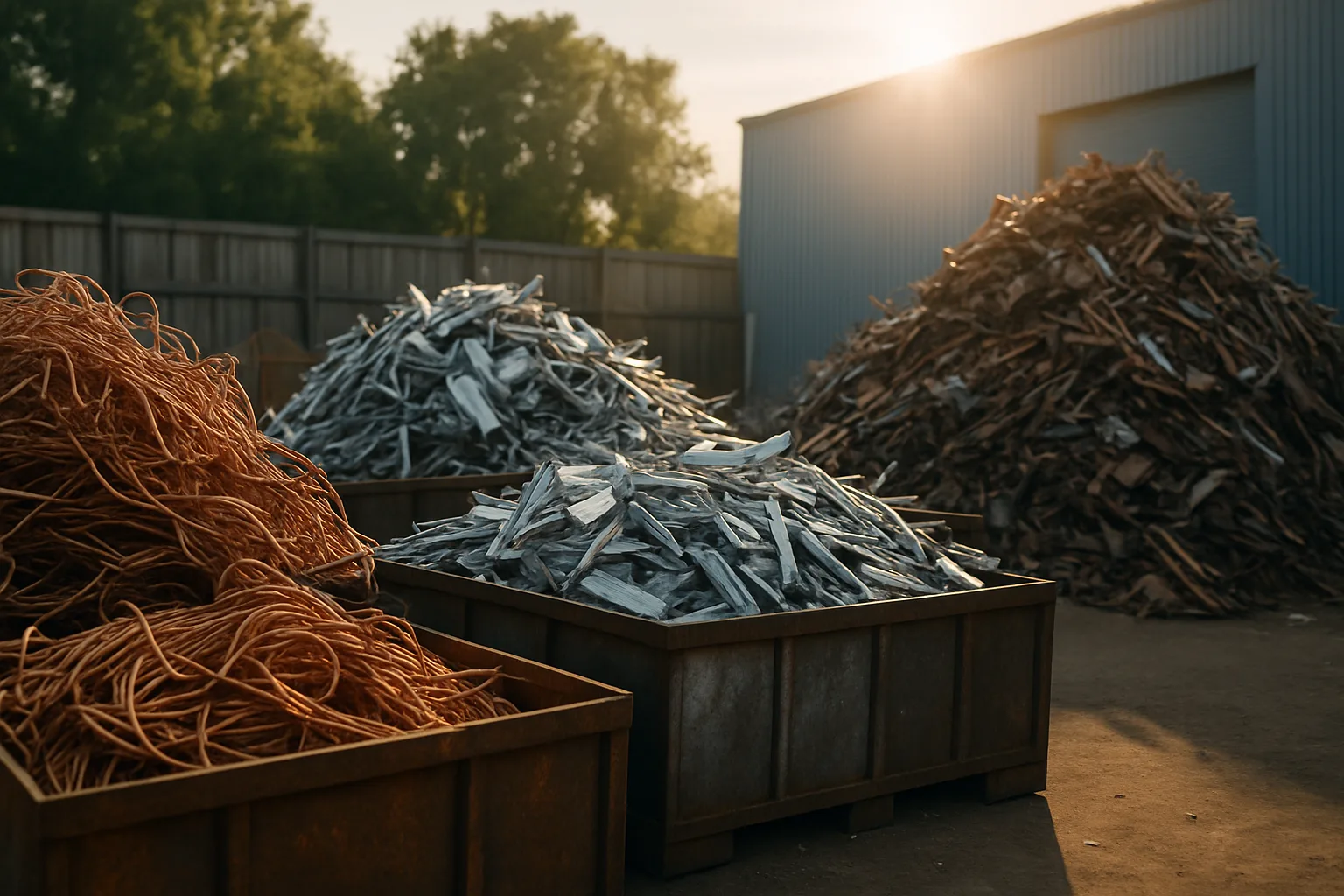
Most Scrap Sellers Leave Money on the Table — Here's Why Metal Type Matters
If you've ever hauled a mixed load to a yard and walked away feeling like you got lowballed, there's a good chance metal classification played a role. Knowing the difference between ferrous and non-ferrous scrap isn't just trivia — it directly affects what you get paid. Whether you're tracking the steel scrap price today or trying to figure out why your copper pipe is worth ten times more than your old steel beam, this guide breaks it down in plain terms.
Sellers in Portland and across Oregon are sitting on more value than they realize. The problem isn't the metal. It's the lack of information — and a selling process that doesn't reward what you bring in.
Ferrous vs. Non-Ferrous: The Core Difference That Drives Scrap Metal Prices Today
The word "ferrous" comes from the Latin ferrum, meaning iron. Ferrous metals contain iron. Non-ferrous metals do not. That one distinction shapes how metals are processed, how they're priced, and how much competition exists among buyers.
Here's a quick breakdown:
- Ferrous metals: Steel, cast iron, wrought iron, stainless steel (some grades). These are magnetic. They're heavy, abundant, and traded in high volumes — but at lower per-pound prices.
- Non-ferrous metals: Copper, aluminum, brass, lead, zinc, nickel, titanium, and precious metals. These are non-magnetic. They're rarer, lighter in some cases, and command significantly higher prices per pound.
The magnet test is the fastest way to sort a mixed load. If it sticks, it's ferrous. If it doesn't, you likely have something more valuable on your hands. For a Portland yard operator or a demolition contractor clearing a site in Oregon, this distinction between ferrous and non-ferrous determines how you sort, stage, and ultimately sell your material.
Understanding Ferrous Scrap: Steel, Cast Iron, and Why Volume Is the Game
Ferrous scrap is the workhorse of the recycling industry. Steel alone accounts for the vast majority of all scrap metal recycled globally. It feeds electric arc furnaces, reinforces new construction, and cycles back into manufacturing faster than most metals. When people talk about the steel scrap price today, they're usually referencing grades like #1 Heavy Melting Steel (HMS), shredded auto bodies, or structural steel.
Prices for ferrous scrap move with global steel demand, energy costs, and mill inventory levels. They're lower per pound than non-ferrous — often measured in dollars per gross ton rather than cents per pound — but the sheer volume involved makes it a significant revenue stream for large generators. A construction company clearing rebar and I-beams from a Portland job site isn't going to make the same per-pound margin as someone with a load of bare bright copper wire. But a full flatbed of HMS adds up fast.
Common ferrous scrap categories include:
- #1 Heavy Melting Steel (HMS 1): Clean, uncoated steel plate and structural shapes
- #2 Heavy Melting Steel (HMS 2): Includes lighter gauges and mixed steel
- Shredded scrap: Processed auto hulks and mixed light steel
- Cast iron: Engine blocks, radiators, old machinery
- Rebar: Common on demolition and construction sites
Sorting matters here. Mixed loads get graded down. A load of clean #1 HMS fetches more than the same weight of unsorted mixed steel. Yards pay for consistency because mills demand it.
Non-Ferrous Scrap: Where Scrap Copper, Aluminum, and Catalytic Converters Live
Non-ferrous metals are where per-pound values climb fast. Scrap copper — particularly bare bright copper wire — consistently ranks among the most valuable common scrap metals. Scrap aluminum, while lower per pound than copper, moves in massive quantities from cans, extrusions, radiators, and auto parts. Brass fixtures from old plumbing jobs. Stainless steel sinks and restaurant equipment. It adds up.
Then there are catalytic converters. If you work with end-of-life vehicles, you already know that cats are their own category. They contain platinum group metals (PGMs) — platinum, palladium, and rhodium — that are worth far more than the steel shell around them. A catalytic converter buyer who knows their grades will pay significantly more than a general yard taking guesses. Proper VIN lookup and serial tracking — features built into platforms like smashscrap.com — ensure you're getting paid for what the cat actually contains, not a flat average that benefits the buyer.
Key non-ferrous categories to know:
- Bare bright copper wire: Top-grade copper, no insulation, no solder
- #1 copper tubing: Clean copper pipe, no fittings or paint
- Insulated copper wire: Priced based on copper recovery percentage
- Cast aluminum: Engine blocks, transmission housings
- Sheet aluminum: Auto hoods, siding, roofing material
- Radiators: Copper/brass or aluminum/plastic — priced differently
- Catalytic converters: Graded by serial number and PGM content
For sellers accessing Portland scrap metal services, understanding which of your materials fall into non-ferrous categories is the first step toward getting paid properly. Don't let mixed loads blur the value of your best material.
Why the Selling Method Matters as Much as the Metal Type
Here's the part most sellers miss. Knowing your metal type tells you what you could get. The selling method determines what you actually get. The old model — one buyer, one phone call, take it or leave it — doesn't serve sellers. It serves buyers. When only one party knows the real market rate, only one party benefits.
Scrap metal prices today change daily. Ferrous grades respond to mill orders and export demand. Non-ferrous metals track commodity exchanges and global supply chains. A buyer who knows you don't have another offer has zero incentive to sharpen their price.
That's exactly what SMASH addresses. SMASH is a B2B scrap metal marketplace built around competitive auctions, not single-buyer negotiations. When your load — whether it's a tonnage of shredded steel or a drum of sorted non-ferrous — goes in front of multiple vetted buyers simultaneously, the market sets the price. Not one buyer's best offer. Competition can help reveal what your material is actually worth.
Features like photo documentation, packing lists, and BOL tracking mean buyers bid with confidence on exactly what they're seeing. No surprises at the scale. No grade disputes after the fact. When you sell your scrap metal at top prices on Sell Scrap Metal, you're not guessing — you're putting your material in front of the market.
How Portland Sellers Are Using Market Transparency to Their Advantage
Portland's industrial corridor, active construction sector, and strong base of auto dismantlers generate a consistent mix of ferrous and non-ferrous scrap. Oregon yards handling demolition debris, appliance recycling, and vehicle end-of-life material deal with both sides of this equation every week. The sellers winning in this market aren't necessarily the ones with the biggest loads. They're the ones who know their material and put it in front of the right buyers.
Consider a real-world scenario: a demolition contractor in Portland clears a commercial building. The load includes structural steel beams, copper plumbing, aluminum conduit, and a handful of catalytic converters from old HVAC equipment. That's four different pricing categories, each with its own market. Selling it all to one yard on a single call means taking that yard's blended offer — which will favor the buyer's margin, not the seller's.
Running it through a competitive auction platform changes the dynamic. Vetted buyers bid against each other on documented, categorized loads. The SMASH scrap metal auction process means the market — not a single voice on the phone — determines what each category fetches. No subscription fees. SMASH earns when the seller earns.
If you're trying to find scrap metal pickup near me or you're tired of the single-buyer guessing game, this approach puts the leverage back where it belongs: with the person who has the material. Get a fair price for your scrap today and stop leaving money in a buyer's pocket.
Want to go deeper on selling strategies, grade definitions, and market timing? Explore scrap metal selling guides for practical breakdowns built for real sellers.
Frequently Asked Questions
Q: What is the steel scrap price today in Portland, Oregon?
Steel scrap prices change daily based on mill demand, energy costs, and export activity. Common grades like HMS #1 and shredded scrap are typically priced per gross ton. Check current rates directly with yards or through a platform like SMASH that provides market-based pricing — posted numbers are always more accurate than general estimates. Disclaimer: All scrap metal prices fluctuate. Always verify current rates before selling.
Q: What's the difference between ferrous and non-ferrous scrap metal prices today?
Ferrous metals like steel and cast iron are priced per gross ton and typically range far lower per pound than non-ferrous metals. Non-ferrous metals like copper, aluminum, and brass are priced per pound and command significantly higher values. The gap can be dramatic — scrap copper can be worth many times more per pound than structural steel.
Q: Is it worth separating ferrous and non-ferrous scrap before selling?
Yes — almost always. Mixed loads get averaged down at the scale. Separating your material lets each category be priced on its own merit. It takes some labor upfront, but the payoff on a load with meaningful non-ferrous content is consistently higher than selling mixed.
Q: Can I sell catalytic converters through a B2B scrap metal marketplace like SMASH?
Yes. Catalytic converters are non-ferrous scrap with high-value PGM content, and they're well-suited for auction-based selling because buyer competition helps surface accurate market pricing. SMASH uses serial tracking and VIN lookup to document cats properly, giving buyers the data they need to bid with confidence.
Q: How do I find scrap metal pickup near me in Portland or Oregon?
Platforms like SMASH connect sellers with vetted buyers across North America, including the Pacific Northwest. For Portland-specific service and logistics support, start with a platform that handles documentation, competitive bidding, and pickup coordination in one place — rather than making cold calls to individual yards.
If you're sitting on a mixed load of ferrous and non-ferrous material — steel beams, copper pipe, aluminum extrusions, or a pile of catalytic converters — you already have value. The question is whether the process you use to sell it reflects that value. Stop settling for a single buyer's first offer. Request a pickup, get your material documented, and let the market do its job at sell-scrapmetal.com.
Follow SMASH on LinkedIn for ongoing scrap metal market insights, industry trends, and auction updates: SMASH on LinkedIn.