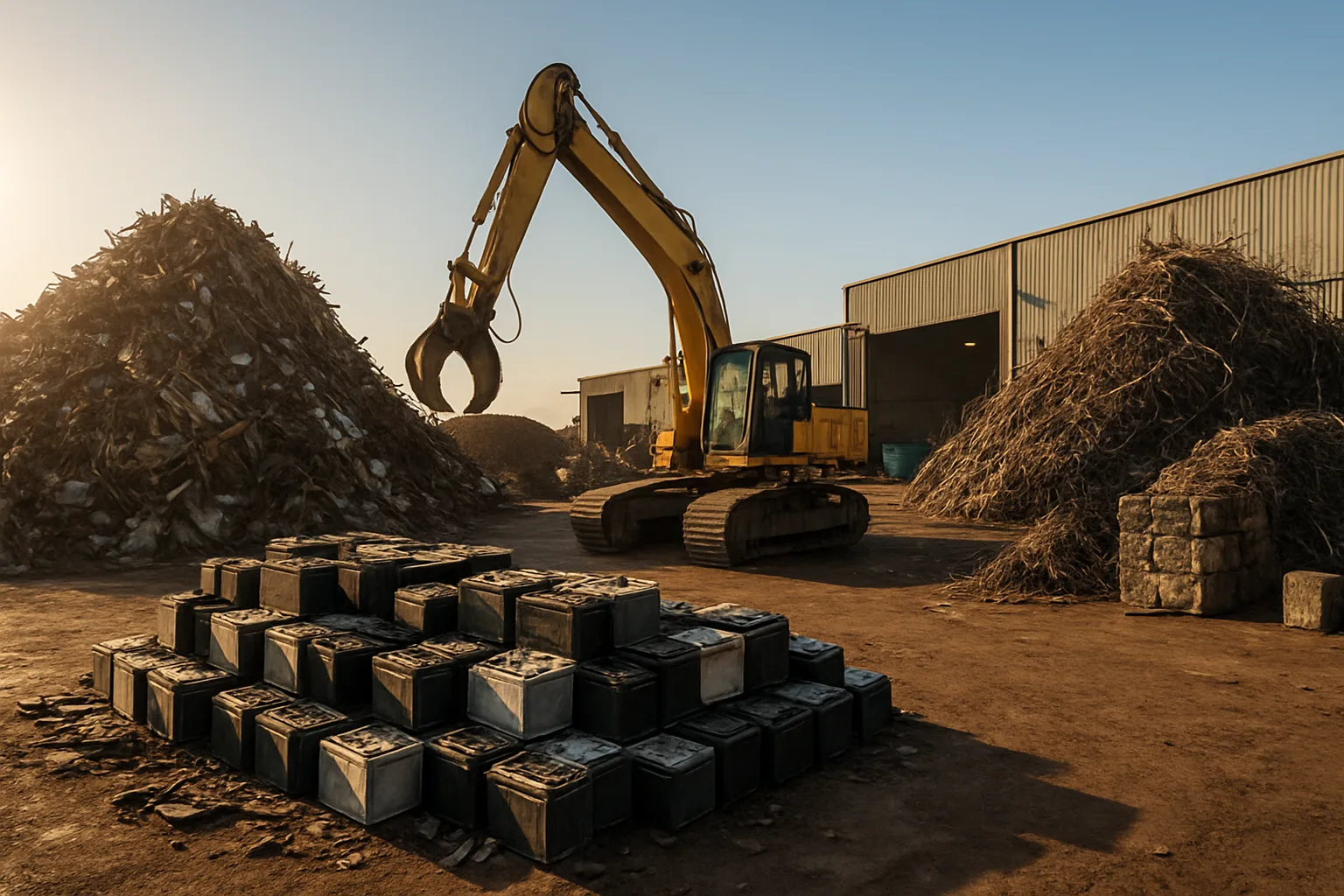
Most people scrapping lead-acid batteries think they're leaving money on the table. They're not wrong — but the bigger mistake is not knowing how much they're leaving behind, or why lead scrap behaves so differently from aluminum, copper, or steel.
If you've got a stack of dead car batteries, a pile of old UPS units, or a forklift battery that finally gave out, this article breaks down what your lead scrap is actually worth, how it stacks up against other metals, and why selling smart — not just fast — makes a real difference. And yes, we'll get to the aluminum scrap price today comparison, because that context matters more than most people realize.
Why Lead-Acid Batteries Are Worth More Than You Think
Lead-acid batteries are the most recycled consumer product in North America. That's not a feel-good stat — it's a market signal. High recycling rates mean consistent demand, which means lead scrap holds its value better than many other metals during slow markets.
A standard 12-volt car battery weighs between 30 and 50 pounds. The lead content inside — plates, terminals, and ballast — makes up roughly 60–65% of that total weight. That's 18 to 32 pounds of actual lead per battery. Multiply that across a pallet of cores, and you're looking at a load worth tracking carefully.
- Lead content per standard car battery: 18–32 lbs
- Lead content per industrial forklift battery: 150–300+ lbs
- Typical battery types accepted for recycling: automotive, marine, AGM, gel cell, UPS/standby, forklift
The key thing most sellers miss: scrap yards price lead-acid batteries either by the battery unit (flat rate per piece) or by pound of lead, depending on the buyer. Knowing which pricing method a buyer uses — before you show up — changes your negotiating position completely.
Lead vs. Aluminum Scrap Price Today: How Do They Actually Compare?
Here's where sellers get confused. Lead and aluminum prices move independently. The aluminum scrap price today often gets more attention because aluminum shows up in more everyday scrap — window frames, cans, auto parts, extrusions. But lead is denser and heavier per unit, which means a smaller volume of material can be worth more by weight.
As of June 2026, lead and aluminum scrap are in genuinely different market positions. Aluminum has seen price pressure from increased domestic supply and shifting EV manufacturing inputs. Lead, on the other hand, benefits from strong battery replacement cycles — gasoline vehicles still dominate the road, and every one of them runs a lead-acid starter battery.
Here's a practical side-by-side to frame your expectations:
- Aluminum (mixed/cast): Lower price per pound than copper or lead, but high volume availability makes it a consistent earner
- Scrap copper: Still the highest-value common metal — but you need clean, sorted material to hit top pricing
- Scrap steel: Lowest price per pound of the common metals — volume is where the money is
- Lead (battery scrap): Mid-tier price per pound, but dense weight means good payouts per unit with less sorting required
The honest answer: neither lead nor aluminum is always "better." What matters is what you have, how much of it you have, and who you're selling it to. A buyer paying flat rate per battery unit may be your best option on a small load. A buyer pricing by lead pound could be far better on a pallet of industrial UPS units. That's exactly the kind of price discovery that platforms like North America's B2B scrap metal auction platform are built to surface.
Best Scrap Metal Prices in San Jose: What Local Sellers Need to Know
San Jose is one of the highest-volume scrap markets in California. The concentration of tech businesses, data centers, auto shops, and industrial operations means a steady flow of lead-acid batteries, scrap aluminum, copper wire, and mixed metal loads hitting the market constantly.
That volume cuts both ways. More sellers means more competition among yards — which can work in your favor. But it also means yards get picky. If your battery load is mixed (automotive with industrial, AGM with flooded), expect lower offers. Clean, sorted loads consistently get better pricing. If you're targeting the best scrap metal prices in San Jose, sort before you sell.
A few practical points for San Jose and broader California sellers:
- California has strict battery handling regulations. Yards are required to accept used lead-acid batteries under California law. That doesn't mean they'll pay top dollar — but you can't be turned away for drop-off.
- Photo documentation helps. If you're selling a large lot, photos of the battery types and condition before transport give buyers more confidence — and more confidence typically translates to stronger offers.
- Know the difference between a flat rate and a per-pound offer. Always ask which pricing method a yard uses before loading your truck.
- Forklift and industrial batteries need special handling. Not every yard has the equipment. Narrow your list before you call around.
Local San Jose scrap metal services can help you navigate buyer options in the area — whether you're clearing out a data center UPS room or scrapping a decade's worth of automotive batteries from a shop.
How to Sell Lead Scrap Online and Get Competitive Pricing
The old way: call your regular yard, take whatever they quote, load your truck, and hope the scale is right. That system works fine when you have a small load and no time to negotiate. It fails you when you have volume and no idea what the market is actually paying.
Selling scrap metal online — specifically through auction-format platforms — changes the math. When multiple vetted buyers compete for your load, you get a real market price instead of a single buyer's offer. That's the difference between price-guessing and price-discovery.
SMASH is built around that principle. No subscription fees. No cold calls to yards that may or may not pick up. You list your load — batteries, cores, aluminum, copper, whatever you've got — with photo documentation and weight details, and vetted buyers bid. If you want to sell your scrap metal at top prices on Sell Scrap Metal, the platform handles the pricing transparency so you're not flying blind.
For lead-acid battery lots specifically, the features that matter most are:
- Inventory documentation: Battery type, approximate count, weight estimate, and condition photos all improve buyer confidence
- Vetted buyers: You're not dealing with tire-kickers or lowball flippers — buyers on the platform are verified
- Auto-invoicing: Paperwork is handled, which matters when you're moving a significant load and need a clean paper trail
- No subscription fees: You don't pay to list — SMASH earns when the deal closes
5 Things That Affect the Value of Your Lead-Acid Battery Scrap
Not all battery scrap pays the same. These five factors move the needle more than most sellers realize:
- Battery type and condition. Intact, uncracked batteries in original casing pay more than damaged units. Cracked cases or leaking electrolyte reduces value and creates handling complications for buyers.
- Volume. A single battery pays less per pound than a pallet. A full truckload of clean automotive batteries pays better per unit than a mixed pallet. Volume and consistency both matter.
- Lead content by type. AGM (absorbed glass mat) and gel cell batteries have different lead content profiles than flooded lead-acid batteries. Some buyers price them separately.
- Current lead spot price. Lead trades on commodity markets just like copper and aluminum. The spot price on the day you sell directly affects what buyers will offer. Timing matters, especially on large loads.
- Who you're selling to. A yard that specializes in battery scrap versus a general metal recycler will typically pay differently. Specialty buyers have direct smelter relationships and fewer handling costs, which can mean better payouts.
If you're working with a large industrial lot — UPS battery banks, forklift batteries, telecom backup systems — it's worth getting multiple quotes before committing. The spread between the lowest and highest offer on a significant load can be substantial. Explore scrap metal selling guides for more on how to prep and price different metal types before you go to market.
Getting the Best Scrap Metal Prices in California: The Bigger Picture
California's scrap market is large, regulated, and price-competitive. That combination creates both opportunity and friction for sellers. On one hand, demand is strong — smelters, secondary processors, and export buyers all compete for quality material. On the other hand, state regulations around hazardous material handling (lead falls under this), documentation requirements, and transport rules add steps that out-of-state sellers don't always deal with.
The sellers who get the best scrap metal prices in California consistently do a few things differently:
- They sort before they sell. Mixed loads pay less, every time.
- They document what they have. Photos, weight estimates, battery types — all of it reduces buyer uncertainty and supports stronger bids.
- They don't default to the first quote. One phone call to one yard is not price discovery. It's a single data point.
- They use competitive platforms when the load is worth it. For loads over a few hundred pounds, the difference between one quote and five competing bids can be significant.
Whether you're a yard operator clearing incoming inventory or a business scrapping your own equipment, the same principle applies: competition reveals the market. That's not a philosophy — it's just how auctions work. Get a fair price for your scrap today by putting your load in front of buyers who are actually competing for it.
Frequently Asked Questions
Q: What is the aluminum scrap price today compared to lead scrap?
Aluminum and lead scrap prices fluctuate daily based on commodity markets, supply, and demand. As a general rule, lead scrap (especially from batteries) is denser and heavier per unit, while aluminum offers more volume availability. The best approach is to check current rates from multiple buyers rather than relying on a single quote. Prices vary by region, buyer type, and material grade.
Q: Where can I sell lead-acid batteries for scrap in San Jose?
San Jose has multiple scrap yards and recycling facilities that accept lead-acid batteries. California law requires licensed dealers to accept used lead-acid batteries, so you have options. For larger lots or competitive pricing, consider listing through an online platform that connects you with vetted buyers instead of limiting yourself to one local yard.
Q: Does SMASH accept lead-acid battery scrap from individual sellers?
SMASH is primarily a B2B platform serving recycling yards, businesses, and high-volume sellers. If you're clearing a significant battery lot — automotive cores, industrial UPS units, or forklift batteries — SMASH is worth exploring. For smaller individual loads, a local scrap yard or drop-off facility is typically the faster route.
Q: How do I get the best scrap metal prices near me?
Getting the best price starts with sorting your material, documenting what you have with photos and weight estimates, and getting more than one quote. Platforms that use an auction format — where buyers compete — give you better price discovery than a single cold call to your nearest yard. The more competitive the process, the closer you get to actual market value.
Q: Do scrap metal prices change daily?
Yes. Lead, aluminum, copper, and steel all trade on commodity markets and can shift daily based on global supply and demand, currency movements, and industrial output data. Always check current rates before committing to a sale, especially on larger loads where even small per-pound changes make a real dollar difference.
Disclaimer: Scrap metal prices fluctuate daily. All price references in this article are for general context only. Always verify current rates directly with buyers before selling.
Ready to stop guessing and start getting real offers? Sell your scrap metal at top prices — request a pickup at sell-scrapmetal.com. Whether it's a stack of lead-acid batteries, a load of aluminum, or mixed metal from a cleanout, the right buyers are out there. Put your load in front of them.
Stay current on scrap metal market trends and industry insights — follow SMASH on LinkedIn for regular updates from across the North American scrap market.