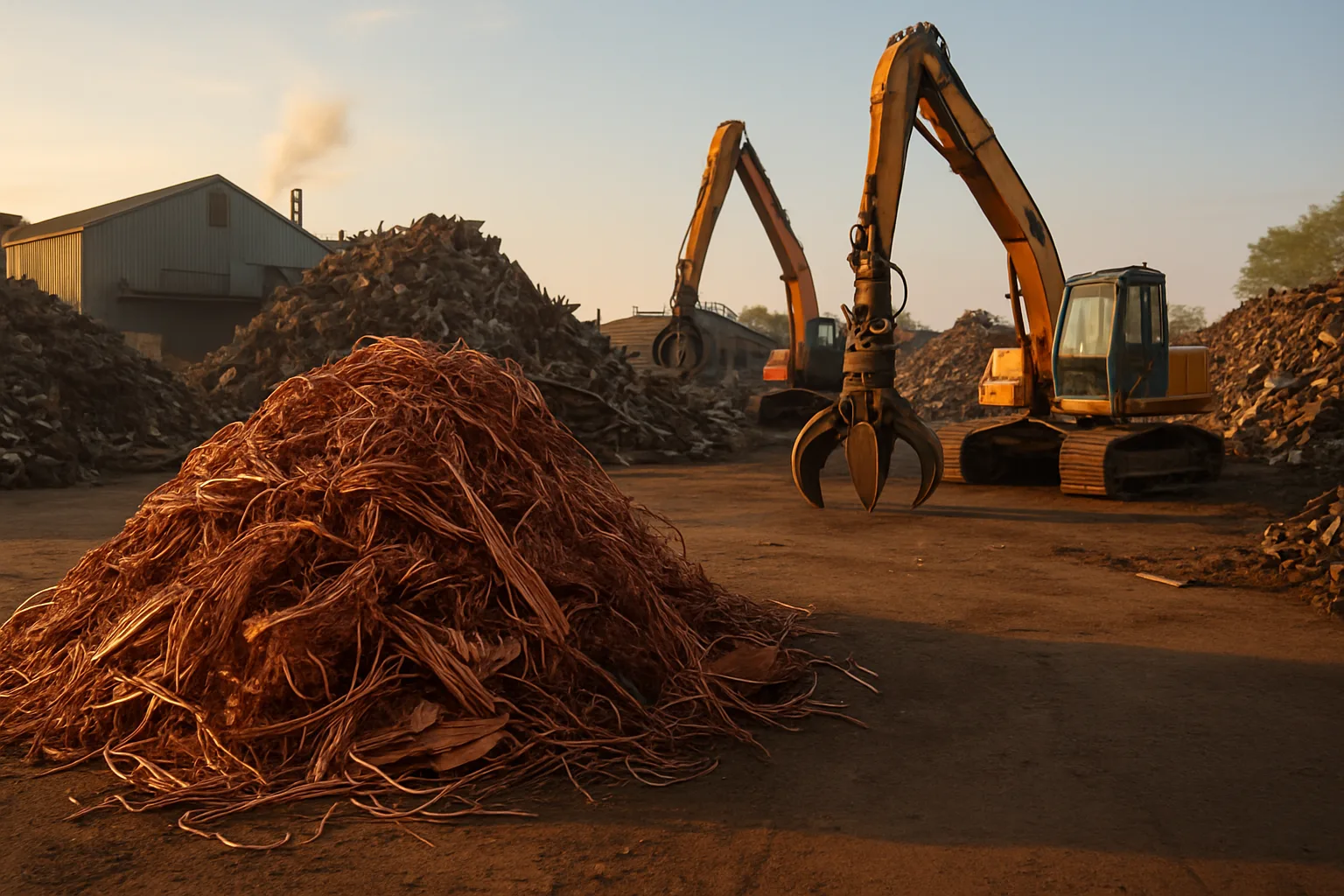
Copper prices move fast. If you're sitting on a pile of bare bright, some mixed #1, and a few boxes of insulated wire — what you call it matters more than how much you have. Pittsburgh yards aren't all paying the same price, and grading copper wrong can cost you real money before you even load the truck.
This guide breaks down how copper scrap is graded, what drives price swings in 2026, and how platforms like SMASH are changing the way sellers get paid. Whether you're clearing out a job site in Pittsburgh or liquidating inventory from a full demo, read this before you sell.
Why Copper Grading Directly Affects What You Get Paid
Copper isn't copper. That's the first thing experienced scrappers learn, and the last thing first-timers figure out — usually after they've already sold a load for less than it was worth. Buyers price copper based on its purity, condition, and form. The cleaner the material, the higher the grade, the better the price per pound.
There are four commonly recognized grades of copper scrap in North American yards:
- Bare Bright (#1 Bare Bright): The cleanest, highest-paying grade. Uncoated, unalloyed copper wire, no solder, no insulation. Must be at least 16 gauge. This is the benchmark grade.
- #1 Copper: Clean, uncoated, unalloyed copper pipe or wire. Can include bus bars and commutator segments. No paint, solder, or excessive oxidation.
- #2 Copper: Miscellaneous copper wire, pipe, and sheet with minor impurities — some solder, paint, or light oxidation allowed. Significantly lower per-pound return than #1.
- Insulated Copper Wire: Varies widely depending on insulation thickness and copper content. Buyers often run a recovery percentage to determine value. Stripping wire yourself almost always improves your payout.
The spread between Bare Bright and #2 copper can be significant — often $0.30–$0.60 per pound or more depending on market conditions. On a 500-pound load, that gap is real money. Grading accurately — or taking the time to clean and sort — pays off.
Copper Price Trends in 2026: What's Driving the Market
Copper demand in 2026 continues to be shaped by two major forces: electrification infrastructure buildout and global supply constraints. Grid modernization projects across the U.S., EV charging infrastructure expansion, and ongoing data center construction are keeping copper demand elevated. That's good news if you're holding scrap.
On the supply side, mine output from major South American producers has been inconsistent, and that uncertainty shows up in futures pricing. When the London Metal Exchange (LME) spot price moves, domestic scrap buyers adjust their street prices within days — sometimes hours. Staying aware of copper futures gives you a baseline for evaluating any offer you receive.
A few things to watch in the second half of 2026:
- LME Copper spot price: The benchmark that most U.S. buyers reference when setting their scrap copper buy prices.
- U.S. tariff landscape: Trade policy continues to affect how domestic buyers price imported and exported materials, influencing local scrap premiums.
- Seasonal demand: Construction activity typically peaks in warmer months, which can tighten supply of clean #1 and Bare Bright in regional markets like Pennsylvania.
One buyer quoting you $X per pound today might not be your best option tomorrow. That's exactly why competition between buyers — not a single phone call — is the better play. Platforms like get competitive bids for your scrap metal through a vetted auction format, letting the market set the price instead of one buyer's daily sheet.
Disclaimer: Copper prices fluctuate daily based on market conditions. Always verify current rates before selling.
How to Sort and Prepare Your Copper Before You Sell Near Pittsburgh
Sorting takes time. But showing up at a Pittsburgh yard — or listing on an auction platform — with a clean, pre-sorted load gives you two advantages: a higher grade classification and more buyer confidence. Both translate to better pricing.
Here's a practical pre-sale checklist for copper scrap:
- Strip what you can. Insulated wire that's been stripped to bare copper moves up the grade ladder. Hand-stripping pays off on thicker gauges. For large volumes, a mechanical stripper makes sense.
- Separate by grade. Don't mix Bare Bright with #2 and hope for the best. Buyers will downgrade the whole load. Keep grades in separate containers.
- Remove attachments. Brass fittings, solder joints, steel screws — these contaminate a #1 copper load. Pull them off. The brass and steel have their own value anyway.
- Document everything. Take photos before the load ships. Note weights per grade. This matters when you're selling through a platform that supports photo documentation and serial tracking — buyers trust documented inventory more than mystery loads.
- Weigh it yourself first. Don't walk in blind. Know your approximate weight so you can verify the yard's scale ticket.
For larger industrial or commercial loads from Pittsburgh job sites, consider Pittsburgh scrap metal services for pickup and processing options that take the logistics off your plate.
Selling Copper Through a Scrap Metal Auction vs. Walking It Into a Yard
The traditional method is simple: load the truck, drive to a yard, take their price, get a check. That works fine if you're dropping off a small residential load and just want it gone. But if you're selling 1,000+ pounds of copper — or have ongoing volume — that approach leaves money on the table.
A scrap metal auction model flips the dynamic. Instead of accepting one buyer's number, multiple vetted buyers compete for your load. The price isn't set by whoever picks up the phone first — it's set by the market. That's price discovery working in your favor.
SMASH operates on exactly this model. No subscription fees. No guessing. You list your load, vetted buyers bid, and you see real competition on your inventory. Auto-invoicing and full documentation — including photo records and packing lists — mean fewer disputes and faster payment. Sell your scrap metal at top prices on Sell Scrap Metal to see how the auction approach compares to what your local yard quoted you last week.
For buyers in Pittsburgh and across Pennsylvania, documented loads with clean grading attract stronger bids. The more confidence a buyer has in what they're getting, the less discount they build in for uncertainty. Clean inventory, clear photos, accurate grades — that's the formula.
Non-Ferrous Metals Beyond Copper: Maximizing Your Full Load Value
If you're selling copper, you're probably sitting on other non-ferrous material too. Aluminum, brass, and stainless all have their own grading systems and pricing tiers. Treating each material as a separate line item — rather than dumping everything into a mixed bin — is how serious sellers increase their total payout.
A few quick notes on common non-ferrous companions to copper loads:
- Scrap aluminum: Extrusions, cast, breakage, and sheet are priced differently. Clean extrusion aluminum fetches more than dirty cast. Sort before you sell.
- Brass: Red brass (high copper content) trades at a significant premium over yellow brass. Know which you have.
- Catalytic converters: If your load includes cats — from demo work, automotive dismantling, or fleet maintenance — don't let a yard bundle them into a flat price. Cats are priced by PGM content and model. A catalytic converter buyer with real pricing transparency will break them out separately.
The same principle applies across all materials: more information, more competition, better price. Explore scrap metal selling guides to go deeper on aluminum grading, brass sorting, and catalytic converter pricing if you're moving mixed loads regularly.
Ready to Sell Your Scrap Copper in Pittsburgh?
You've sorted the load, graded the copper, pulled the fittings, and taken photos. Now the move is to make sure buyers compete for it — not just accept the first number you hear. Pittsburgh has active scrap markets, but your best price rarely comes from one phone call to one yard.
SMASH connects sellers with vetted buyers across North America through a transparent auction format. No subscriptions. No cold-call guessing. Just documented inventory, competitive bids, and a clear transaction. If you're moving volume — copper, aluminum, cats, or mixed loads — get a fair price for your scrap today and let the market tell you what it's worth.
Sell your scrap metal at top prices and skip the guesswork — request a pickup or list your load at sell-scrapmetal.com.
Frequently Asked Questions
Q: How do I find scrap metal recycling near me for cash in Pittsburgh?
Search for licensed scrap yards in Pittsburgh, Pennsylvania, or use a platform like SMASH that connects you with vetted buyers who compete for your load. Cash or fast-pay options vary by buyer — confirm payment terms before you drop off or ship.
Q: What is the difference between #1 and #2 copper scrap?
#1 copper is clean, uncoated, unalloyed pipe or wire with no solder or significant impurities. #2 copper includes material with minor contamination — paint, solder, light corrosion. The price spread between the two grades can be meaningful, especially on larger loads.
Q: Can I sell scrap metal near me within 5 miles of Pittsburgh without a truck?
Yes. Several services offer scrap metal pickup for larger loads, including commercial and industrial volumes. If your copper load is too heavy to transport yourself, look for platforms or services that coordinate pickup logistics in the Pittsburgh area.
Q: How does a scrap metal auction work compared to selling to a yard directly?
In a traditional yard sale, you get one buyer's price — take it or leave it. A scrap metal auction puts your load in front of multiple vetted buyers who bid competitively. More competition generally means better price discovery. SMASH operates this way with no subscription fees for sellers.
Q: Does copper scrap price change daily in Pennsylvania?
Yes. Scrap copper prices in Pennsylvania — and across the U.S. — fluctuate based on LME spot prices, local demand, and supply conditions. Check current rates before you sell, and don't assume last week's price is still accurate today.
Stay current on scrap metal market trends and industry news — follow SMASH on LinkedIn for regular updates on pricing, grading, and what's moving in North American scrap markets.