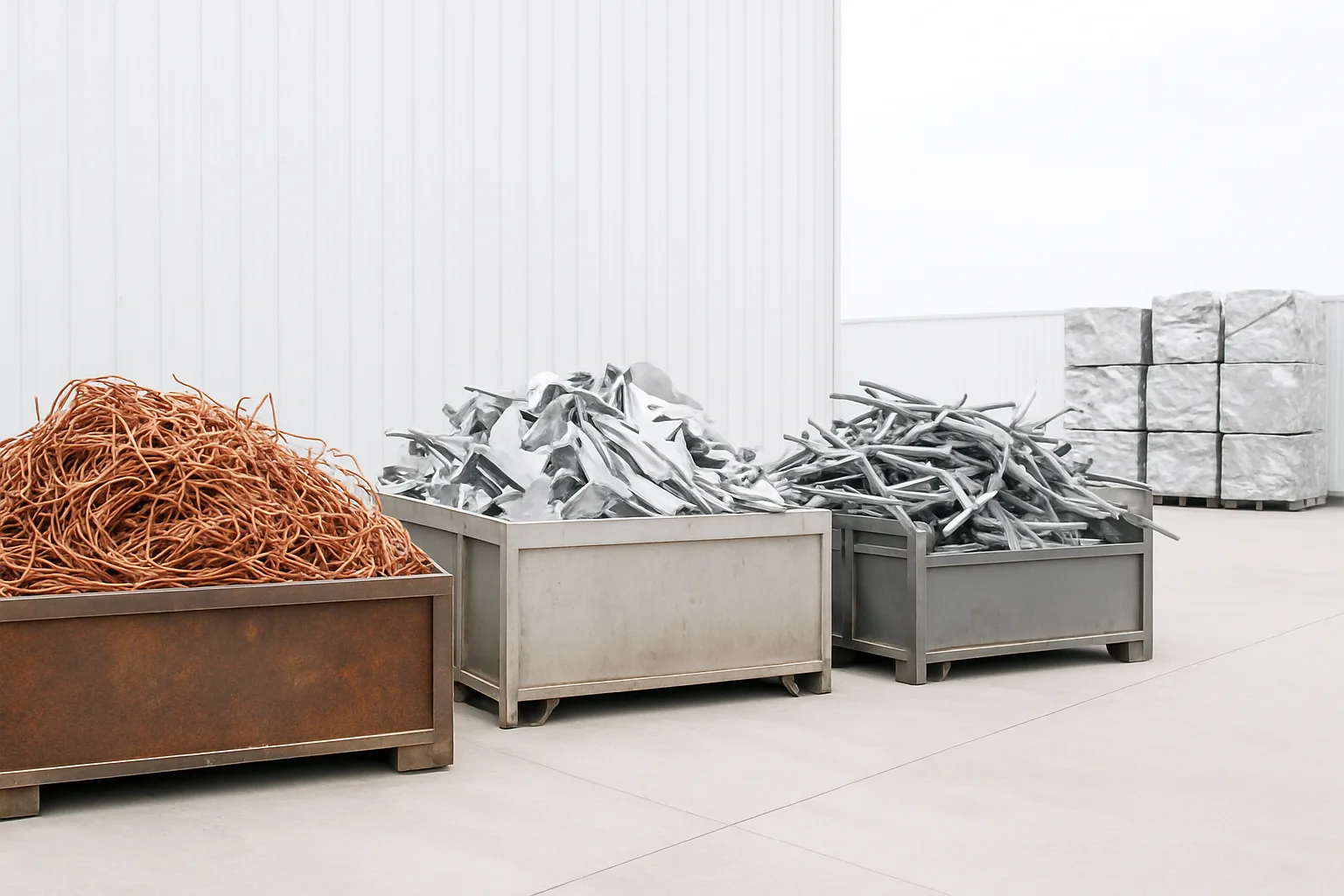
Your old laptops, dead servers, and broken smartphones aren't just trash — they're holding precious metals that most recyclers never fully recover. Gold, silver, palladium, and copper are sitting inside devices that end up in dumpsters or low-value bulk recycling streams every day. If you run a recycling yard or manage commercial electronics disposal in Columbus, you're likely leaving real money on the table.
The B2B scrap metal marketplace has changed how serious operators approach e-waste. Instead of guessing at value and calling one buyer, competitive platforms surface what the market actually wants to pay. That matters when you're moving circuit boards, hard drives, and server racks with legitimate precious metal content.
What's Actually Inside Old Electronics — and Why It Matters for Scrap Metal Prices
Most people know e-waste contains metals. Few understand how concentrated those metals can be. A metric ton of circuit boards can yield more gold than a metric ton of low-grade ore. That's not a marketing line — it's why dedicated precious metal refiners pay attention to electronics that most scrap yards treat as nuisance material.
Here's what you're working with in common e-waste categories:
- Printed circuit boards (PCBs): Gold contacts, silver solder, palladium capacitors, copper traces
- CPUs and processors: High gold content, especially older ceramic-style chips
- Hard drives: Aluminum platters with recycle value, rare earth magnets, copper windings
- Power supplies: Copper transformers, aluminum heat sinks, steel chassis
- Smartphone and laptop batteries: Lithium, cobalt, nickel — increasingly valuable in 2026 battery supply chains
- CRT monitors (legacy): Lead glass, copper yokes — requires careful handling but still has recovery value
The challenge for scrap metal recycling operations in Ohio is separating and grading this material properly. Bulk mixed e-waste gets priced at the lowest common denominator. Sorted, documented loads get priced on what's actually in them.
The Old Way of Selling E-Waste Is Costing You Money
Here's the typical B2B e-waste flow: a company generates old IT equipment, calls one buyer, gets a quote, takes the check. Nobody competing. No transparency on what the load actually contains. The buyer wins because they know the spread — you don't.
That's the same broken model that the SMASH scrap metal auction marketplace was built to replace. When you list a documented load of mixed PCBs, server CPUs, or hard drives with real inventory data — photos, weights, grades — multiple vetted buyers see it. Competition happens. Price discovery happens. You find out what the market actually wants to pay, not what one buyer decides to offer you on a Tuesday morning.
For yards in Columbus processing commercial e-waste accounts, this is a significant shift. You're not just a middleman accepting whatever spread the refiner offers. You're running an auction. That changes the dynamic entirely.
Precious Metal Recovery: What Drives Value in 2026
Precious metal prices are always moving. In 2026, palladium markets remain sensitive to automotive catalytic converter demand, gold trades with macro uncertainty, and silver has seen industrial demand tighten with solar and electronics manufacturing growth. None of these prices are static — check current rates before pricing a load.
Disclaimer: Metal prices fluctuate daily based on commodity markets, supply chain conditions, and demand cycles. Always verify current pricing through a live market source before committing to a transaction.
What you can count on are the fundamentals that make certain e-waste categories more valuable:
- Grade and sort quality: A clean CPU lot gets better pricing than mixed board material every time. The more precisely you sort, the more accurately buyers can bid.
- Volume: Most refiners have minimum quantities that make precious metal recovery economical. Aggregating material across multiple accounts helps Columbus-based yards hit those thresholds.
- Documentation: Serial tracking, photo documentation, and accurate weights give buyers confidence. Confidence translates to tighter spreads and stronger bids on a scrap metal auction platform.
- Aluminum recycle value in peripherals: Don't overlook the base metals. Aluminum chassis, heat sinks, and housings add up. Copper from power cables and transformers adds up. These aren't glamorous, but they're consistent.
If you're running a volume e-waste operation in Ohio, treat precious metal recovery as its own revenue line — not an afterthought rolled into a bulk load price.
How a B2B Scrap Metal Marketplace Changes the E-Waste Game
The friction in e-waste monetization has always been information asymmetry. Buyers know what PCBs yield. Sellers don't. That gap is where margin disappears.
A proper B2B scrap metal marketplace collapses that gap. When you list a load with documented content — weights, photos, grade classifications, any relevant serial tracking — you're not asking buyers to guess. Buyers who know precious metal recovery intimately bid on what they can verify. The result is more accurate pricing and more competitive bids.
Platforms like SMASH use vetted buyer networks, meaning you're not taking bids from unknown operators. Every buyer has been screened. That matters especially in e-waste, where chain-of-custody documentation, data destruction compliance, and downstream accountability are real concerns for commercial sellers.
If you want to sell your scrap metal at top prices on Sell Scrap Metal, e-waste is one category where the discipline of proper documentation pays off immediately. A sloppy inventory gets sloppy bids. A clean inventory with real data gets buyers competing.
Columbus Yards: Building an E-Waste Revenue Stream That Scales
Columbus sits at a logistics crossroads in Ohio with a dense commercial and institutional base — universities, healthcare systems, corporate campuses, and a growing tech sector all generating IT equipment turnover. That's a steady e-waste supply chain waiting to be tapped by recycling operations positioned to handle it properly.
A few practical moves for Columbus scrap metal services looking to grow e-waste volume:
- Target IT asset disposition (ITAD) accounts: Businesses refreshing hardware every 3-5 years generate consistent loads. Position your yard as a compliant, documented recycling partner.
- Offer data destruction documentation: Commercial accounts need proof that hard drives are destroyed. Build that into your service offering and you differentiate from competitors who skip this step.
- Sort before you sell: Even basic separation — CPUs from boards, boards from peripherals, cables from chassis — improves your load quality and what buyers will pay.
- Track aluminum recycle value separately: Aluminum from electronics is clean, consistent material. Don't blend it with lower grades. Price it on its own.
- Use auction mechanics for large lots: A truckload of server equipment from a data center refresh deserves competitive bidding, not a single phone call to one buyer.
Ohio's industrial base means competition for commercial accounts is real. But most yards aren't using scrap metal recycling Ohio-focused platforms that create genuine buyer competition. That's an opening for operations willing to invest in better process.
Practical Steps to Maximize Recovery Value Before You Sell
You don't need a precious metal refinery on-site to maximize e-waste value. You need process discipline. Here's what that looks like in practice.
Step 1: Inventory accurately. Weigh and categorize everything. Use SMASH's inventory tool to document loads properly. Buyers can't bid on what they can't verify.
Step 2: Photograph the load. Photo documentation isn't optional anymore. It's how remote buyers assess what you actually have. Close-ups of board types, CPU grades, and cable condition matter.
Step 3: Separate base metals from precious metal-bearing material. Copper cables go with copper. Aluminum chassis go with aluminum. PCBs and CPUs get their own category. Don't muddy the value of high-grade material with low-grade mix.
Step 4: List on a platform with vetted buyers. If you want to get a fair price for your scrap today, you need buyers who specialize in precious metal recovery. Generic scrap buyers won't price PCBs correctly. Specialist buyers in a competitive auction will.
Step 5: Review bids with context. Understand why bids come in where they do. Gold spot price, refining costs, and processing complexity all factor in. The more you understand the spread, the better you negotiate over time.
The days of handing a pallet of mixed e-waste to one buyer and hoping for the best are behind you. Explore scrap metal selling guides to sharpen your process and get more from every load you move.
When you're ready to move e-waste the right way — documented, competitive, transparent — request a pickup at sell-scrapmetal.com. Sell your scrap metal at top prices and stop leaving precious metal value on the table.
Frequently Asked Questions
Q: What types of electronics have the most scrap metal value?
Older computers and servers generally carry the most precious metal content — ceramic CPUs, gold-plated connectors, and dense circuit boards. High-volume categories like hard drives and power supplies also contribute meaningful copper and aluminum recycle value. The more you can sort and grade before selling, the better your price outcome on a B2B scrap metal marketplace.
Q: How does a scrap metal auction platform handle e-waste differently than a standard buyer?
A standard buyer makes you one offer — take it or leave it. A scrap metal auction platform puts your documented load in front of multiple vetted buyers who compete on price. For e-waste with real precious metal content, that competition can reveal significant differences between what one buyer offers and what the market will actually pay.
Q: Is there a minimum load size to sell e-waste through a B2B marketplace in Columbus?
Minimums vary by platform and buyer, but most precious metal recovery buyers want loads large enough to make refining economics work. Columbus-area yards aggregating material from multiple commercial accounts can hit those thresholds faster. Contact the platform directly to confirm current minimums before listing.
Q: What documentation do commercial e-waste sellers in Ohio typically need?
Commercial accounts often require a certificate of data destruction for hard drives, a bill of lading (BOL), and a recycling certificate for compliance purposes. If you're running an ITAD-focused operation in Ohio, building this documentation into your standard workflow helps you win and retain business accounts.
Q: How do I find scrap metal buyers near me who specialize in electronics and e-waste?
Searching "sell scrap metal near me" will surface general yards, but e-waste with precious metal content needs specialist buyers. A vetted B2B scrap metal marketplace connects you to buyers who specifically price PCBs, CPUs, and precious metal-bearing material — not just generalist yards pricing by the pound on bulk mixed material.
Stay current on scrap metal market movements and e-waste trends — follow SMASH on LinkedIn for regular industry updates and pricing insights.