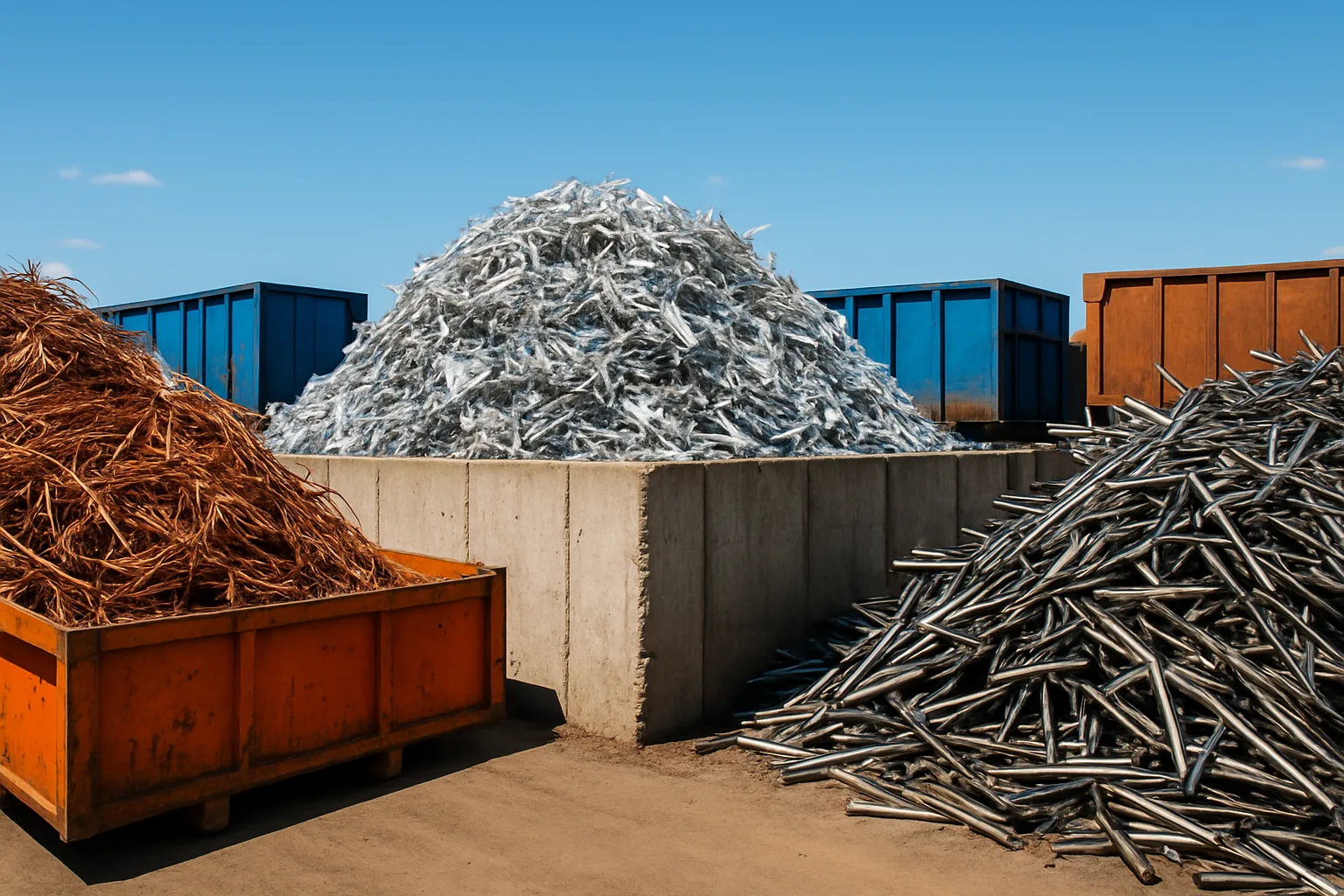
Stainless Steel Scrap Grades Explained — And Why the Grade Determines Your Price
Most sellers leave money on the table with stainless steel. Not because they're doing anything wrong — but because they don't know that the grade of stainless they're selling can swing your payout by 30% or more. If you're hauling mixed stainless to a yard in Salt Lake City without sorting it first, you're almost certainly getting paid for the cheapest grade in the pile. That's how buyers protect themselves. Here's how you protect yourself.
This week's market recap breaks down the main stainless steel scrap grades, what drives their value, how scrap metal prices in Salt Lake City stack up against general market trends, and what you can do right now to get a better return on your material.
---What Is Stainless Steel Scrap — And Why Does Grade Matter So Much?
Stainless steel isn't one material. It's a family of alloys, and the key variable is the nickel and chromium content. Nickel is expensive. The more nickel in the alloy, the higher the scrap value. If you're selling a mix of 304 and 430 stainless as a single load, you're handing buyers a discount they didn't earn.
The most common grades you'll encounter in the scrap market are:
- 304 Stainless: The workhorse grade. Contains roughly 8% nickel and 18% chromium. Found in kitchen equipment, food processing machinery, sinks, tanks, and industrial tubing. This is the grade with real value — buyers want it.
- 316 Stainless: Higher nickel content (around 10-12%) plus molybdenum, which gives it corrosion resistance in marine and chemical environments. Sells at a premium over 304. Common in pharmaceutical equipment, marine hardware, and chemical processing.
- 430 Stainless: The budget grade. No nickel — just chromium. Magnetic, which is how you identify it in the field. Used in appliance panels, trim, and some automotive parts. Worth significantly less than 304 or 316.
- 201 Stainless: A lower-cost alternative to 304 that substitutes manganese for some nickel. Common in consumer goods. Priced between 430 and 304 depending on the market.
- 17-4 and Specialty Grades: High-performance alloys used in aerospace, military, and tooling applications. Typically priced well above standard grades, but you need documentation to prove the material.
The practical takeaway: sort your stainless before you sell. A magnet is your first tool. If the magnet sticks hard, you're likely looking at 430. Weak magnetic pull or none at all suggests 304 or 316. When in doubt, ask the yard to test it — most have XRF analyzers that give a grade read in seconds.
---Stainless Scrap Pricing in 2026 — What's Moving the Market
Stainless steel scrap prices in 2026 continue to track nickel prices on the London Metal Exchange. When nickel moves, 304 and 316 scrap follow. That relationship has tightened as EV battery demand and specialty steel production compete for the same nickel supply. For scrap sellers, that generally means sustained interest from buyers — but it also means daily price volatility.
Yards across Utah and the broader Intermountain West are reporting steady demand for clean 304, especially from food processing and industrial facility cleanouts. Demolition work tied to ongoing commercial construction in the Salt Lake City metro has pushed intermittent supply into local yards, but demand from mills and secondary processors has kept prices from softening significantly.
A few factors driving stainless scrap prices right now:
- Nickel LME benchmarks: Watch spot nickel prices weekly. When nickel moves up 5-10%, 304 scrap premiums follow within days.
- Mill buying activity: Domestic stainless melt shops and re-rollers set the floor. When mills are running hot, scrap demand rises. When they trim production, prices soften fast.
- Import competition: Offshore stainless production still puts pressure on domestic prices. U.S. tariff policy in 2026 continues to influence how aggressively domestic mills pursue scrap versus imported alternatives.
- Cleanliness and prep: Clean, sorted stainless always commands a premium over mixed or contaminated loads. This is the one variable you control entirely.
Disclaimer: Scrap metal prices fluctuate daily based on market conditions. Always verify current rates directly with your buyer or platform before selling.
---How to Sell Stainless Scrap in Salt Lake City Without Getting Shorted
Salt Lake City has a solid scrap infrastructure — multiple yards, active industrial supply chains, and proximity to regional processing hubs. But more buyers doesn't automatically mean more competition on your load. Many sellers still work with one yard, one contact, one price. That's the old way of doing this, and it consistently leaves money behind.
If you're figuring out how to sell scrap copper, aluminum, or stainless from a commercial facility or industrial site, the process is the same regardless of metal type: document what you have, establish the grade, and get more than one offer. For stainless specifically:
- Sort by grade before anything else. Don't let a buyer sort it for you — they'll grade it conservatively to protect their margin.
- Weigh your material. Know your approximate tonnage before you call anyone. It changes the conversation.
- Photograph your load. Documented inventory gives buyers more confidence and limits disputes at the scale.
- Get competing bids. One quote is not a market. Two quotes is a start. Three or more is price discovery.
- Use a platform that brings buyers to you. Platforms like get competitive bids for your scrap metal with SMASH — instead of cold-calling yards one by one.
For sellers in Salt Lake City running regular loads of industrial stainless, non-ferrous, or catalytic converters, the difference between one buyer and multiple bidders in a structured auction can be significant. More buyers means better price discovery. That's not a slogan — it's how markets work.
---Catalytic Converter Auction — The Other High-Value Metal Conversation
Stainless grades aren't the only place sellers get tripped up on value. Catalytic converters carry platinum group metals (PGMs) — platinum, palladium, and rhodium — and the range between the worst and best offer you'll get on a load of cats is genuinely wide. A catalytic converter auction format exists precisely because assay-based buying creates information asymmetry. Buyers know the PGM content. Sellers often don't.
If you're moving cats out of a Salt Lake City shop or fleet operation, the same logic applies as with stainless: sort by type, document with photos and serial numbers where possible, and don't settle for the first number someone quotes you on the phone. PGM markets in 2026 have stabilized relative to the volatility of the early 2020s, but individual converter values still vary enormously based on make, model, and condition.
You can sell your scrap metal at top prices on Sell Scrap Metal — whether you're moving stainless, non-ferrous, or a mixed load of cats from a fleet operation. Getting your material in front of vetted buyers who bid competitively is the starting point.
---Scrap Metal Recycling Utah — What Sellers Need to Know in 2026
Utah's scrap metal recycling landscape has matured considerably. Regulatory compliance for scrap metal recycling in Utah requires proper documentation — seller identification, load records, and in some cases photo documentation for certain metals. Most reputable yards in the Salt Lake City area handle this routinely, but first-time sellers should know it's part of the process, not a barrier to entry.
For commercial sellers and industrial facilities generating regular scrap volumes, working with a platform that handles documentation, auto-invoicing, and transaction records makes compliance straightforward. That's one of the practical reasons operators who move consistent volumes of non-ferrous or catalytic converters increasingly use structured platforms rather than informal one-off calls to local buyers.
If you want to explore scrap metal selling guides covering everything from copper stripping to proper load preparation, there's solid practical content available before you haul your first load.
For anyone looking to get a fair price for your scrap today, the process starts with knowing what you have and finding the right buyer — not just the nearest one.
---Weekly Market Recap — July 26, 2026
Here's where the major metals categories stand heading into the last week of July:
- Stainless 304 scrap: Steady to firm. Nickel pricing has supported consistent demand. Clean, sorted loads continue to attract competitive offers from domestic buyers.
- Copper scrap price today: Copper remains one of the most actively traded scrap categories. Stripping quality and cleanliness still drive significant price spreads between grades. Bare bright, #1 copper, and #2 copper all trade at meaningfully different levels.
- Aluminum scrap: Mixed demand. Cast aluminum from automotive sources remains active. Extrusion grades have softened slightly as new production has increased supply in some regions.
- Catalytic converters: PGM spot prices have stabilized. Volume-based sellers are increasingly moving to auction formats to capture more of the assay value.
- Ferrous / scrap steel: Mill buying has been moderate. HMS 1&2 and shredded steel are moving but without aggressive premiums. Clean loads from demolition projects in the Salt Lake City area continue to find ready buyers.
All pricing references are general market observations only. Verify current rates with your buyer or platform before executing any transaction. Prices fluctuate daily.
Whether you're running a single load of stainless out of a kitchen equipment cleanout or managing ongoing non-ferrous volumes from a Utah industrial facility, the path to a better return is the same: know your grade, document your load, and don't accept the first number you hear. SMASH brings vetted buyers into a competitive bidding format so the market — not a single buyer's margin target — sets your price.
---Frequently Asked Questions
Q: How do I know which grade of stainless steel scrap I have?
Start with a magnet. 430 stainless is magnetic; 304 and 316 are not (or only weakly magnetic). For precise grade identification, most scrap yards in Salt Lake City and across Utah use handheld XRF analyzers that can identify the alloy in seconds. Sorting before you arrive always gets you a better price than letting the yard sort for you.
Q: What are scrap metal prices like in Salt Lake City right now?
Prices in Salt Lake City generally track national LME benchmarks and domestic mill demand, with some regional variation based on local buyer competition. For current rates, contact local yards directly or use a platform like SMASH to get competing offers on your load. Prices change daily, so always confirm before you haul.
Q: How do I get the best copper scrap price today?
Grade your copper before selling — bare bright, #1, and #2 copper all pay at different rates, and the spread is significant. Strip insulation when it's practical and economical to do so. Then get multiple offers. One yard quote is not a market price — it's that yard's offer.
Q: Is it worth sorting stainless steel scrap before selling in Utah?
Absolutely. Mixed stainless gets priced at the lowest grade in the load. A few minutes with a magnet and some basic sorting can move your per-pound rate meaningfully. For larger loads from industrial cleanouts or demolition in the Salt Lake City area, proper sorting before delivery is one of the highest-ROI things you can do.
Q: How does a catalytic converter auction work for scrap sellers?
In an auction format, your cats are listed with documentation — photos, serial numbers, and unit counts — and multiple vetted buyers submit competing bids. This is different from calling one buyer for a quote. Competition between buyers tends to surface more of the actual PGM value in your load rather than leaving margin on the table with a single-buyer transaction.
---Ready to stop guessing and start getting competitive offers on your scrap? Whether you're moving stainless, copper, cats, or a full mixed load from a Utah facility, the first step is getting your material in front of more than one buyer. Sell your scrap metal at top prices on Sell Scrap Metal — or head directly to sell-scrapmetal.com to request a pickup and find out what your load is actually worth in today's market.
Follow SMASH on LinkedIn for weekly scrap metal market insights, pricing updates, and practical guides for sellers across North America.