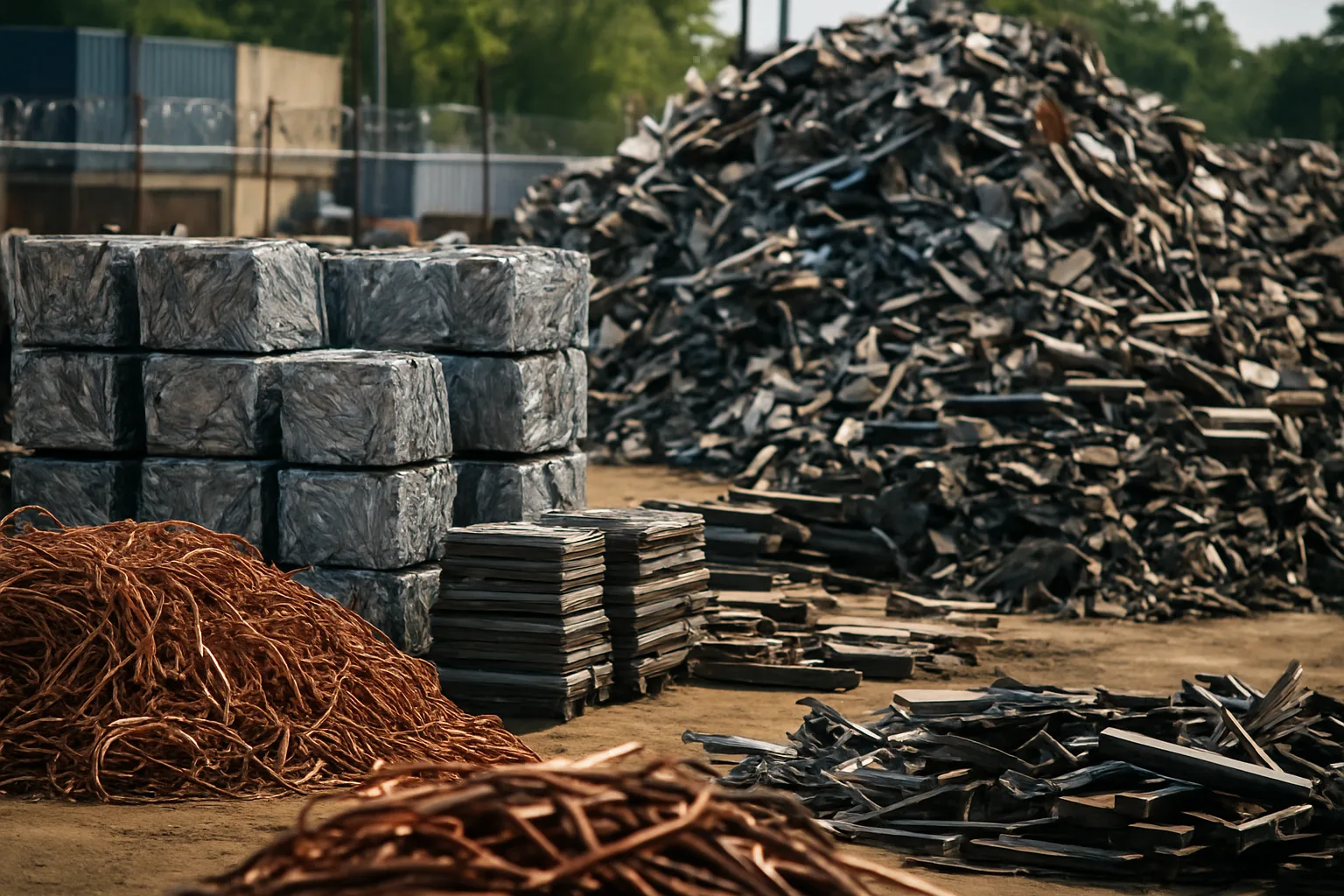
What Really Happens When a Yard Weighs Your Scrap — And Why It Affects the Price You Get
Most sellers show up at a recycling yard with a truckload of metal and assume the scale tells the whole story. It doesn't. The number on the scale is just the starting point. What actually determines your payout is a combination of weight, grade, contamination level, and the buyer's assessment of what they're looking at. If you don't understand that process, you're leaving money on the table every single time.
Whether you're hauling in a mix of scrap copper, sorting catalytic converters, or offloading a pile of scrap aluminum after a job site cleanout near Baltimore, understanding how grading works gives you real leverage. Scrap metal prices today vary not just by market conditions — they vary by how your material gets classified. The same piece of metal can get priced differently at two different yards depending on how it's graded.
This isn't a case study about one yard. It's a breakdown of how the weighing and grading process works across the industry — and where sellers consistently lose money without realizing it.
The Scale Is Only Part of the Equation: How Yards Weigh Your Load
When you pull onto a yard, your vehicle rolls over a truck scale (sometimes called a platform scale or pit scale). The yard records your gross weight. You offload your material. Then you drive back over the scale for your tare weight. The difference is the net weight of your scrap.
Sounds simple. But here's where it gets complicated: what's in that net weight matters as much as how much it weighs. Yards aren't paying per pound of mixed material — they're paying per pound of specific grades. And that's where grading comes in.
- Gross weight: Your vehicle plus your load
- Tare weight: Your vehicle empty
- Net weight: The actual scrap metal weight they're buying
- Adjustments: Deductions for moisture, dirt, non-metal attachments, or incorrect grade declarations
Some yards will weigh individual loads by material category. Others will weigh the full mixed load and then apply grade deductions after sorting. Either way, the final payout calculation happens after the grader has assessed your material — not before.
How Yards Grade Scrap Metal — And What Each Grade Means for Your Payout
Grading is where most sellers get surprised. Every major metal category — copper, aluminum, steel, stainless — has its own grading system. Yards use industry-standard grades, but apply them based on visual inspection, experience, and sometimes testing.
Copper Grading
Scrap copper is one of the most graded categories in the yard. Clean copper wire with no insulation is worth significantly more than insulated wire or mixed copper. Common grades include:
- #1 Copper: Clean, uncoated, unalloyed copper pipe or wire, minimum diameter. No solder, paint, or insulation.
- #2 Copper: Copper with some oxidation, solder joints, paint, or small amounts of coating. Still solid copper, just not pristine.
- Bare Bright Copper: The cleanest grade — shiny, uncoated, stripped wire. Commands the highest price per pound.
- Insulated Wire: Priced based on the estimated copper recovery percentage inside the insulation.
If you bring in copper that you think is #1 and the grader classifies it as #2 because of solder or slight oxidation, that difference can be meaningful on a large load. Clean your material before you haul it if you want the better grade.
Aluminum Grading
Scrap aluminum also breaks down into multiple grades. Cast aluminum (engine blocks, transmission housings) is graded differently than extruded aluminum (window frames, doors) or sheet aluminum. Contamination — paint, rubber, plastic attachments — will drop your grade fast.
Steel and Ferrous Grades
Ferrous scrap is generally graded as shredded steel, HMS (heavy melt steel), or light iron. Structural steel, auto bodies, and appliances all fall into different buckets. These grades affect what mills will pay, which flows back to what the yard pays you.
Catalytic Converters
Cats are in their own category entirely. They're graded by vehicle make and model, OEM part number, physical condition, and whether the substrate is intact. A grader uses a combination of visual inspection and reference databases to assign a value. Damaged substrates — cracked, blown out, or missing entirely — drop the value dramatically. Platforms like sell your scrap metal on the SMASH marketplace have made catalytic converter pricing more transparent by putting graded cats in front of vetted buyers who bid competitively. That's a different outcome than one yard giving you one number.
Where Sellers in Baltimore Lose Money Without Knowing It
Baltimore has a solid density of recycling yards serving both residential sellers and commercial operators across Maryland. But that doesn't mean every transaction goes smoothly. The most common places sellers lose value are predictable — and avoidable.
Mixed loads get graded down. If you haul a mix of #1 copper, #2 copper, and insulated wire all together, a busy yard grader isn't going to separate it for you. They'll call the whole load at the lowest grade present. Sort your material before you go — even basic separation pays off.
Moisture and contamination deductions. Some yards apply a moisture deduction to loads that are wet or have significant dirt and debris. If you're hauling construction scrap or material that's been sitting outside near Baltimore through a wet summer, this hits your net weight.
Cats without documentation. If you're bringing in catalytic converters, Maryland state law requires documentation — seller ID, vehicle information. Yards that take cats seriously will use VIN lookups and serial tracking. If your paperwork isn't clean, you may face delays or reduced acceptance. This is one reason working with a platform that handles documentation properly isn't just convenience — it's protection.
Not knowing the current market. Scrap metal prices today move. Copper, aluminum, and platinum group metals (inside catalytic converters) all track global commodity markets. If you haven't checked prices before you haul, you're negotiating blind. Platforms and services that offer transparent pricing help you benchmark before you commit.
If you're in the Baltimore area and want to make sure you're not leaving money behind, Baltimore scrap metal services can connect you with buyers who grade competitively and pay based on real market data.
The SMASH Approach: Graded Inventory Meets Competitive Bidding
Here's where the traditional yard model and the SMASH model diverge. A traditional yard gives you one price. One buyer, one offer, one outcome. You can take it or haul your load somewhere else and spend another hour finding out if the next number is better.
SMASH works differently. Sellers document their material — weight, grade, photos, condition — and put it in front of vetted buyers who compete. That competition is what drives better price discovery. It's not a guarantee of a higher price on every load. But more buyers seeing graded, documented inventory is better than one buyer making a quiet offer.
The grading work you do upfront — sorting your copper, separating your aluminum grades, photographing your catalytic converters with part numbers visible — directly improves the quality of bids you get. Buyers on platforms like SMASH bid with confidence when the inventory documentation is solid. Uncertainty about grade or condition leads to lower bids. Clarity leads to competition.
For yards and sellers moving regular volume, the inventory tool and photo documentation features mean you're not just selling a load — you're building a transaction record that holds up. That matters for compliance, for repeat buyers, and for understanding your own material value over time. If you're ready to stop guessing and start getting market-rate offers, sell your scrap metal at top prices on Sell Scrap Metal and see how documented inventory changes the outcome.
How to Prepare Your Scrap Before You Sell — A Practical Checklist
Whether you're selling through a local Maryland yard, using a platform like SMASH, or exploring both, preparation is what separates sellers who get strong prices from sellers who take whatever they're offered. Here's what consistent sellers do before every haul:
- Sort by metal type. Copper separate from aluminum. Ferrous separate from non-ferrous. Don't let a grader make that call for you.
- Strip what you can. Bare bright copper is worth more than insulated wire. If stripping is practical, do it.
- Remove attachments. Brass fittings, rubber hoses, plastic housings — remove them before hauling. They reduce your grade and sometimes trigger contamination deductions.
- Document your catalytic converters. Photograph each cat with the part number or serial visible. Know the vehicle it came from. Have seller ID ready.
- Check scrap metal prices today before you go. Benchmark copper, aluminum, and steel prices online so you know what range to expect.
- Weigh your material at home if possible. A basic floor scale gives you a reference point so you can flag any significant discrepancies at the yard.
Preparation isn't about distrust — it's about showing up as an informed seller. Yards respect sellers who know their material. It shortens the transaction and reduces disputes. And when you're ready to get a fair price for your scrap today, that preparation is what makes it happen.
The scrap metal market rewards sellers who do the work. Sort it, document it, benchmark it — then put it in front of buyers who compete. That's how you find out what your material is actually worth, not just what one buyer was willing to pay on a Tuesday afternoon.
If you're in Baltimore or anywhere across Maryland, start by understanding how the grading process works. Then use it to your advantage. Ready to move your material? Explore scrap metal selling guides and find out how to get the most from every load.
Disclaimer: Scrap metal prices fluctuate daily based on commodity markets and local supply conditions. Always verify current rates before selling.
Frequently Asked Questions
Q: How do I know if a recycling yard graded my scrap metal correctly?
Ask the yard to show you the grade they assigned before you accept payment. Reputable yards will explain their classification. If you've pre-sorted your material and photographed it, you have a reference point for comparison. Knowing the basic grade definitions for copper and aluminum before you go helps you ask the right questions.
Q: What are scrap metal prices today for copper and aluminum in Baltimore?
Scrap metal prices today shift with commodity markets — copper and aluminum both trade on global exchanges that move daily. For current rates in Baltimore, check with local Maryland yards directly or use a benchmarking service before you haul. Prices can vary by grade and by buyer, so getting more than one quote is always worth the effort.
Q: Do I need ID to sell scrap metal in Maryland?
Yes. Maryland state law requires sellers to provide valid government-issued ID when selling scrap metal, particularly for high-value materials like copper and catalytic converters. Yards are required to record seller information and, for cats, vehicle details. Having your documentation ready speeds up the transaction.
Q: How does a catalytic converter auction work and is it worth it for small sellers?
A catalytic converter auction puts your graded cats in front of multiple vetted buyers who bid competitively rather than you receiving a single offer from one buyer. Even smaller volumes can benefit from the transparency — you see what multiple buyers think your material is worth. Platforms like SMASH handle the documentation and buyer vetting, which removes a lot of the guesswork for sellers who don't do this every day.
Q: What's the difference between selling scrap near me at a local yard versus using an online platform?
A local yard is fast and convenient for mixed loads and immediate cash. An online platform like SMASH adds competitive bidding and transparent pricing, which can benefit sellers with higher-value or well-documented material — especially catalytic converters, clean copper, or large loads. Many experienced sellers use both: local yards for everyday material, platforms for high-value loads where competition matters.
Follow SMASH on LinkedIn at linkedin.com/company/scrap-metal-auction-sales-hub for scrap metal market insights, industry news, and updates on how the recycling market is moving.