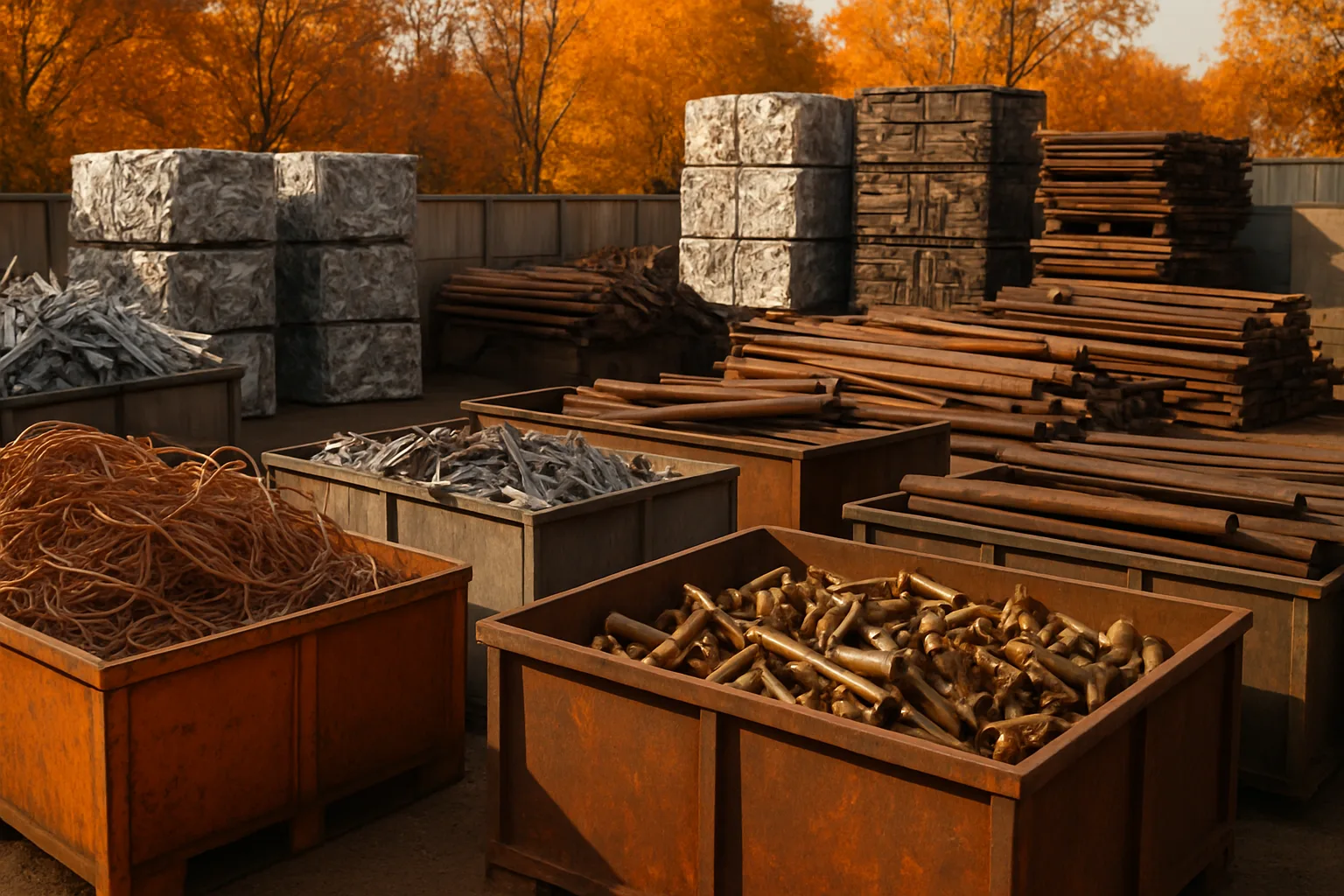
Brass candlesticks, bronze bushings, old plumbing fittings — most people have no idea what this stuff is worth. But if you're sitting on a pile of yellow and reddish-brown metal, you could be looking at some of the most valuable scrap in your yard or garage.
Brass and bronze are copper alloys. That matters because the copper scrap price today directly influences what you'll get paid for both metals. When copper moves, brass and bronze move with it. Understanding what you have — and how to sell it right — is the difference between leaving money on the table and getting paid what the market actually says your material is worth.
This guide breaks down what brass and bronze actually are, where to find them, what they're worth, and how to sell them for the best price possible. Whether you're clearing out a shop in Philadelphia or sorting a commercial load, this applies to you.
What Are Brass and Bronze — and Why Do They Matter for Scrap?
Brass is an alloy of copper and zinc. Bronze is an alloy of copper and tin — sometimes with small amounts of aluminum, nickel, or phosphorus mixed in. Both metals are denser and heavier than they look, which is part of why they pay well by the pound.
Here's why yards care about them: both alloys carry significant copper content. Brass typically runs 60–85% copper depending on the grade. Bronze often runs 80–90% copper. That's why scrap yards treat them differently from plain steel or aluminum — and why the price per pound is substantially higher.
The two most common brass grades you'll encounter in scrap:
- Yellow Brass — faucets, valves, door hardware, plumbing fittings. Most common. Usually the baseline price.
- Red Brass — higher copper content, often found in older pipe fittings and water meters. Pays more per pound than yellow brass.
- Brass Shells / Cartridges — spent ammunition casings. Some yards handle this, some don't. Check local rules.
- Bronze Bushings and Bearings — industrial, heavy equipment. Dense, heavy, and worth separating.
- Architectural Bronze — decorative fixtures, door frames, railings. Valuable if you can identify it correctly.
Misidentifying your material costs you money. A red brass fitting sold as yellow brass is a loss. That's why photos, weight documentation, and buyer competition all matter — more on that below.
Where to Actually Find Brass and Bronze Scrap
Brass and bronze aren't rare — they're hiding in places most people overlook. Once you know what to look for, you start seeing them everywhere.
Residential and Renovation Sources
- Old plumbing shutoffs, valves, and fittings (pre-1980s homes especially)
- Door knobs, hinges, knockers, and lock hardware
- Bathroom and kitchen faucets — the bodies are often brass even when chrome-plated
- Lamp bases and old light fixtures
- Musical instruments (trumpets, trombones, tubas are almost entirely brass)
Industrial and Commercial Sources
- Hydraulic fittings and valve bodies from machine shops
- Bronze bushings, sleeves, and bearings from manufacturing equipment
- Electrical connectors and terminal blocks
- Water meters (the bodies are almost always brass)
- Marine hardware — cleats, through-hulls, sea cocks
Demolition and Construction
Building teardowns in Philadelphia and across Pennsylvania are a consistent source. Older commercial buildings often have brass-heavy HVAC systems, fire suppression hardware, and plumbing infrastructure. If you're in the demo business or know someone who is, brass and bronze should be sorted separately from day one — not thrown into a mixed metals bin.
A simple magnet test helps: brass and bronze are non-ferrous and won't attract a magnet. If a fitting sticks, it's iron or steel. If it doesn't, you're likely looking at something worth sorting.
What Is Brass and Bronze Scrap Worth? Understanding the Copper Connection
There's no fixed number to give you here — and anyone who quotes you a static price without checking today's market is either guessing or lowballing you. Brass and bronze scrap prices are tied directly to the copper scrap price today, which moves daily based on futures markets, global demand, and supply dynamics.
What we can tell you is how the pricing structure works:
- Yellow brass typically trades at a discount to clean copper — often in the range of 65–80% of the copper price per pound, depending on grade and cleanliness.
- Red brass commands a higher percentage due to its elevated copper content.
- Bronze pricing varies significantly by alloy — phosphor bronze and bearing bronze pay more than architectural or decorative bronze.
- Dirty or mixed brass (with iron inserts, rubber gaskets, plastic fittings still attached) takes a significant price hit. Clean your material.
The single biggest variable is who's buying. A single yard giving you one number is one data point. Multiple buyers competing for your load is a market. That's not a small distinction — that's the entire difference between guessing your price and discovering it.
Platforms like the SMASH scrap metal auction marketplace connect sellers with vetted buyers across North America, letting competition do the work of price discovery. When buyers see documented, photographed, accurately described loads, they bid accordingly. More buyers means better price discovery. That's not marketing — that's how markets work.
How to Prepare Your Brass and Bronze for the Best Scrap Metal Price
Showing up with a mixed pile of mystery metal is the fastest way to get underpaid. Sorting and preparing your material correctly takes maybe an hour of extra work and can meaningfully change what you're paid per pound.
Step 1: Separate by type. Yellow brass, red brass, and bronze should be in separate containers or bags. Don't let them get mixed. If you're unsure, a basic metal identification guide or a quick photo comparison helps.
Step 2: Strip the junk. Remove iron nipples, plastic fittings, rubber seals, and anything non-brass from your fittings before you sell. Yards will either deduct for contamination or downgrade the entire lot. A few minutes with a wrench saves you real money.
Step 3: Weigh it yourself. You don't need a certified scale, but having a reasonable weight estimate before you walk into a yard means you're not flying blind on volume. For large commercial loads, accurate weights are table stakes.
Step 4: Document what you have. Photos. Weight estimate. Grade description. This sounds like extra work, but it's exactly what allows you to solicit multiple bids instead of accepting the first number someone throws at you. Platforms like SMASH are built around this — documented inventory gives buyers more confidence, and confident buyers bid higher.
If you're in the Philadelphia area and want local support with sorting or pickup logistics, Philadelphia scrap metal services are available to help you get your material picked up and sold efficiently.
Selling Brass and Bronze Scrap in Philadelphia and Pennsylvania
The Philadelphia metro and surrounding Pennsylvania region have a strong industrial history — which means a consistent supply of brass and bronze from older buildings, manufacturing facilities, and commercial renovations. If you're in the business of buying or collecting scrap in this area, brass and bronze should be high on your list of priority materials to sort and sell separately.
Local scrap yards vary significantly in what they'll pay. Some specialize in non-ferrous metals and will give you a sharper price. Others run everything through a general metals line and may not differentiate well between red and yellow brass. That's not a knock on local yards — it's just how pricing works when you're dealing with one buyer at a time.
If you want to move beyond the single-buyer model, sell your scrap metal at top prices on Sell Scrap Metal and let the market tell you what your material is actually worth. The old way — one phone call, one price, take it or leave it — doesn't have to be your only option.
For smaller loads, local drop-off is often the practical move. For larger commercial quantities of brass or bronze, it's worth taking the time to get a fair price for your scrap today through a competitive process. More buyers see your load, more bids come in, and you walk away with a number the market actually set — not one a single buyer chose.
If you want to go deeper on non-ferrous pricing and strategy, explore scrap metal selling guides for more detailed breakdowns by material type.
Brass and Bronze vs. Other Non-Ferrous Metals: How They Stack Up
If you're sorting a mixed non-ferrous load, it helps to know where brass and bronze sit in the value hierarchy relative to other common metals.
- Clean copper — highest value per pound of any common base metal scrap. Bare bright wire and clean copper pipe are the benchmarks everything else is priced against.
- Red brass / high-grade bronze — close behind clean copper due to high copper content. Worth separating carefully.
- Yellow brass — solid mid-tier non-ferrous. Better than aluminum, well below clean copper.
- Aluminum — lightweight, lower price per pound. High value in volume but not the same per-unit return as brass.
- Stainless steel — lower than non-ferrous but better than regular steel. Worth separating from carbon steel.
- Scrap iron and steel — the lowest per-pound return of common scrap metals. If you're thinking about how to sell scrap iron, volume is your friend — the math only works when you're moving significant tonnage.
The takeaway: if you have a mixed pile, the hour you spend sorting non-ferrous from ferrous, and then separating copper from brass from aluminum, will almost always pay off. You're not just getting a better price per pound — you're eliminating the yard's incentive to downgrade your entire load based on contamination.
When you're ready to move your material and want a process that puts competition to work for you, sell your scrap metal at top prices on Sell Scrap Metal and find out what your brass and bronze is actually worth in today's market.
Frequently Asked Questions
Q: How does the copper scrap price today affect what I get paid for brass?
Brass is a copper alloy, so its price moves in direct proportion to copper markets. When the copper scrap price today goes up, brass prices follow — and vice versa. Yellow brass typically trades at a percentage of the copper price per pound, with red brass and bearing bronze commanding higher percentages due to their elevated copper content.
Q: Where can I sell brass and bronze scrap in Philadelphia?
Local scrap yards throughout the Philadelphia metro area accept brass and bronze. However, pricing varies significantly between yards, and a single quote from one buyer may not reflect what the market will actually pay. Using a competitive platform gives you access to more buyers and better price discovery on larger loads.
Q: How do I tell brass apart from bronze?
Brass is typically a brighter yellow color; bronze tends toward a darker reddish-brown. Both are non-ferrous — neither will attract a magnet. For large loads, a quick acid test or spectrometer reading at a yard will confirm the alloy. When in doubt, keep them separated and let the buyer identify them — mixing them together usually means you get paid the lower of the two prices.
Q: Does dirty brass pay less than clean brass?
Yes — significantly. Iron inserts, rubber seals, plastic fittings, and chrome plating all contaminate a brass load and can cause a yard to downgrade the entire lot. Stripping fittings down to clean brass before you sell takes time but routinely improves the price per pound you receive.
Q: Is there a minimum amount of brass or bronze I need to sell?
Most local scrap yards will take any amount — even a few pounds of brass fittings. For competitive auction platforms, larger loads (50 lbs and up) tend to attract more buyer interest and better pricing. If you're accumulating material over time, holding it until you have a meaningful quantity often makes more sense than making multiple small trips.
Brass and bronze are worth finding, sorting, and selling right. If you're ready to stop guessing what your material is worth and start finding out, request a pickup at sell-scrapmetal.com and let competition do the work.
Stay sharp on market moves and non-ferrous pricing — follow SMASH on LinkedIn for regular scrap metal market insights and industry updates.
Disclaimer: Scrap metal prices fluctuate daily based on commodity markets. All price references in this article are general and illustrative. Check current rates before selling.