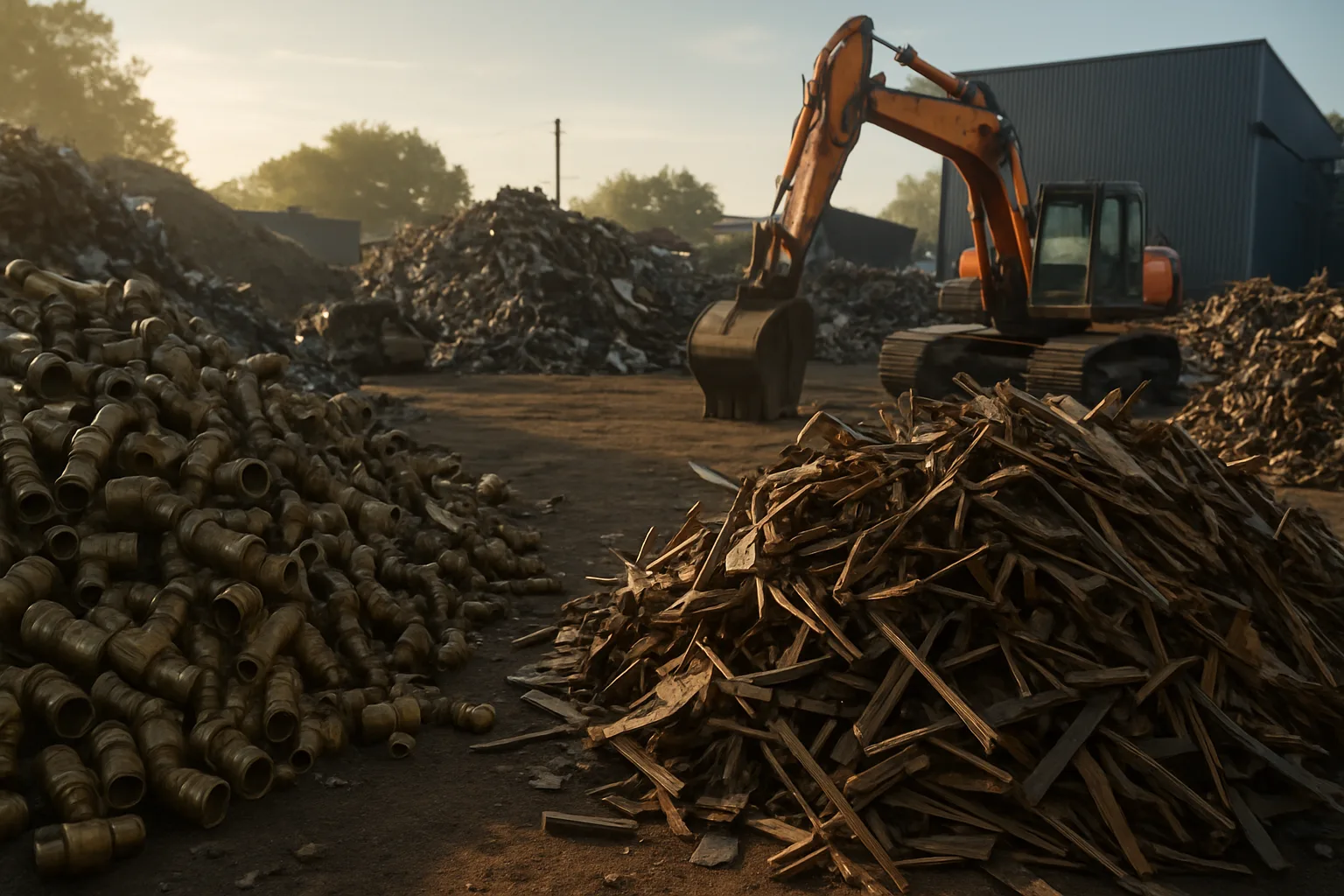
Brass vs. Bronze Scrap: What's the Difference and Which Pays More?
Most people toss brass and bronze into the same mental bucket. That's a mistake that costs you money. These two copper alloys look similar, feel similar, and often end up in the same pile at the yard — but they're priced differently, sourced differently, and buyers treat them differently. If you're watching scrap metal prices today and trying to get every dollar out of your load, knowing the difference matters.
This guide breaks down what brass and bronze actually are, where to find them, how to tell them apart in the field, and what they're realistically worth at the yard in 2026. If you're in Phoenix or anywhere in Arizona sitting on a mixed pile of yellow metal, keep reading.
What Is Brass Scrap and What Is Bronze Scrap?
Brass is a copper-zinc alloy. The zinc content typically runs between 10% and 40%, depending on the grade. It's softer, more machinable, and commonly used in plumbing, musical instruments, ammunition casings, decorative hardware, and electrical components. It has a bright yellow color — think doorknobs, faucet bodies, and bullet casings.
Bronze is a copper-tin alloy. It's older, harder, and historically used in bearings, bushings, marine hardware, bells, and statuary. Bronze tends to look more reddish-brown than brass and often appears darker or more aged. Some bronze alloys also contain aluminum, silicon, or manganese — which affects their scrap value and how buyers grade them.
The key takeaway: both metals have high copper content, which is why they command better prices than steel or aluminum scrap. But they're not interchangeable at the scale. Yards sort them separately for a reason.
Where to Find Brass and Bronze Scrap (Common Sources)
You don't have to work in demolition to come across these metals regularly. They show up in more places than most people realize. Here's where to look:
- Plumbing tear-outs: Old brass valves, fittings, ball valves, gate valves, and compression fittings are everywhere in residential and commercial renovation work. A full bag of brass plumbing fittings adds up fast.
- Electrical components: Brass terminals, connectors, and bus bars pull out of electrical panels and switchgear. These are high-grade and worth sorting separately.
- Ammunition casings: Spent .223, 9mm, and .308 brass shell casings are a legitimate scrap source. Shooting ranges, gun clubs, and law enforcement training facilities generate large volumes.
- Musical instruments: Damaged or obsolete brass instruments — trumpets, trombones, tubas — have real scrap value. Don't overlook these.
- Industrial bearings and bushings: Bronze bushings and sleeve bearings come out of manufacturing equipment, pumps, and conveyor systems. In the Phoenix metro area, light industrial and HVAC work generates these regularly.
- Marine and outdoor hardware: Propeller shafts, through-hull fittings, and marine bronze hardware — less common inland but worth knowing.
- Statues and architectural elements: Older buildings, churches, and public spaces sometimes have bronze fixtures, plaques, or ornamental elements that get replaced during renovation.
- Auto parts: Some older radiators have brass tanks. Vintage carburetors often contain brass components. Bronze valve guides and seat inserts come out of engine rebuilds.
If you're doing estate cleanouts, commercial HVAC service, or industrial equipment salvage in Arizona, you're already sitting on these materials. The question is whether you're sorting and selling them right.
How to Tell Brass from Bronze in the Field
Color is your first clue. Brass is brighter yellow — it looks almost golden when clean. Bronze runs redder and darker, closer to a brownish-gold. But color alone isn't reliable on oxidized or dirty metal.
Try these quick checks:
- Scratch test: Brass is softer. It scratches easier with a file or knife. Bronze is harder and more resistant.
- Sound: Strike them. Bronze rings with a more resonant, bell-like tone. Brass sounds flatter.
- Weight: Bronze is generally denser than brass. If two similar-sized pieces feel noticeably different in hand, that's a hint.
- Markings: Industrial parts are often stamped with alloy codes. Look for "C260," "C360," or "C464" for common brass alloys, and "C932," "C954," or "C863" for bronze.
- Magnet test: Neither brass nor bronze is magnetic. If your piece sticks to a magnet, it's not brass or bronze — it may be brass-plated steel, which is worth far less.
Misidentifying your metal at the yard costs you. Brass accidentally sorted as lower-grade mixed metal gets paid at mixed metal rates. Take the extra minute to separate your loads properly. Documented, sorted inventory gives buyers more confidence — and that shows up in your payout.
Scrap Metal Prices Today: What Brass and Bronze Are Worth
Brass and bronze prices fluctuate with copper markets, and 2026 copper markets have been anything but quiet. Rather than quoting specific per-pound figures that can shift daily, here's how to think about relative value:
- Clean yellow brass (plumbing valves, fittings, clean casings) typically lands at the top of the brass price range. Clean, sorted, and free of insulation or steel attachments gets you the best rate.
- Red brass (higher copper content, closer to 85% copper) prices closer to copper than standard yellow brass. Sort it separately.
- Brass borings and turnings (machine shop waste) pay less because of the surface area, contamination risk, and processing required by the yard.
- Bronze #1 (clean bushings, solid bronze, no attachments) commands a solid price per pound — typically above aluminum scrap value per pound but below clean copper.
- Mixed brass/bronze (unsorted, dirty, mixed alloys) gets discounted significantly. Yards have to sort and process it, and that cost comes off your price.
The spread between sorted and unsorted can be substantial. A load of clean yellow brass versus a box of mixed "yellow metal" can mean a real price difference per pound. That's why sorting pays. Check current rates before you haul — prices change. Always verify current rates directly with your buyer before hauling a load.
Disclaimer: Scrap metal prices fluctuate daily based on commodity markets. The information above reflects general pricing relationships, not fixed rates. Always check current prices before selling.
Platforms like SMASH bring competitive pressure to this process. Instead of calling one buyer and taking whatever they offer, find the best price for your scrap on SMASH and let vetted buyers compete for your load. More buyers means better price discovery — that's not a slogan, it's how markets work.
Selling Brass and Bronze in Phoenix: What Local Sellers Should Know
Phoenix is a working city. Construction, HVAC, commercial renovation, light manufacturing — brass and bronze scrap flow through here constantly. The challenge isn't finding the metal. It's getting the right price for it when you're ready to sell.
Local yards in the Phoenix metro buy brass and bronze, but prices and policies vary. Some yards require a minimum weight before they'll pay top grade rates. Some discount wet or dirty loads. Others don't separate red brass from yellow brass and lump it all together at the lower rate. Knowing this before you show up matters.
If you're looking for Phoenix scrap metal services that take the guesswork out of selling, the smarter move is to go in with sorted, documented inventory and a price benchmark already in hand. Don't walk into a single-buyer situation cold.
SMASH changes that dynamic. The auction format puts multiple vetted buyers in front of your load — whether you're selling a few hundred pounds of brass fittings or a full pallet of bronze bushings from an equipment teardown. No guessing. No single phone call. Competition does the work. sell your scrap metal at top prices on Sell Scrap Metal and see what your load is actually worth in today's market.
For sellers in Arizona doing volume work — contractors, HVAC shops, machine shops, industrial dismantlers — this matters even more. A consistent price improvement per pound across regular loads adds up to real money over a year.
How to Maximize Your Payout on Brass and Bronze Loads
You've sourced the metal. You've sorted it. Now make sure you're selling it right. Here's how to protect your margins:
- Sort by grade before you haul. Clean yellow brass in one bin. Red brass separate. Bronze separate. Mixed or dirty metal in its own pile. Never mix copper-bearing alloys with steel attachments — remove bolts, nuts, and fittings before weighing.
- Document what you have. Photos of your load, weight estimates, and a basic description give buyers the information they need to bid confidently. Better documentation supports better offers.
- Know your weight. Don't guess. A bathroom scale works for small loads. For larger hauls, get a preliminary weight at a certified scale before you sell.
- Check scrap metal prices today before you commit. Copper prices drive brass and bronze rates. A quick check of commodity markets before you sell gives you a baseline to evaluate any offer against.
- Get multiple offers. One buyer, one price — that's the old way. Use competitive platforms to let buyers fight for your load.
- Avoid peak contamination. Grease, oil, paint, and attached steel all reduce your grade. Clean metal pays more. A few minutes with a wire brush or shop rag is worth it.
For ongoing sellers, the inventory tool in SMASH helps you track loads, attach photos, and keep records — useful for your own accounting and for building buyer confidence in your material. Explore scrap metal selling guides for more practical tips on getting the most from every load you haul.
When you're ready to sell, don't leave money on the table by calling one number and taking whatever they say. Get a fair price for your scrap today — your brass and bronze are worth more than a single buyer's offer on a slow Tuesday.
Frequently Asked Questions
Q: What are scrap metal prices today for brass and bronze in Phoenix?
Brass and bronze prices shift daily with copper commodity markets. Clean yellow brass and red brass typically command higher rates than mixed or dirty loads. Contact local yards or use a competitive platform like SMASH to get current offers. Always verify rates the day you plan to sell — don't rely on prices from last week.
Q: How do I find a place to sell scrap metal near me in Phoenix?
Phoenix has multiple scrap yards that accept non-ferrous metals including brass and bronze. Your best move is to check rates at more than one buyer before committing. Platforms like SMASH connect you with vetted buyers across Arizona so you're not stuck with one yard's rate. Sort your load first — you'll get better offers on clean, separated material.
Q: Is bronze worth more than brass as scrap metal?
It depends on the grade and copper content. High-grade bronze (like clean #1 bushings) often prices competitively with red brass. Standard yellow brass and commercial bronze can land close to each other. The bigger factor is usually cleanliness and sorting — a clean load of either material beats a mixed, dirty load every time.
Q: Can I sell brass ammunition casings as scrap metal in Arizona?
Yes. Spent brass casings are a legitimate scrap commodity. Shooting ranges and gun clubs in the Phoenix area generate significant volumes. Yards typically want them sorted by caliber or at minimum separated from steel-cased ammunition. Check local regulations and yard policies, as some yards have specific requirements for accepting ammunition-related materials.
Q: How does the SMASH auction platform work for selling brass and bronze scrap?
SMASH lets you list your load — with photos, weights, and material descriptions — and have vetted buyers compete for it in an auction format. Instead of calling one yard and accepting one price, you get competitive offers from multiple buyers. There are no subscription fees. SMASH only wins when you do.
If you're sitting on brass valves, bronze bushings, or a mixed pile of yellow metal from a job site in Phoenix or anywhere in Arizona, don't just haul it to the first yard that answers the phone. Sort it, document it, and let the market tell you what it's worth. Visit sell-scrapmetal.com to request a pickup and get competitive pricing on your load — no guesswork, no single-buyer take-it-or-leave-it.
Stay sharp on market moves and industry news — follow SMASH on LinkedIn for scrap metal market insights and updates from the recycling industry.