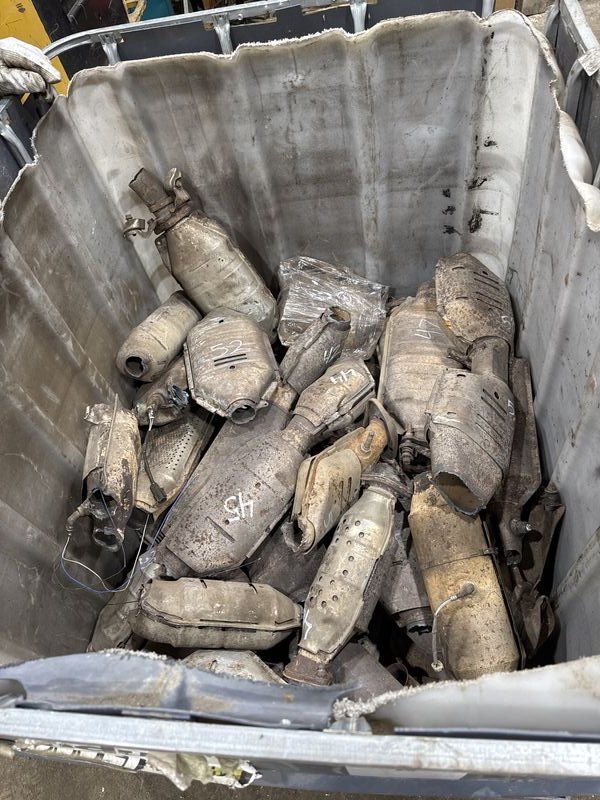
Why Your Catalytic Converter Is Worth More Than You Think — And Why the Price Keeps Changing
Most people pulling a catalytic converter off a scrapped vehicle have no idea what it's actually worth. Some get lowballed at the counter. Others sell to the first buyer they find and leave real money on the table. In New York's active scrap metal market, that gap between what you're offered and what the market will actually pay can be significant — especially for cats.
If you're trying to find the best scrap metal prices New York has to offer on catalytic converters, you need to understand why prices swing so dramatically — and how the recycling process actually works. This isn't trivia. It directly affects your bottom line.
What Happens to a Catalytic Converter After You Sell It
A catalytic converter isn't scrapped for its steel shell. The shell is worth very little. What buyers are actually after is the ceramic or metallic substrate inside — a honeycomb structure coated with platinum group metals, commonly called PGMs. These are platinum, palladium, and rhodium.
Here's the recycling chain in simple terms:
- Collection: Yards and individual sellers bring in used cats. Buyers sort them by type — foreign, domestic, aftermarket, diesel, and so on.
- Decanning: The outer shell is cut away to expose the substrate inside.
- Assay and sampling: The substrate gets crushed, sampled, and sent to a processor or refinery. The assay determines exact PGM content.
- Smelting and refining: The processor extracts the platinum, palladium, and rhodium through a high-temperature smelting process.
- Settlement: The refiner settles with the seller based on the recovered PGM values, minus processing fees.
That last step is where the real money is — and it's also why the price you see quoted at a local yard is always an estimate. No one knows the exact PGM content of your specific converter until it's been assayed. Buyers price in that uncertainty. That spread between what they pay you and what they eventually recover is how they make money.
Why Catalytic Converter Prices Vary So Dramatically
If you've ever called two different buyers in New York and gotten wildly different quotes on the same cat, you've experienced this firsthand. Here's what's actually driving that variance:
PGM Commodity Prices
Platinum, palladium, and rhodium trade on global commodity markets. Their prices move daily — sometimes sharply. Rhodium in particular has historically been one of the most volatile metals on earth, capable of swinging hundreds of dollars in a short period. When PGM prices drop, cat prices drop. When they spike, a cat that seemed ordinary can suddenly be worth serious money. Always check current market conditions before you sell.
Converter Type and Vehicle Make
Not all converters are built the same. A large diesel particulate filter from a commercial truck will have a very different PGM loading than a small aftermarket cat off a compact sedan. Foreign vehicles — particularly Japanese and European makes — tend to run higher palladium loadings. Domestic vehicles often run more platinum. Aftermarket cats (the kind installed as a replacement, not the original equipment) carry significantly lower PGM content and pay correspondingly less.
Condition of the Substrate
A cracked, damaged, or "rattled out" substrate means lost PGMs. Buyers will downgrade or reject converters where the internal honeycomb has broken down. Overheated cats that have "cooked" the substrate also lose recoverable PGM content. Condition matters — and experienced buyers will assess it before quoting.
Who's Buying and How They're Pricing
This is where most sellers leave money behind. A single buyer quoting you over the phone has no competitive pressure. They set a price, take it or leave it. When you bring real competition into the equation — multiple vetted buyers bidding on your material — price discovery actually works. Platforms like sell your scrap metal on the SMASH marketplace exist specifically to create that competition for sellers moving material at volume.
The Old Way Versus the Smart Way to Sell Cats in New York
The traditional approach: pull the converters, call one buyer, take their price, move on. That might work when PGM prices are low and volumes are small. But when you're moving a load of mixed cats — foreign, domestic, diesel, aftermarket — you're leaving serious money on the table without multiple buyers in the room.
Here's what the smarter approach looks like for yards and dealers in New York:
- Document everything. Photo documentation and serial tracking on individual units gives buyers confidence. A buyer who can see exactly what they're bidding on will bid higher than one guessing at a mixed pile.
- Separate your material. Don't let aftermarket cats drag down the value of your OEM units. Sort before you sell.
- Use a B2B scrap metal marketplace to create competition. One phone call to one buyer is not a market. Competition is a market.
- Time your sales when possible. If PGM prices are trending down, sitting on material has a cost. But selling into a spike without competitive bids still leaves money behind.
New York scrap operators — from the Bronx to Brooklyn, from Long Island to upstate — are increasingly moving toward auction-style selling precisely because it removes the guesswork. You find out what the market will actually pay, not what one buyer decides to offer.
What This Means for Aluminum Scrap Value Today — and Other Non-Ferrous Metals
Catalytic converters get a lot of attention because of their PGM content, but they're part of a broader picture. If you're selling scrap in New York, you're likely moving a mix: scrap copper, scrap aluminum, steel, and maybe cores or non-ferrous material alongside your cats.
Understanding aluminum scrap value today follows a similar logic — LME aluminum pricing sets the floor, but the actual price you get depends on the grade of aluminum, contamination levels, and how many buyers are competing for your load. Painted aluminum, clean cast, extrusions, and mixed clips all pay differently. A buyer quoting you "aluminum price" without specifying grade is either guessing or leaving themselves room to discount when they see your material.
Scrap copper follows similar rules. Bare bright, #1 copper, #2 copper, and insulated wire each have distinct grades and price points. Don't sell a load of mixed material without knowing what's in it — and don't let a single buyer be the only one who prices it out.
For New York operations looking to get a fair price for your scrap today, the common thread across all these materials is the same: documentation, proper sorting, and competition among buyers. SMASH is built around exactly those principles.
How SMASH Works for Catalytic Converter Sellers
SMASH is a vetted buyer marketplace. You list your material — cats, non-ferrous loads, cores, whatever you're moving — and qualified buyers compete for it. No subscription fees. No guessing. SMASH only wins when you sell.
For catalytic converters specifically, the platform supports photo documentation and serial tracking on individual units. That matters because a buyer who sees exactly what they're bidding on is a buyer who bids with confidence. Confidence translates to higher bids. It's straightforward.
If you're a yard operator or dealer in New York running regular volumes of cats, using a B2B scrap metal marketplace like SMASH removes the single-buyer dynamic that's been costing you money. More buyers means better price discovery. It's not a complicated concept — it's just not how most of the industry has operated historically.
You can also explore New York scrap metal services available in your area to find pickup options, local buyer connections, and more resources tailored to the New York market.
Whether you're in Manhattan sourcing material from auto shops, or running a full-scale recycling operation in upstate New York, the fundamentals are the same. Know your material. Document it properly. Get it in front of multiple buyers. Don't settle for a single quote on a load that could attract real competition.
If you want to dig deeper into how different metals are valued and sold, explore scrap metal selling guides covering copper, aluminum, steel, and more.
Disclaimer: Scrap metal prices — including PGM-based pricing for catalytic converters — fluctuate based on global commodity markets. Always check current rates before selling. Nothing in this article constitutes a price guarantee or specific price quote.
Frequently Asked Questions
Q: What determines the price of a catalytic converter at a scrap yard in New York?
The price is primarily driven by the converter's platinum, palladium, and rhodium content — and the current market price for those metals. Vehicle make, model, converter type (OEM vs. aftermarket), and substrate condition all affect the value. New York buyers will also factor in their processing costs and margins.
Q: Why did my catalytic converter get a lower price than I expected?
Several things can reduce the offer: a damaged or rattled-out substrate, an aftermarket unit with lower PGM content, a drop in PGM commodity prices, or simply selling to a single buyer with no competitive pressure. Getting multiple quotes — or using a marketplace like SMASH — helps ensure you're seeing actual market value.
Q: Are there legal requirements for selling catalytic converters in New York?
Yes. New York State has regulations governing the sale of catalytic converters to scrap dealers, including requirements around seller identification, documentation of ownership, and record-keeping. Always verify current state and local regulations before selling, and work with licensed buyers who follow proper compliance procedures.
Q: What is the best scrap metal prices New York sellers can realistically expect for mixed non-ferrous loads?
Prices vary significantly based on material grade, current commodity markets, and buyer competition. The best prices typically come from proper sorting, clean material, and selling through a process where multiple buyers compete. There's no universal rate — documented, sorted loads consistently attract stronger offers than unsorted, unverified material.
Q: How do I find a reliable catalytic converter buyer near me in New York?
Start with vetted buyer networks rather than random cold calls. Platforms that pre-qualify buyers and run a competitive process give you more assurance that you're dealing with legitimate, experienced buyers. SMASH connects sellers with vetted buyers across North America, including the New York market.
Ready to stop guessing what your material is worth? Sell your scrap metal at top prices on Sell Scrap Metal — request a pickup at sell-scrapmetal.com and find out what real market competition looks like for your loads.
Stay current on scrap metal pricing and market trends by following SMASH on LinkedIn — practical industry updates, not corporate noise.