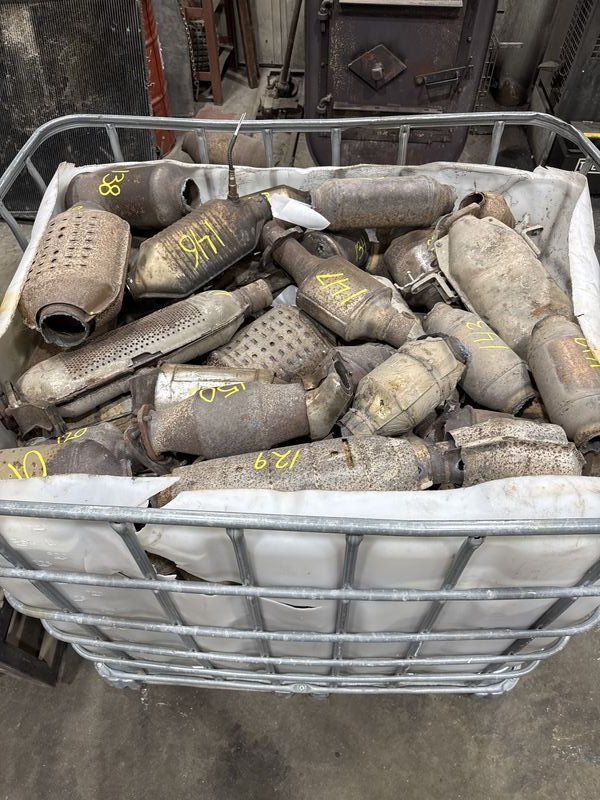
Why Your Catalytic Converter Might Be Worth More Than You Think
Most people have no idea what's hiding inside a catalytic converter. That small, oblong canister bolted to your exhaust system contains platinum, palladium, and rhodium — three of the most valuable metals on the planet. In 2026, those metals still command serious money, which is why best scrap metal prices Colorado Springs searches so often lead back to catalytic converters. If you've got one sitting in your yard or pulling one off a junk vehicle, understanding how the recycling process works puts real money in your pocket.
Prices vary wildly — and that gap between what one buyer offers versus another can be hundreds of dollars on a single unit. That's not a coincidence. It's a system that rewards sellers who know how it works.
How Catalytic Converter Recycling Actually Works
The process starts the moment a converter comes off a vehicle. Whether you're pulling it from a scrapped Honda, a fleet of decommissioned trucks, or a pile of loose cores at your yard, the first step is identification. Buyers and processors look at the make, model, engine size, and year of the vehicle the converter came from. That information tells them what's likely inside the ceramic or metallic substrate — specifically, how much platinum group metal (PGM) content to expect.
Here's how the chain works from converter to cash:
- Collection and identification — Converters are sorted by type: foil (metallic substrate), ceramic, bead, and diesel. Each processes differently and carries different PGM concentrations.
- Decanning — The outer shell is cut away to expose the substrate inside. The substrate is the part that actually holds the precious metals.
- Sampling and assaying — The substrate is crushed, milled into a fine powder, and sampled. Labs test the sample to determine the exact platinum, palladium, and rhodium content per unit.
- Smelting and refining — The powder goes through a high-temperature smelting process. Precious metals are separated and refined to sellable purity.
- Settlement — The refiner settles with the processor based on the assay results and current spot prices for platinum, palladium, and rhodium.
That settlement value — minus processing fees, logistics, and margins — eventually trickles back to determine what a street-level buyer in Colorado Springs or anywhere else will offer you for a converter. Understanding this chain explains everything about why prices differ.
Why Catalytic Converter Prices Vary So Much
Walk into three different scrap yards in Colorado and you might get three completely different quotes on the same converter. That's not random. Several real factors drive price variation, and most sellers don't know them.
Precious metal spot prices fluctuate constantly. Rhodium alone has seen price swings of thousands of dollars per troy ounce within a single calendar year. Palladium and platinum follow commodity markets tied to automotive demand, mining output, and global industrial use. A converter worth $180 in January might settle closer to $230 in October if palladium has run up. Check current spot prices before you sell — never assume last month's quote still applies.
Other factors that affect what you'll actually get paid:
- Converter type and vehicle origin — A converter from a newer Toyota Prius or a late-model GM truck typically carries more PGM content than an older domestic unit. Foreign (foreign original equipment manufacturer) converters are generally valued higher than domestic aftermarket replacements.
- Condition — Damaged substrates, melted internals, or converters that have been "cleaned out" (a fraud issue the industry tracks closely) all reduce or eliminate value.
- Buyer margin — A local yard quoting you $80 might be reselling to a regional processor for $140. That spread is their business. Knowing this helps you find better buyers.
- Volume — A single converter versus a pallet of 50 gets priced very differently. Processors pay better per unit on volume because their cost per assay drops.
- Serial number and VIN documentation — In 2026, regulatory pressure on catalytic converter theft has tightened requirements in many states, including Colorado. Documented converters with verifiable VINs move through the supply chain more easily and command better pricing from compliant buyers.
Regulation in 2026: What Colorado Sellers Need to Know
Catalytic converter theft remains a serious enforcement focus heading into Q4 2026. Colorado has strengthened its scrap metal dealer reporting requirements over the past few years, and buyers operating in the state are required to collect seller identification, vehicle information, and documentation for converter transactions. This isn't just bureaucracy — it's a shift that benefits legitimate sellers.
If you're a recycling yard, auto dismantler, or fleet operator in Colorado Springs with converters to sell, proper documentation actually speeds up your transactions and gives you access to better buyer networks. Compliant processors aren't going to low-ball documented inventory the same way a cash-under-the-table buyer might. Platforms like the SMASH scrap metal auction marketplace build documentation into the process — serial tracking, photo documentation, and VIN lookup are built-in features, not afterthoughts.
Being able to show clean chain of custody is increasingly a price advantage, not just a legal requirement. Buyers competing for well-documented loads bid harder because they face less downstream risk.
How to Get the Best Scrap Metal Prices in Colorado Springs for Your Converters
Selling converters the old way — one call, one buyer, no leverage — leaves money on the table. That's true whether you're an individual with three units off a junked car or a yard moving hundreds of cores a month. Competition is the mechanism that reveals true market value. Without it, you're just accepting whatever the single buyer decides to offer.
Here's how to approach the process to maximize your return:
- Identify your units before you call anyone. Pull the vehicle year, make, model, and engine size for each converter. Use a serial number lookup if available. Buyers price faster and better when you give them real information.
- Document everything. Photos of each unit, the VIN of the source vehicle, your business credentials. This opens more buyer relationships and satisfies Colorado's reporting requirements.
- Get multiple quotes. Don't stop at one. Pricing across buyers in the same market can differ significantly — especially for specialty converters from hybrids or diesel equipment.
- Use a platform that creates competition. When multiple vetted buyers see your inventory at once, you stop guessing and start getting real market discovery. That's the core of how sell your scrap metal at top prices on Sell Scrap Metal helps sellers move beyond the single-buyer trap.
- Time it when you can. If you have volume and flexibility, watching PGM spot prices for a short-term movement can make a real difference. Not everyone has that flexibility, but if you do, use it.
Working with a B2B scrap metal marketplace changes the dynamic entirely. Instead of calling one yard and hoping they're in a good mood, your inventory is visible to multiple qualified buyers simultaneously. That's not hype — that's basic supply-side economics applied to scrap.
Why SMASH Is Built for This Kind of Transaction
Catalytic converters are exactly the kind of commodity that benefits from a structured auction environment. PGM values fluctuate. Buyer appetite shifts week to week. And documentation requirements make it harder to move units through informal channels. SMASH was built for this reality.
The platform handles inventory documentation, serial tracking, and photo records as part of the standard listing process — not as extra steps you have to figure out on your own. Buyers on SMASH are vetted, which means you're not fielding calls from unknowns who may or may not close. And because the format is competitive, price discovery happens naturally instead of being dictated by whoever picks up the phone first.
There's no subscription fee. SMASH only makes money when you do. For yards in Colorado Springs or anywhere across North America moving converter inventory regularly, that alignment matters. You can also explore scrap metal selling guides to get deeper on pricing strategy, documentation best practices, and how auctions work for different metal categories.
If you're ready to stop guessing and start getting real bids on your catalytic converter inventory, get a fair price for your scrap today and see what competitive pricing actually looks like. Sell your scrap metal at top prices — request a pickup or listing at sell-scrapmetal.com and let buyers compete for your load.
Disclaimer: Catalytic converter prices fluctuate based on precious metal spot markets, converter type, and buyer demand. Always verify current rates before selling.
Frequently Asked Questions
Q: What determines the value of a catalytic converter for scrap?
The primary factor is PGM content — how much platinum, palladium, and rhodium is inside the substrate. That depends on the vehicle make, model, year, and engine type. Current spot prices for those metals also shift the value up or down, sometimes significantly within the same month.
Q: Where can I get the best scrap metal prices in Colorado Springs for catalytic converters?
Getting the best price means getting multiple bids, not just one quote from one yard. Using a competitive platform like SMASH or reaching out to multiple buyers in Colorado with documented inventory gives you real price discovery. A single call to one buyer is rarely your best option.
Q: Do I need paperwork to sell a catalytic converter in Colorado?
Yes. Colorado requires scrap metal dealers to collect seller ID and vehicle documentation for catalytic converter transactions. Bring your ID and have the VIN of the source vehicle available. Converters with clean documentation move faster and attract better buyers.
Q: Why does the same converter get quoted at different prices by different buyers?
Buyers have different processing costs, different access to refiners, and different margins they're willing to accept. A local yard quoting low may be reselling to a regional processor at a higher rate. This spread is exactly why competitive platforms exist — they close that gap by letting buyers compete directly for your inventory.
Q: Is it worth selling catalytic converters in bulk versus individually?
Volume almost always gets better per-unit pricing. Processors save on assay and logistics costs when handling pallets versus single units, and they pass some of that savings back to the seller. If you're a yard or dismantler in Colorado Springs building up converter inventory, batching your loads before selling typically improves your return.
Stay current on scrap metal market trends and pricing insights by following SMASH on LinkedIn: linkedin.com/company/scrap-metal-auction-sales-hub.