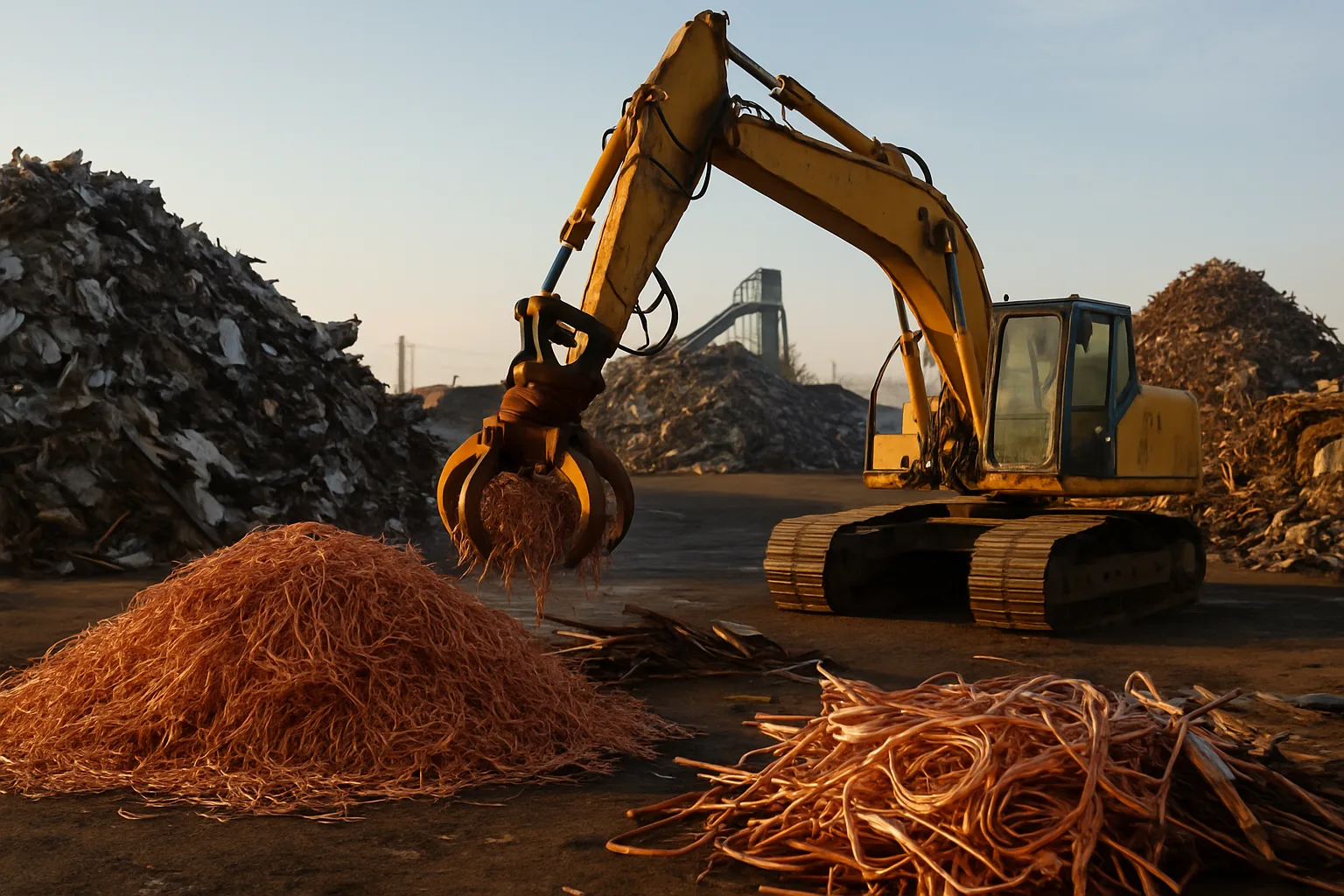
Copper Scrap Prices in 2026: A Grading Guide for Sellers in Gary and Beyond
Most sellers leave money on the table before they ever reach the scale. They show up with a mixed load of copper, take whatever grade the yard assigns, and walk away thinking they got a fair deal. But copper grading isn't a mystery — and once you understand it, you can sort smarter, document better, and price-discover more effectively. If you're doing scrap metal recycling in Gary or anywhere across Indiana, this guide is for you.
Copper is one of the highest-value non-ferrous metals in the yard. But "copper" is not one price. It's a spectrum — from bright bare wire at the top to heavily insulated junk wire at the bottom. The spread between grades can be significant. Knowing where your material falls, and how to push it up a grade, is how serious sellers maximize every load.
Why Copper Grading Matters More Than Ever for Scrap Metal Recycling in Gary
The copper market in 2026 has been volatile. Demand from EV manufacturing, grid infrastructure buildout, and domestic reshoring of electronics production has kept copper prices elevated relative to historical norms — but day-to-day fluctuations are real. When the market moves, the delta between a #1 copper load and a #2 copper load isn't just a percentage point. It can add up to a meaningful dollar difference per pound across a full load.
Gary's industrial geography makes this especially relevant. With proximity to Chicago's manufacturing base and a legacy of heavy industrial activity across Northwest Indiana, yards in this corridor see everything — clean demolition copper, HVAC coils, old motor windings, transformer wire, and mixed insulated scrap. The material variety is high. That means grading decisions happen constantly, and sellers who understand the system get better outcomes.
If you're looking to sell your scrap metal at top prices on Sell Scrap Metal, understanding grade classifications before you walk into a yard is step one.
The Copper Grading Breakdown: #1, #2, #3, and Beyond
Here's how copper is typically graded in U.S. scrap markets. These are industry-standard classifications, though individual yards may use slightly different language.
#1 Copper (Bare Bright or #1 Heavy)
This is the top tier. Bare bright copper is uncoated, unalloyed, unsoldered, and clean — typically 16 gauge or heavier wire with no insulation, no paint, and no attached fittings. #1 heavy includes clean copper pipe, bus bars, and tubing with no fittings or excessive corrosion. This grade commands the highest price per pound at virtually every yard in Indiana.
- No insulation, coatings, or solder
- 16 gauge or heavier wire
- Clean pipe and tubing with no fittings
- No heavy oxidation or corrosion
#2 Copper
#2 copper is still clean and unalloyed, but it has some disqualifying characteristics that knock it below bare bright — light coatings, minor soldering, small attached fittings, or thinner gauge wire. Oxidized or slightly corroded pipe often falls here. The price is meaningfully lower than #1, which is why separating your material matters.
- Light oxidation or minor coatings
- Small soldered fittings acceptable
- Thinner gauge wire (under 16 gauge)
- Some yards include dirty plumbing here
#3 Copper / Roofing Copper
This category includes heavily oxidized, painted, or tarred copper — often roofing sheets or flashing. It's still copper, but the contamination is significant enough to require more processing. Expect a steeper discount from market price. Clean it if you can; even removing surface tar or paint can sometimes move material up a grade.
Insulated Copper Wire (ICW) Grades
Insulated wire is its own pricing universe. Yards calculate recoverable copper based on the percentage of copper inside the insulation — this is called the "recovery percentage" or "copper content." A thick THHN building wire might recover 75-80% copper. Thin Christmas light wire might recover 10-15%. The price you receive per pound reflects that math.
- THHN / Romex: High recovery, better price
- Communication wire / Cat5: Medium recovery
- Christmas lights / extension cords: Low recovery, often called "junk wire"
- Automotive harnesses: Medium, but labor-intensive to strip
If you're unsure where your wire falls, stripping it yourself — if time and labor allow — almost always results in a better price. Bare wire beats insulated wire every time.
How to Sort and Prepare Your Copper Load Before the Yard
Preparation is where sellers win or lose before the transaction even begins. Showing up with sorted, documented material gives yards more confidence and gives you more leverage in the conversation. This is especially true if you're bringing a significant load to sell.
Here's a practical pre-sort checklist:
- Separate by grade. Keep bare bright in its own bin. Don't mix it with #2 or insulated wire — mixed loads get graded down to the lowest common denominator.
- Remove attachments. Pull brass fittings, steel connectors, and aluminum end caps. Each of those is a different metal and a different price.
- Photo-document your load. This matters more than most sellers realize. Platforms like North America's B2B scrap metal auction platform SMASH use photo documentation and inventory tools to give buyers a clear picture of what they're bidding on — which increases buyer confidence and improves price discovery.
- Weigh it yourself if possible. Even an approximate weight helps you benchmark what you receive at the yard scale.
- Note any special characteristics. VIN lookup, serial tracking, and origin documentation matter for certain loads, especially electronics or automotive copper.
For smaller sellers in Gary who just want to drop off a load and move on, sorting at minimum into two or three categories — bare, insulated, and mixed — takes 20 minutes and can make a real difference in your payout.
Selling Copper Scrap Online vs. Walking into a Yard: What's the Difference?
The traditional approach is straightforward: load your truck, find a scrap yard near me open on a Saturday or Sunday, pull onto the scale, take the posted price, and leave. For occasional sellers with small quantities, that still works. But it has a fundamental flaw — you're getting one price from one buyer with no competition.
The case for selling scrap metal online is simple: competition can help reveal the market. When multiple vetted buyers see your documented load and bid on it, you get a clearer picture of what it's actually worth. That's the difference between a posted price on a whiteboard and a real market price.
SMASH operates as an auction-based platform, meaning loads go to vetted buyers who compete — rather than one yard with one posted price and no transparency. There are no subscription fees. The model is straightforward: you only pay when a sale happens. For yards and sellers with volume, that's a meaningful structural difference.
If you're in Northwest Indiana and you're moving regular copper loads — HVAC cores, demolition wire, or non-ferrous from a job site — it's worth comparing what you get from a single yard quote versus what competition surfaces. Get a fair price for your scrap today and see what the market actually offers.
Best Practices for Getting the Best Scrap Metal Prices in Indiana
Whether you're a first-timer or a regular seller, these habits consistently produce better results. The scrap market rewards preparation and information.
Track Prices Before You Sell
Copper prices move daily based on COMEX futures, global demand, and local yard margins. Don't sell a large load during a dip without checking where prices have been over the past few weeks. Even a rough sense of the trend — rising or falling — helps you time a load when it makes sense. Explore scrap metal selling guides for more on reading market conditions.
Know Your Yard's Schedule
Finding a scrap yard near me open Sunday is a common search for sellers who work weekdays. Not all yards in the Gary and Northwest Indiana area maintain weekend hours. Call ahead. Some yards that are open Saturday cut off inbound loads by noon. A wasted trip costs you time and fuel — confirm hours before you load the truck.
Build a Relationship with Your Buyer
Regular sellers who bring consistent, clean, documented loads often develop standing arrangements with buyers. That relationship can mean priority scheduling, faster ticketing, and sometimes better pricing on edge-grade material. Yards want reliable supply. If you're that supplier, you have leverage.
Don't Mix Non-Ferrous with Ferrous
Steel and iron contamination in a copper load can result in the whole load being downgraded or weighed at a blended rate. Keep your scrap copper, scrap aluminum, and scrap steel separate. They're valued differently and sold through different markets. Mixing them costs you money every time.
Disclaimer: Copper scrap prices fluctuate based on commodity markets, local yard conditions, and material grade. Always verify current rates with your yard or platform before selling. Prices referenced in this guide are directional only.
Frequently Asked Questions
Q: What is the difference between bare bright copper and #1 copper?
Bare bright is the top subgrade of #1 copper — it must be uncoated, unalloyed, and 16 gauge or heavier with no insulation or solder. #1 heavy copper includes clean pipe, bus bars, and tubing, which may not meet the bare bright standard but are still clean, unalloyed material. Most yards pay the same or very close rates for both within the #1 category.
Q: Where can I find a scrap yard near me open Sunday in Gary, Indiana?
Sunday hours vary by yard, and not all facilities in the Gary and Northwest Indiana area operate seven days a week. Your best move is to call ahead or check the yard's website before making the trip. Some yards maintain Saturday hours but close Sunday entirely — confirming in advance saves you a wasted run.
Q: How do copper scrap prices in Gary compare to the broader Indiana market?
Gary's proximity to Chicago means it sits within a competitive corridor for non-ferrous pricing. Local yard margins and posted prices can vary, but the underlying commodity price — driven by COMEX copper futures — is the same benchmark across Indiana. The difference between yards is typically margin and grading standards, not the underlying market price.
Q: Is it worth stripping insulation off copper wire before selling?
In most cases, yes — if the wire is high-recovery (thick gauge like THHN or Romex), stripping it yourself moves the material into a higher price category. For low-recovery wire like thin communication cable or Christmas lights, the labor may not be worth it. Evaluate the gauge and insulation thickness before deciding.
Q: Can I sell scrap copper online instead of going to a yard in Gary?
Yes. Platforms like SMASH allow sellers to document and list loads for vetted buyers to bid on competitively — rather than taking one posted price from one local yard. This approach works best for larger loads where the price difference between a single buyer and a competitive bid is meaningful. For small occasional loads, a local yard may still be the most practical option.
If you're sitting on a load of sorted copper and want to know what the market will actually pay, don't guess. Sell your scrap metal at top prices — request a pickup or get started at sell-scrapmetal.com. Clean loads, documented inventory, and competitive buyers — that's how you stop leaving money on the scale.
Stay sharp on market movements and industry news by following SMASH on LinkedIn — regular updates on copper trends, grading shifts, and what's moving in the non-ferrous market across North America.