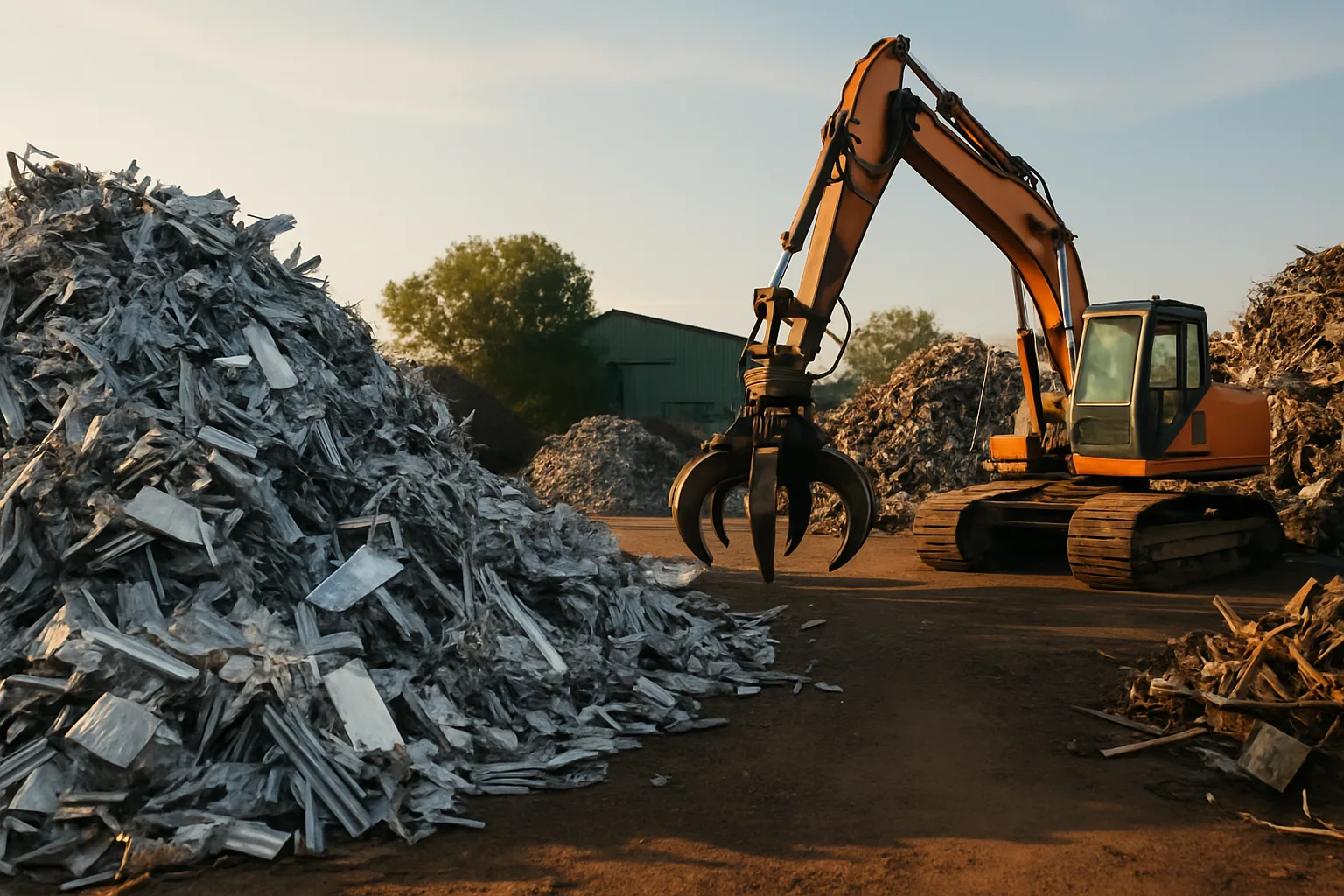
Why Your Aluminum Grade Determines Everything — Including What You Get Paid
Most sellers leave money on the table before they ever make a phone call. They show up at a yard — or call a single buyer — with a mixed load and take whatever price they're offered. No documentation. No competitive bids. No idea what grade they're actually holding. If that sounds familiar, this is for you.
Aluminum scrap is not one commodity. It's a dozen. The difference between a clean 6061 extrusion and a painted aluminum auto cast can be dramatic — and if you're lumping them together, you're subsidizing your buyer's margin. Understanding aluminum grades is the single most practical thing you can do to sell your scrap metal at top prices on Sell Scrap Metal — every time, not just when you get lucky.
Aluminum Scrap Grades Explained: What Buyers Actually Care About
Buyers don't price aluminum by weight alone. They price it by what it costs them to process it. Contamination, alloy uncertainty, coatings, and mixed grades all add cost on their end — and they pass that cost back to you in the form of a lower offer. The cleaner and more identifiable your material, the more it's worth.
Here's a practical breakdown of the most common aluminum grades you'll encounter:
- 1100 / Pure Aluminum Sheet (Zorba-free): High-purity, minimal alloy. Thin gauge sheet, foil, and food-grade containers. Top-tier pricing when clean and dry.
- 6061 / 6063 Extrusions (Taint/Tabor): The backbone of aluminum recycling. Window frames, door tracks, structural profiles. Strong market demand. Buyers want it free of steel hardware and broken glass.
- Cast Aluminum (Twitch): Engine blocks, transmission housings, auto parts. Heavy and valuable, but alloy content varies. Price dips if mixed with iron castings.
- Aluminum Wheels (Clean Rims): Chrome-plated rims trade lower than clean alloy wheels. Separate them. A stack of clean alloy wheels is a premium load.
- Insulated Aluminum Wire: Priced at a significant discount versus bare wire due to stripping costs. If volume justifies it, strip it yourself or use a granulator.
- Painted / Coated Aluminum: Siding, gutters, auto stampings. Expect a discount. Minimize mixed paint types if possible.
- MLC (Mixed Low Copper Aluminum): Catch-all for mixed auto sheet, stampings, and trim. Benchmark grade for many yards. Separation above this grade means real money.
Knowing which grade you're holding isn't academic — it directly affects what you should be asking for. When you walk in with a sorted, documented load, you're not asking a buyer to trust you. You're showing them proof.
The Old Way Is Costing You Real Money
Here's how most aluminum scrap moves in 2026: a yard operator or independent collector calls their regular buyer, gets a number, loads the truck, and drops the material. One buyer. One offer. No competition. The buyer sets the price, and the seller accepts it because there's no reference point to push back with.
That's not a market. That's a favor.
Competitive pressure is what creates real price discovery. When multiple vetted buyers bid on the same documented load, the price reflects actual demand — not just what one contact feels like paying today. That's the model SMASH was built on. Sellers who list documented, graded loads get bids from buyers across the country. The load sells at the price the market actually supports, not the price one buyer decides to offer at 8 a.m. on a Tuesday.
If you're moving volume — even moderate volume — in Riverside or anywhere else in California, the math on this compounds fast. A few extra dollars per hundred pounds, repeated across loads, adds up to a significant annual difference. Get competitive bids for your scrap metal and stop leaving that gap on the table.
Scrap Metal Inventory Management: The Secret Weapon Most Sellers Ignore
Documentation is not paperwork. It's leverage.
When a buyer receives a packing list, photos, weights by grade, and a clear description of condition, they can price with confidence. Confident buyers bid higher. Uncertain buyers pad their offers with a risk discount — which comes out of your pocket. This is where scrap metal inventory management pays off directly, not in theory.
Here's what proper documentation looks like before a load goes to auction or bid:
- Sort by grade — separate extrusions from cast, clean sheet from painted. Even rough sorting beats mixed loads.
- Weigh by category — don't estimate. Scale tickets carry weight with buyers, literally and figuratively.
- Photograph the load — multiple angles, close-ups on grade quality, evidence of cleanliness or contamination disclosure.
- Document serial numbers or VINs where applicable — especially for catalytic converters and automotive parts. It protects you legally and reassures buyers.
- Prepare a packing list or BOL — weight, grade, unit count, condition notes. Platforms like SMASH support this workflow natively with inventory tools, photo uploads, and auto-invoicing built in.
Operators in Riverside running mixed recycling operations sometimes deal with incoming loads that haven't been sorted at all. The yards that build documentation habits — even basic ones — consistently get better bids than those that don't. It's not a secret. Buyers talk about it. Explore scrap metal selling guides for more practical documentation strategies that move the needle.
What Copper Scrap Prices in Riverside Tell You About Market Timing
If you're tracking copper scrap prices Riverside buyers are offering, you already understand that local prices move with LME copper — but not perfectly. There's a spread between global commodity prices and what a yard in Riverside or the Inland Empire pays on a given day. That spread reflects local supply, regional demand, transport costs, and how many competing buyers exist in that market.
The same logic applies to aluminum. Scrap metal prices Riverside yards post are influenced by regional processors, distance to smelters, and how much competition exists for that particular grade at that particular moment. A market with one dominant buyer is a market where the seller loses. Always.
This is why national platforms matter for volume sellers. A load of clean 6063 extrusion sitting in a Riverside yard isn't just worth what one local buyer offers. It's worth what the best buyer — anywhere buyers can efficiently access that load — is willing to pay. Technology changes the geography of scrap trading. Use it.
Disclaimer: Scrap metal prices fluctuate daily based on commodity markets, regional demand, and material grade. Always check current rates before listing or selling any load.
How to Get Top Dollar for Your Aluminum: A Practical Game Plan
Let's make this concrete. Whether you're clearing out a commercial renovation in Riverside, California, running a demolition operation, or managing a recycling yard intake, the same principles apply.
Step 1: Grade before you weigh. Resist the urge to mix grades for convenience. Even a basic separation — extrusions in one bin, cast in another, sheet in a third — changes your position at the selling table.
Step 2: Remove obvious contamination. Steel bolts, rubber gaskets, plastic inserts, and glass all hurt your price. A magnet and ten minutes of hand-sorting can shift a load from MLC pricing to extrusion pricing on a 6063 load.
Step 3: Document the load before it moves. Photos, weights, grade descriptions. This takes fifteen minutes. It can recover dollars per pound on a clean, well-documented load versus a mystery pile.
Step 4: Get more than one bid. This is non-negotiable if you're moving meaningful volume. One offer is not a market. Two offers are a starting point. Three or more is price discovery. Platforms designed around auction mechanics — like SMASH — exist specifically to create this dynamic without the seller having to cold-call ten buyers.
Step 5: Know your timing. Aluminum demand tracks construction cycles, automotive production, and manufacturing output. In a strong construction market, extrusion grades move fast. In a slow market, cast aluminum may be harder to place. Understanding the cycle helps you decide when to move a load and when to hold.
If you're ready to stop guessing and start getting bids that reflect real market demand, get a fair price for your scrap today — with documentation, competitive buyers, and a process that works for sellers, not just buyers.
Frequently Asked Questions
Q: What are the highest-paying aluminum scrap grades in Riverside right now?
Clean 6061/6063 extrusions and uncoated aluminum wheels consistently command premium prices relative to other aluminum grades. Bare, uninsulated aluminum wire and clean sheet also price well when free of contamination. Check current scrap metal prices Riverside yards are posting before delivering any load, as daily rates fluctuate with commodity markets.
Q: How do copper scrap prices in Riverside compare to aluminum prices?
Copper consistently prices significantly higher per pound than aluminum, reflecting its greater industrial value and conductivity applications. However, aluminum is far more abundant in demolition, automotive, and manufacturing scrap streams, so volume sellers often move more revenue through aluminum simply due to tonnage. Both markets benefit from competitive bidding — a single buyer rarely offers the best available rate.
Q: Does sorting my aluminum scrap before selling actually make a difference?
Yes — substantially. Sorted, graded loads allow buyers to bid with confidence, removing the risk discount they build in when material is mixed or unidentified. Even basic separation (extrusions vs. cast vs. sheet) can meaningfully improve what you're offered per pound, especially on cleaner grades like 6063 extrusions.
Q: What documentation should I prepare before selling a large aluminum load?
At minimum: scale tickets by grade, photos of the sorted load, a packing list with grade descriptions and weights, and any serial numbers or VINs for automotive components. Platforms like SMASH include built-in inventory tools, photo documentation, and auto-invoicing to streamline this process and make loads more attractive to buyers.
Q: Can I sell aluminum scrap online instead of going to a local yard in Riverside, California?
Yes. For volume loads, online auction and bidding platforms let you reach vetted buyers across North America rather than being limited to local yard rates. This is particularly valuable in markets like Riverside, California where a single dominant buyer may not reflect the best available price nationally. Platforms like SMASH connect sellers with competitive buyers without subscription fees.
If you've been sorting your aluminum carefully and still taking whatever the first buyer offers — you're halfway there. The other half is competition. List your load where multiple buyers can see it, document it properly, and let the market do what markets do. When you're ready to move your next load at a price that actually reflects its grade and quality, sell your scrap metal at top prices on Sell Scrap Metal — request a pickup at sell-scrapmetal.com and find out what your material is really worth.
Follow SMASH on LinkedIn for scrap metal market insights, industry updates, and practical advice for buyers and sellers across North America: follow SMASH on LinkedIn.