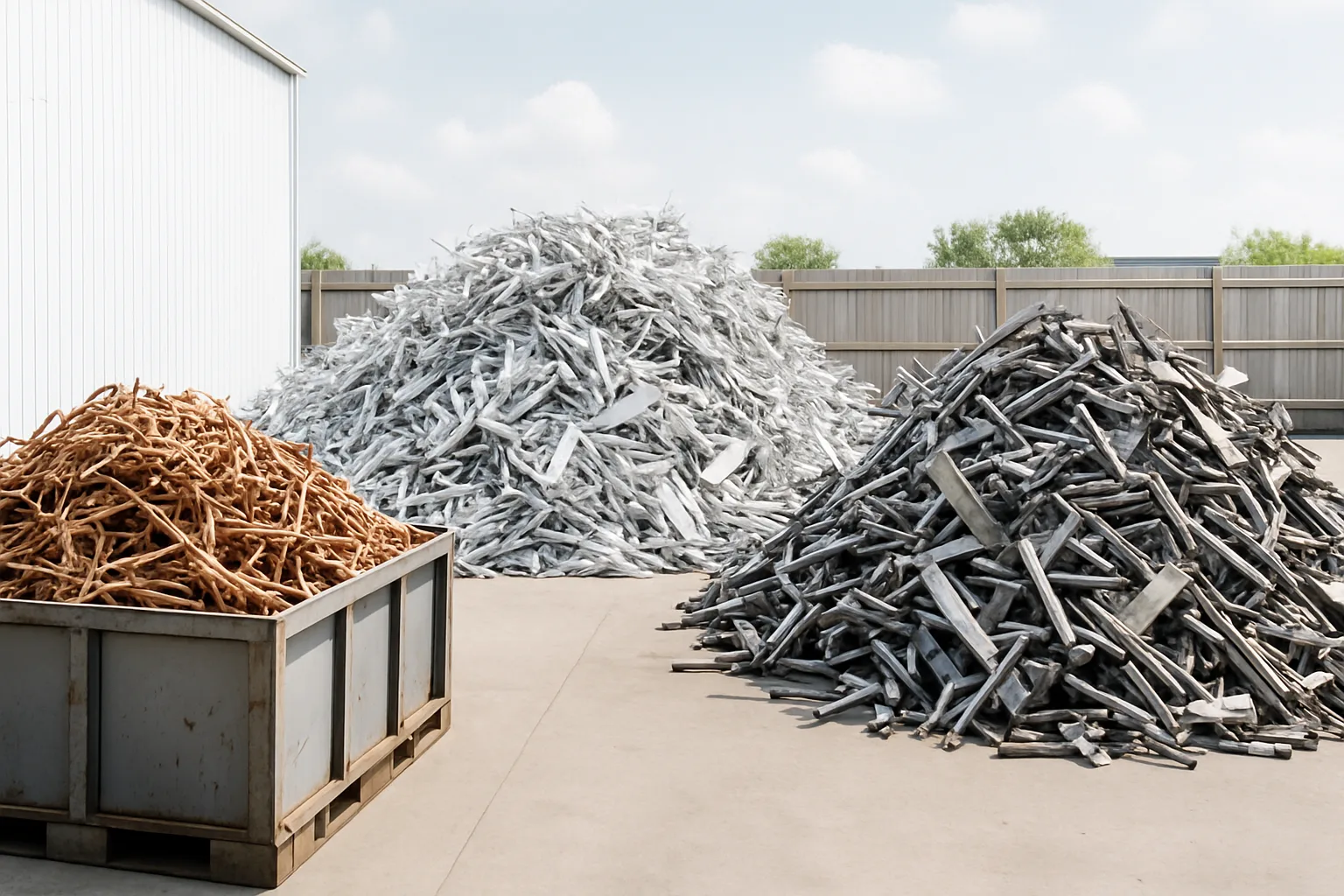
What Actually Happens When You Drop Off Scrap Metal (And Why It Affects Your Payout)
Most people hand over their load and trust the number they get back. That's a mistake. Understanding how recycling yards weigh and grade your scrap metal is one of the fastest ways to stop leaving money on the table — whether you're selling a truckload of prepared steel or a handful of scrap copper pipe. The steel scrap price today may look strong on paper, but your actual payout depends entirely on how your material gets classified once it hits the scale.
This isn't about distrusting your yard. It's about knowing the process well enough to prep your loads right, ask the right questions, and recognize when competition — not just one buyer's opinion — is your best tool for better pricing. Platforms like North America's B2B scrap metal auction platform exist precisely because a single yard's grade isn't always the final word.
The Scale: More Than Just a Number
Every scrap transaction starts at the scale house. Your load gets weighed gross (truck plus material), then tared (truck empty), and the difference is your net weight. Sounds straightforward. It usually is — but details matter.
Moisture is one of the biggest hidden variables. Steel that sat outside in the rain, aluminum cans with residual liquid, or wet cardboard packed in with your non-ferrous material all add weight that isn't metal. Some yards will dock for moisture; others buy as-is and adjust their grade accordingly. Either way, you're absorbing that cost. Drying your material or staging it under cover before delivery is a simple move that protects your yield.
- Gross weight: Full truck on the scale — recorded before unloading.
- Tare weight: Empty truck after unloading — subtracted from gross.
- Net weight: What you actually get paid on.
- Moisture/contamination deductions: Applied at the yard's discretion, sometimes without a clear breakdown.
Ask for a scale ticket every single time. This is your receipt. It shows gross, tare, and net — and it's the foundation of any dispute if the numbers don't feel right. In a busy yard like many you'll find across Grand Rapids, Michigan, scale tickets process fast. Don't leave without yours.
How Grading Works — And Why the Same Material Can Get Different Grades
Grading is where the real money gets made or lost. A yard's grader looks at your material and assigns it a category that determines the price per pound or per ton. That category is based on industry standards — like those set by ISRI (Institute of Scrap Recycling Industries) — but applied with human judgment. That judgment can vary between buyers, between yards, and even between shifts at the same yard.
Here's what graders are actually evaluating:
- Metal type and alloy: Copper #1 vs. copper #2 is a significant price difference. Aluminum grades range from clean cast to mixed painted. Not all aluminum is the same.
- Contamination: Insulation on wire, paint on aluminum, oil in steel — anything that needs to be burned off or processed out reduces grade.
- Size and preparation: Many yards pay a premium for cut and prepared steel. Unseparated bundles or long lengths may be graded down.
- Attachments and mixing: Steel bolted to aluminum, copper fittings still connected to pipe — mixed loads get graded to the lowest common denominator or require sorting on your end first.
This is why two yards in the same city — even in a competitive market like Grand Rapids — can quote you different prices for the same load. Their grade is different. Their downstream buyer relationship is different. And their margin assumption is different. The scrap metal prices today you see posted at any yard's window reflect their target, not necessarily your ceiling.
Steel Grades Explained: What the Yard Is Really Buying
Steel is the highest-volume scrap material in North America by tonnage, and it has one of the most structured grading systems. If you're tracking steel scrap price today to time a sale, understanding what grade your steel falls into tells you which price column actually applies to your load.
Common steel grades you'll encounter at the scale:
- #1 Heavy Melt (HMS 1): Thick-gauge steel, generally 1/4 inch or heavier. Clean, uncoated, and free of attachments. Highest-value steel grade for most sellers.
- #2 Heavy Melt (HMS 2): Thinner gauge, may include light structural pieces or lightly corroded material. Priced below HMS 1.
- Shredder Feed: Auto bodies, appliances, light gauge mixed steel. Goes through a shredder before further processing — lower per-ton value but accepted in large volumes.
- Plate and Structural (P&S): Beams, plates, and heavy structural steel. Valued highly when clean and well-prepared.
- Busheling: Clean factory punchings and clippings. Typically a mill-grade product — not common for general sellers but worth knowing if you're in manufacturing.
If you're in Michigan and running regular loads of industrial steel, getting your material properly sorted before it hits the scale isn't just good practice — it's the difference between shredder pricing and HMS pricing. That gap can be significant per ton.
Non-Ferrous Grading: Where Copper, Aluminum, and Cats Get Complicated
Non-ferrous metals — copper, aluminum, brass, stainless, catalytic converters — are worth far more per pound than steel, but they also require more precise grading. A grader's call on a load of wire or a pile of cats can shift your payout substantially.
Copper: Graded primarily on purity and the presence of coatings or attachments. Bare bright copper (clean, uncoated #1 wire) commands the highest price. #2 copper includes soldered or slightly coated material. Insulated wire is graded by estimated copper content — the insulation is waste, and that's priced in.
Aluminum: Dozens of sub-grades exist. Clean extruded aluminum (doors, window frames) vs. painted aluminum vs. cast aluminum all price differently. Wheels are graded separately from sheet. Mixed aluminum loads typically price at the lowest common grade.
Catalytic converters: This is one of the most variable — and frequently contested — categories in scrap. Cats are graded based on PGM (platinum group metal) content, which varies by make, model, and whether the substrate is intact. Many yards use database pricing tools (some tied to VIN lookup) to confirm what a cat should be worth. Serial tracking and photo documentation have become standard practice in states across the country, including Michigan, due to theft-prevention regulations.
If you're selling cats and wondering whether your yard's quote reflects actual PGM content or a conservative floor price, this is exactly where a B2B scrap metal marketplace like SMASH creates real value. Multiple vetted buyers bidding on the same documented load gives you price discovery that a single yard's quote simply cannot provide. You can get a fair price for your scrap today when buyers compete rather than quote in isolation.
How to Prepare Your Load to Get the Best Grade
Knowing how grading works is only half the equation. The other half is showing up with a load that earns the best possible grade — not one that gives the grader an excuse to dock you. In Grand Rapids and across Michigan, yards handle high volumes daily. A clean, well-sorted load stands out and earns respect at the scale house.
Here's what preparation actually looks like in practice:
- Sort by metal type before you arrive. Copper in one section, aluminum in another, steel separated from everything else. Mixed loads get mixed grades.
- Strip insulation from wire where practical. Bare copper is worth significantly more than insulated wire, and the labor often pays off.
- Remove non-metal attachments. Plastic fittings, rubber seals, wooden pallets — anything that isn't metal reduces your grade or triggers a deduction.
- Cut oversized steel to yard specifications. Many yards have maximum length requirements. Confirm before you load.
- Keep your load dry. Wet material loses yield to moisture deductions. Stage your loads under cover when possible.
- Document high-value items. Cats, cores, and non-ferrous loads benefit from photo documentation and serial tracking. This protects you and builds buyer confidence.
If you're a business generating regular scrap loads, this preparation process is also the foundation for listing inventory on a platform like SMASH. Documented, graded, photo-documented loads attract more competitive bids and close faster. You can sell your scrap metal at top prices on Sell Scrap Metal when you arrive prepared and informed.
Why One Buyer's Grade Isn't the Final Answer
Here's the part most sellers don't think about until they've been doing this for years: a yard's grade is an opinion backed by experience and their own downstream costs — but it's still one opinion. The steel scrap price today and every non-ferrous price posted on a yard's board reflects what that yard needs to make margin. It's not a neutral market rate.
That's not a criticism of yards. That's just how markets work. The problem is when sellers treat one quote as the truth instead of a starting point. Competitive markets produce better prices. More buyers bidding on the same documented load reveals what the material is actually worth to multiple parties.
This is the core logic behind SMASH — SMASH scrap metal auction format connects sellers with vetted buyers across North America, creates competition around documented loads, and removes the guesswork from pricing. Whether you're in Grand Rapids selling a recurring load of industrial non-ferrous, or a recycling yard looking to move material more efficiently, competition and transparency are the tools that close the gap between what you're getting and what your scrap is worth. Explore scrap metal selling guides to go deeper on timing, grading, and maximizing your return.
Ready to stop guessing? Sell your scrap metal at top prices — request a pickup at sell-scrapmetal.com and find out what your material is actually worth in today's market.
Stay current on scrap metal market trends and industry updates — follow SMASH on LinkedIn for insights built for recyclers and buyers across North America.
Frequently Asked Questions
Q: How do recycling yards determine the steel scrap price today?
Yards base their daily steel prices on a combination of mill demand, regional market conditions, and their own processing costs. Prices shift frequently — sometimes daily — based on what downstream buyers and mills are willing to pay. Always check current posted prices before you haul, and consider getting multiple quotes for large loads.
Q: Why did I get a lower grade than I expected for my copper or aluminum?
Grading reflects contamination, coatings, mixed alloys, and attachments — not just the metal type. A load of aluminum that looks clean may include painted sections, different alloys, or plastic attachments that drop the grade. Sorting thoroughly before delivery is the most reliable way to protect your grade.
Q: Do scrap yards in Grand Rapids, Michigan follow standard grading guidelines?
Most reputable yards reference ISRI grading guidelines as a baseline, but they apply their own judgment based on local market conditions and downstream relationships. Grades can vary between yards in the same city. Getting multiple quotes — or listing with a competitive platform — helps you understand where your material actually falls in the market.
Q: What is the best way to sell scrap metal for cash in Grand Rapids?
Sort your material, strip what you can, and arrive with a clean, documented load. For smaller loads, local yards in the Grand Rapids area offer walk-in service. For larger or recurring loads, platforms like SMASH create buyer competition that often produces stronger price discovery than a single yard quote.
Q: Does moisture really affect my scrap metal payout?
Yes — significantly for high-volume loads. Wet steel or aluminum adds dead weight that the yard will either dock for directly or absorb in a lower grade offer. Keeping material dry and staged under cover before delivery is a simple step that protects your net payout at the scale.
Disclaimer: Scrap metal prices fluctuate daily based on market conditions. Always verify current rates before delivering your load. The price information in this article is for educational purposes only and does not represent current market prices.