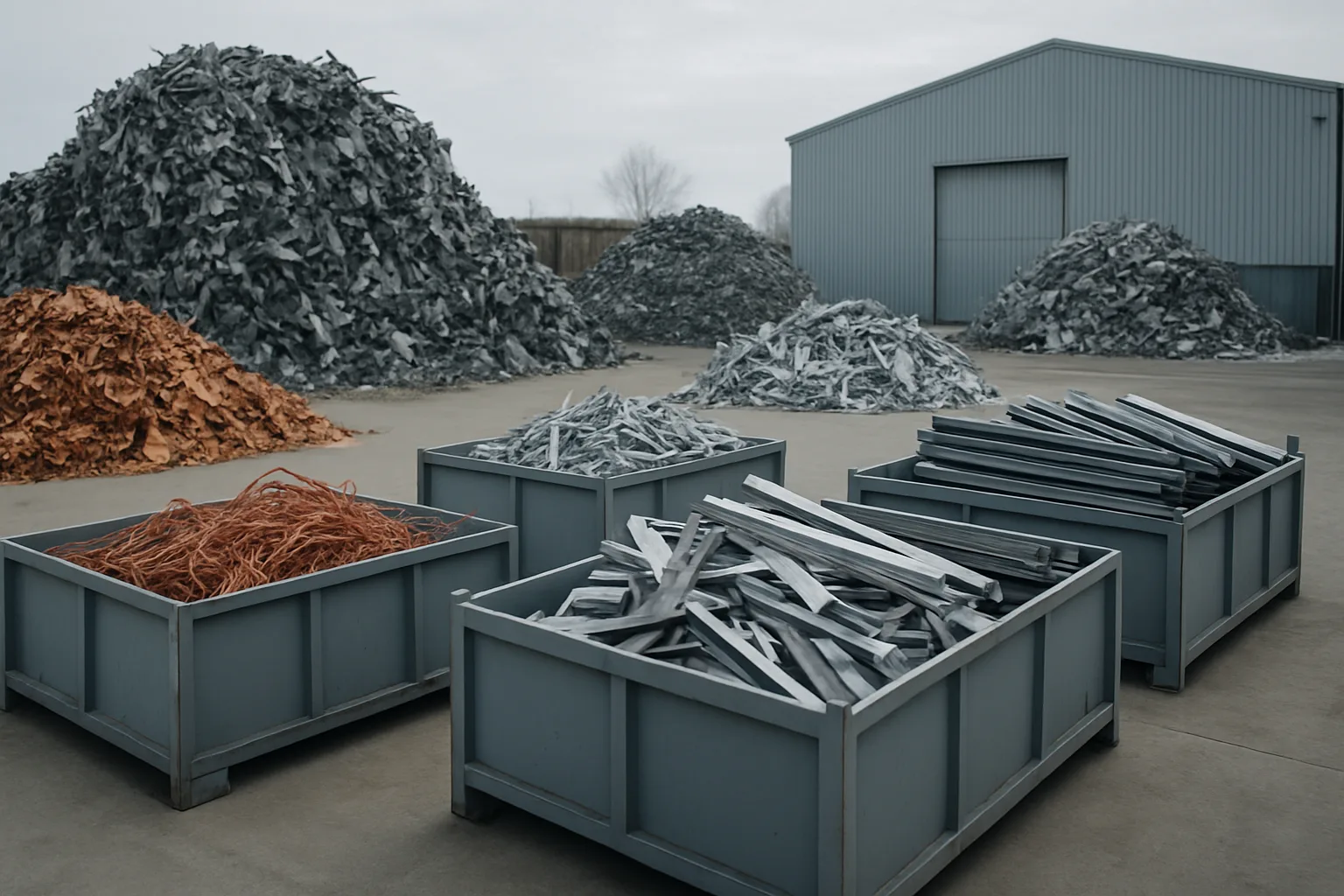
Most people selling scrap have no idea what metal they're actually holding. That's money left on the table. Copper pays three to four times more than steel. Aluminum beats iron by a wide margin. Getting your metals sorted before you hit the yard — or before you list a load — directly affects your payout. If you want to track the steel scrap price today and actually understand how it applies to what you're selling, you first need to know what you've got.
This guide gives you the practical tools to identify your metals fast — no lab, no spectrometer, no guessing. A magnet, your eyes, and a basic understanding of what to look for will get you 90% of the way there.
---Why Metal ID Matters Before You Sell Scrap Metal
Walk into a scrap yard downtown without sorting your metals and you'll get a mixed-load price. That's the lowest price they offer — because they now have to do the sorting work you skipped. Yards don't pay you for the best metal in the pile. They pay you for the average. Mixed loads mean your copper brings down the price of your aluminum, and your aluminum drags down what should be a clean steel price.
In a competitive market — whether you're an individual seller or a business running regular loads out of Denver — proper identification and sorting is the single easiest way to improve your return without changing anything else about your operation. Platforms like SMASH make it even more rewarding, because documented, sorted inventory attracts more vetted buyers and generates real price competition on loads. More on that below.
- Sorted copper commands a premium over mixed non-ferrous loads
- Clean aluminum (no paint, no steel inserts) grades higher
- Segregated steel helps buyers bid accurately on ferrous loads
- Catalytic converters are worth separating entirely — they carry their own market
The time you invest in ID and sorting pays back at the scale. If you want to sell your scrap metal at top prices on Sell Scrap Metal, this step is non-negotiable.
---The Magnet Test: Your First Line of Metal Identification
A $3 refrigerator magnet is your most powerful sorting tool. The rule is simple: if it sticks, it's ferrous. If it doesn't, you're likely dealing with something more valuable. Ferrous metals contain iron — think steel and cast iron. Non-ferrous metals include copper, aluminum, brass, bronze, stainless steel, and lead. Non-ferrous consistently pays more per pound than ferrous at virtually every yard in Colorado and across North America.
Here's how to run a basic magnet sort:
- Test each piece individually — compound items (motors, alternators, AC units) may contain both ferrous and non-ferrous materials
- Strong pull = steel or cast iron — ferrous, lower value per pound
- Weak pull or no pull = likely non-ferrous — could be aluminum, copper, brass, or stainless
- No pull at all on shiny silver metal = stainless steel or aluminum — both are non-ferrous but price very differently
- No pull on reddish-orange metal = almost certainly copper — one of the most valuable common scrap metals
One critical note: stainless steel is non-ferrous and won't stick to a magnet, but it's still steel. Don't let the name fool you. Stainless pays significantly more than regular carbon steel, but less than copper or brass. Knowing the difference puts real money in your pocket when you're selling loads in Denver or anywhere else in Colorado.
---Visual Identification Guide: What Each Metal Actually Looks Like
The magnet narrows it down. Your eyes close the gap. Here's a breakdown of the most common scrap metals and what to look for visually.
Copper
Fresh copper is a distinctive reddish-orange color — unmistakable when clean. As it oxidizes, it turns darker brown, then green (called patina). You'll find copper in electrical wiring, plumbing pipe, motor windings, and heat exchangers. Scrap copper is one of the highest-value metals you can bring to any yard. Even oxidized copper commands a solid price. Check for any steel cores or attachments — those need to come off to grade up.
Aluminum
Aluminum is lightweight, silver-gray, and won't attract a magnet. It's everywhere — window frames, car wheels, engine blocks, siding, gutters, and cans. Weight is your quick test: if a piece of silver-colored metal feels surprisingly light for its size, it's almost certainly aluminum. Yards grade aluminum by cleanliness and alloy — cast aluminum (engine blocks, wheels) pays differently than extruded aluminum (frames, tubing). Separating these grades before you sell is worth the effort.
Steel and Cast Iron
Steel is magnetic, heavy, and usually gray or black. It's the most common scrap metal by volume — I-beams, car frames, appliances, rebar, pipes. Cast iron is heavier and more brittle than steel, often found in old pipes, engine blocks, and cookware. The steel scrap price today fluctuates with mill demand and global trade conditions, but steel is always a volume game. The more you move, the more it adds up. Track scrap metal prices today before bringing a load in — even small swings per ton matter when you're moving weight.
Brass
Brass is a yellow-gold color — not as bright as gold, more of a warm yellow. It's heavier than aluminum and won't stick to a magnet. Common sources include plumbing fittings, valves, shell casings, and certain electrical components. Brass pays well. If you're sorting a mixed non-ferrous load and you see yellow-gold pieces, pull those out and keep them separate.
Lead
Lead is extremely dense and soft — it scratches easily with a fingernail. It's dull gray and very heavy for its size. You'll find it in old pipes, wheel weights, and battery plates. Battery lead (from car batteries) has its own category at most yards. Handle lead with appropriate care and check your local Denver disposal regulations — some yards have specific requirements for battery drop-off.
Stainless Steel
Shiny, non-magnetic, and silver-toned. Stainless is common in kitchen appliances, restaurant equipment, medical equipment, and automotive exhaust components. The non-magnetic test plus the polished silver look narrows it down quickly. If you're pulling stainless from a commercial kitchen teardown or an industrial site, keep it separate — it pays significantly better than regular carbon steel.
---Identifying Catalytic Converters: A Special Category
If you're pulling cats off vehicles or buying them from repair shops, treat them as their own category entirely. Catalytic converters contain platinum group metals — platinum, palladium, and rhodium — and their value has nothing to do with the steel scrap price today. Cats trade on their own market, driven by PGM spot prices and the specific vehicle application.
Never throw cats into a mixed steel load. That's an expensive mistake. A catalytic converter that belongs in the premium category will net you a fraction of its value if it ends up priced as low-grade ferrous scrap. Use serial numbers and VIN-based lookup tools to identify what you have before you sell.
Platforms like North America's B2B scrap metal auction platform — SMASH — give buyers the documentation and data they need to bid confidently on cats and specialty materials. Photo documentation, serial tracking, and a vetted buyer network mean your catalytic converters get the attention they deserve, not a lowball offer from a single buyer on a cold call.
---How to Use This Knowledge to Get Better Scrap Metal Prices
Identifying your metals is step one. Using that knowledge to sell smart is step two. Whether you're an individual in Denver clearing out a garage or a Colorado recycling operation running weekly loads, the same principle applies: sorted and documented material gets better offers.
Here's the process that works:
- Run the magnet test first — separate ferrous from non-ferrous
- Do a visual sort — break non-ferrous into copper, aluminum, brass, stainless
- Pull out specialty items — cats, motors, and electronics go in separate categories
- Document what you have — weight estimates, photos, and grade descriptions
- Check scrap metal prices today before you commit
- Put your sorted load in front of multiple buyers — not just one phone call to one yard
That last step is where SMASH changes the game. The old way — one buyer, one call, one offer — leaves you with no way to know if you got a fair price. SMASH puts your documented loads in front of vetted buyers who compete for the material. Competition reveals the market. You see what buyers are actually willing to pay, not just what one buyer decides to offer that day.
If you're ready to move your sorted material, get a fair price for your scrap today and see what competition does for your return.
For more detailed guides on grading, pricing, and selling strategy, explore scrap metal selling guides that cover everything from copper grades to steel market timing.
If you're in the Denver area and want local service, check out Denver scrap metal services to find pickup options and local pricing guidance that makes sense for your area.
---Quick Reference: Metal ID Cheat Sheet
Print this out and tape it to your sorting area. It won't replace experience, but it'll save you a lot of mistakes early on.
- Magnetic + heavy + gray/black = Steel or cast iron (ferrous)
- Non-magnetic + reddish-orange = Copper (high value)
- Non-magnetic + light + silver-gray = Aluminum
- Non-magnetic + yellow-gold = Brass
- Non-magnetic + polished silver = Stainless steel
- Non-magnetic + very heavy + dull gray + soft = Lead
- Canister on exhaust system = Catalytic converter — price separately
Keep your grades clean, your documentation accurate, and your material in front of more than one buyer. That's how you stop guessing and start selling with confidence — whether you're running loads out of Denver or shipping from anywhere in Colorado.
---Frequently Asked Questions
Q: How do I know what the steel scrap price today is before I go to the yard?
Check industry pricing sources online before you load up your truck — prices shift with mill demand and market conditions. Platforms like SMASH also provide price transparency through competitive bidding, so you're not relying on a single yard's posted price. Always call ahead or check current rates, as the steel scrap price today can differ meaningfully from last week's number.
Q: Is there a scrap yard in downtown Denver I can use for small loads?
Yes, Denver has multiple yards that accept small residential and commercial loads. For sorted, documented loads — especially non-ferrous and specialty materials — it's worth comparing offers rather than defaulting to the nearest scrap yard downtown. Local pickup services can also come to you, saving time and transport costs.
Q: What's the easiest metal to identify for a beginner?
Copper is the easiest — its reddish-orange color is distinctive and consistent, even with some oxidation. Start your sort by pulling anything that looks copper-colored, then use the magnet test to separate your ferrous from your non-ferrous pile. From there, weight and color will guide you through the rest.
Q: Do I need to remove insulation from copper wire before selling?
Most yards accept insulated copper wire but grade it lower than bare bright copper. Removing insulation — especially on larger gauge wire — can significantly improve your per-pound payout. For small wire or fine gauge, the labor may not justify the time. Ask your yard how they grade insulated wire before you decide.
Q: Can I sell catalytic converters separately from my steel scrap in Denver?
Absolutely — and you should. Catalytic converters contain platinum group metals and should never be priced as part of a ferrous steel load. In Colorado, buyers who specialize in cats will use serial numbers and vehicle data to price them accurately. Selling them through a platform like SMASH, where vetted buyers compete, gives you far better price discovery than a single over-the-counter offer.
---You put in the work to collect and sort your metal — don't undercut yourself at the finish line. Knowing what you have, documenting it properly, and putting it in front of multiple buyers is the difference between a fair deal and a great one. If you're ready to move your load, sell your scrap metal at top prices and request a pickup at sell-scrapmetal.com.
Stay sharp on market moves and industry news — follow SMASH on LinkedIn for scrap metal market insights, pricing updates, and practical guidance for yards and sellers across North America.
Disclaimer: Scrap metal prices fluctuate daily based on market conditions, metal grades, and regional demand. Always check current rates before selling.