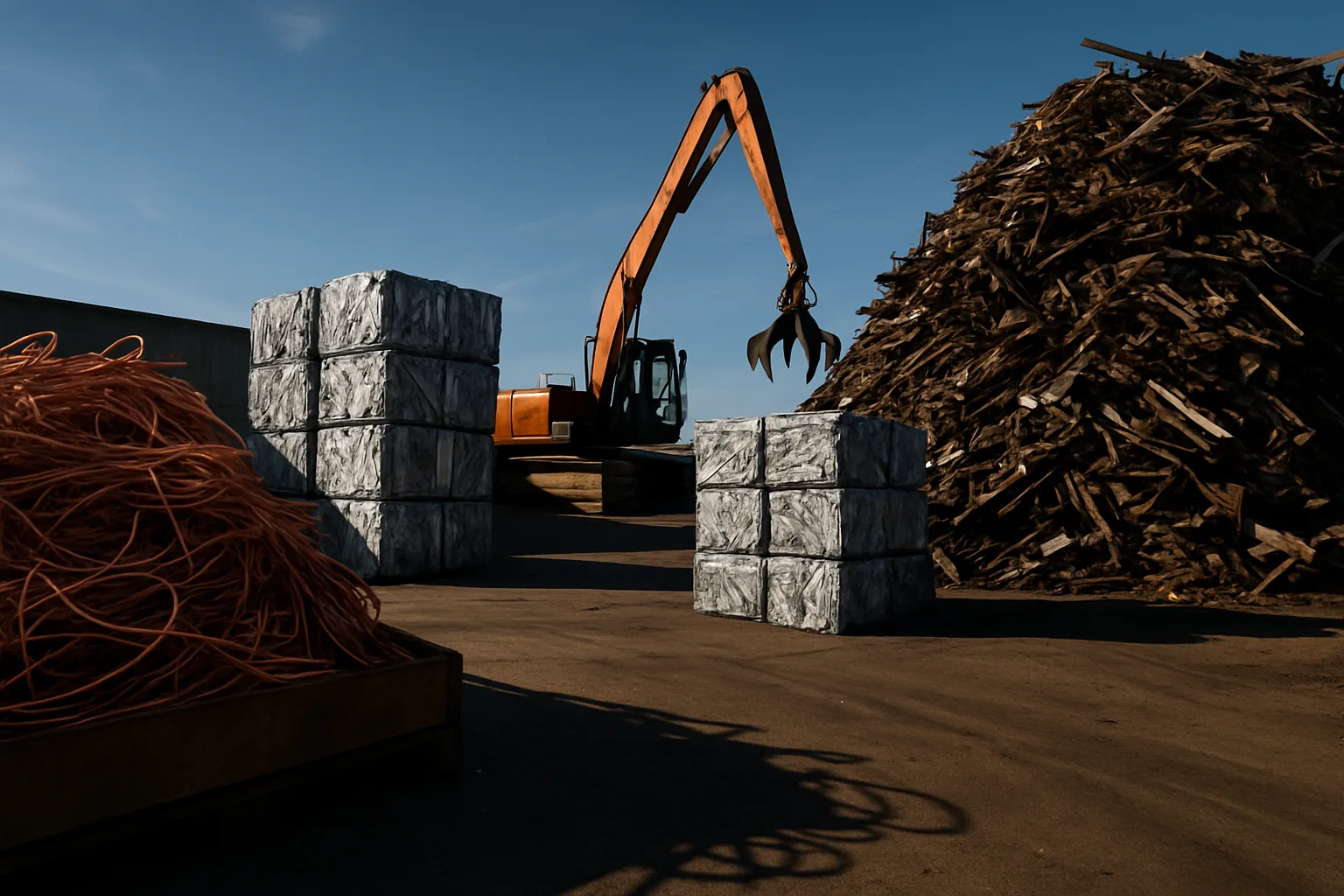
Most people leaving money on the table at the scrap yard aren't doing it on purpose — they just don't know which metals are worth chasing. If you're hauling in mixed loads without sorting, you're getting paid the lowest common denominator. Understanding steel scrap price today versus what copper or aluminum fetches can completely change your bottom line.
This guide breaks down the most profitable scrap metals to collect in 2026, with practical context for sellers in Boston and across Massachusetts. Whether you're cleaning out a job site, stripping a building, or running a full recycling operation, knowing your metals means knowing your money.
Why Metal Type Matters More Than Volume
Volume without knowledge is just hard work. A pickup truck full of clean copper wire will pay multiples of what the same truck loaded with mixed steel earns. That gap isn't a small rounding error — it can be the difference between a decent day and a great one.
Scrap metal prices are segmented by type, grade, and condition. Ferrous metals (iron and steel) trade at lower per-pound rates than non-ferrous metals like copper, aluminum, and brass. That doesn't mean steel isn't worth collecting — it absolutely is, especially at volume — but your highest-value targets are almost always non-ferrous.
- Copper — consistently the highest-value common scrap metal
- Aluminum — lightweight, easy to collect, solid market demand
- Brass — often overlooked, frequently found in plumbing and fittings
- Steel and iron — lower per-pound rate, but high volume can add up fast
- Catalytic converters — contain platinum group metals, among the highest-value items per unit
- Stainless steel — grades vary, but better returns than standard steel
Knowing what you have before you haul it is the first step toward getting paid what it's actually worth. Platforms like get competitive bids for your scrap metal through SMASH exist precisely because most sellers never had a way to verify whether their yard's offer was fair.
Copper: The Benchmark for Scrap Metal Prices Today
If you track scrap metal prices today, copper is usually the number that gets referenced first. It's the benchmark non-ferrous metal, and for good reason — industrial demand for copper is relentless. Electric vehicles, construction wiring, HVAC systems, plumbing — copper is everywhere, and demand isn't slowing down.
In a market like Boston, with major construction activity, older housing stock being renovated, and active demolition projects across Massachusetts, copper is consistently available to those who know where to look. Roofing flashing, electrical wire, pipe from gut-renovations, and old radiators all carry copper value.
Grades matter here. Clean, bare bright copper wire commands the highest price. Insulated wire, copper with solder, or #2 copper with paint or oxidation will pay less. Sorting before you sell is worth the time. A load of mixed copper grades pays the rate of the lowest grade in that load unless you've separated it.
Steel Scrap Price Today: Don't Ignore the Volume Play
Steel won't make you rich per pound, but dismissing it is a mistake. The steel scrap price today in U.S. markets reflects global demand from steel mills, and that demand is real and ongoing. The play with steel is volume and consistency — bulk ferrous loads, HMS (heavy melting steel), structural steel from demolition, and appliances all contribute to a steady stream of tonnage that adds up.
For contractors and demolition crews operating in and around Boston, structural steel from commercial projects can represent significant scrap weight. A single commercial demo job can yield tens of thousands of pounds of ferrous material. At scale, even modest per-ton rates become meaningful revenue.
Key steel categories worth tracking:
- HMS 1 & 2 (Heavy Melting Scrap) — structural beams, plate, heavy gauge
- Prepared steel — cut to size, commands a slight premium
- Shredder feed — appliances, light iron, auto bodies
- Cast iron — engine blocks, radiators, heavy machinery parts
- Stainless steel — kitchen equipment, industrial tanks, food processing gear
The gap between hauling mixed loads versus sorted, graded steel can be meaningful. If you're not tracking what you're selling by grade, you're flying blind. This is exactly where scrap metal inventory management earns its value — knowing what you have, documented by grade, gives buyers more confidence and gives you a stronger position when you're negotiating price.
Catalytic Converters: High Value, High Scrutiny
Few items in the scrap world generate more interest — or more regulatory attention — than catalytic converters. They contain platinum, palladium, and rhodium: platinum group metals (PGMs) that trade at prices far above copper. A single converter from a late-model truck or SUV can be worth significantly more than a comparable weight of any common non-ferrous metal.
But the market for cats is not simple. Values swing based on the specific vehicle make, model, year, and engine. A converter from a Ford F-250 diesel pays differently than one from a Honda Civic. This is why VIN lookup and serial tracking matter — guessing on cats means leaving real money behind, or worse, getting underpaid because a buyer can't verify what they're buying.
Regulations around catalytic converter sales have tightened significantly across the U.S. as of 2026. Most states, including Massachusetts, now require documented proof of ownership, seller identification, and transaction records for cat sales. Working with a platform that handles proper documentation protects you legally and commercially. Platforms like SMASH support serial tracking and photo documentation precisely to meet these compliance requirements.
If you're in Boston and moving cats regularly, the documentation burden is real — but it's also what separates legitimate, high-value transactions from ones that create liability. Do this right.
Aluminum: Lightweight and Consistently Profitable
Aluminum punches above its weight for scrap value. It's light enough to collect in large quantities without specialized equipment, and it's found in a huge range of sources: cans, extrusions, automotive parts, siding, gutters, wire, rims, and cast components from machinery.
Like copper, aluminum grades vary. Clean cast aluminum, sheet aluminum, extrusions, and aluminum rims each have their own pricing tier. Contaminated or painted aluminum pays less. Sorting pays off here too.
In Massachusetts, the construction, manufacturing, and automotive sectors all generate aluminum scrap at meaningful volumes. Roofers pulling aluminum flashing, auto shops with old rims and engine components, and industrial facilities with cast parts — these are all solid aluminum sources. If you're not already targeting these streams, you're passing up consistent non-ferrous income.
For sellers managing multiple metal types across different jobs, keeping a clean inventory record isn't just good practice — it's how you maximize price discovery. When you list a well-documented load of sorted aluminum through a competitive auction on SMASH, buyers can bid with confidence. That confidence shows up in the final price. Sell your scrap metal at top prices on Sell Scrap Metal and see what documented, sorted loads actually earn in a competitive market.
How to Maximize What You Earn: Sorting, Documentation, and Market Access
Knowing your metals is step one. Actually extracting their value requires sorting, documentation, and access to real competition between buyers. Most sellers in the U.S. still operate on the single-buyer model — call one yard, accept their price, haul the load. That model works for the yard. It rarely works in your favor.
Here's the framework that changes outcomes:
- Sort on-site — separate copper, aluminum, steel, and specialty metals before they touch a trailer. Mixed loads get mixed prices.
- Document what you have — photos, weights, grades, serial numbers for cats. Buyers price uncertainty into their offers. Remove the uncertainty.
- Use competitive pricing — more buyers bidding on your load means better price discovery. This isn't theory; it's basic economics.
- Time your sales where possible — steel scrap price today moves with global demand. Large loads sometimes justify timing, especially for ferrous material.
- Know your minimums — don't accept offers below your floor on high-grade material. If you've done steps 1-3, you have leverage.
SMASH was built around this exact framework. The platform brings vetted buyers into competition for your loads, supports full inventory documentation including VIN lookup for cats, handles auto-invoicing, and charges no subscription fees. You only pay when you sell. Explore scrap metal selling guides to go deeper on how to grade and list your material effectively.
Whether you're running Boston scrap metal services at the commercial level or clearing out a single job site, the mechanics are the same: sort, document, compete. That's how you stop leaving money at the yard.
Ready to stop guessing what your scrap is worth? Get a fair price for your scrap today — request a pickup at sell-scrapmetal.com and let competition do the work.
Frequently Asked Questions
Q: What is the steel scrap price today in Boston?
Steel scrap prices fluctuate daily based on global mill demand, local market conditions, and material grade. HMS (Heavy Melting Steel) and prepared steel each trade at different rates. For current pricing in the Boston area, check with local yards or use a platform like SMASH to get competitive bids. Disclaimer: scrap metal prices change frequently — always verify current rates before selling.
Q: What scrap metal is most profitable to collect in Massachusetts?
Non-ferrous metals — copper, aluminum, and brass — consistently return higher per-pound values than ferrous scrap like steel and iron. Catalytic converters can be among the highest-value items per unit when properly documented. In Massachusetts, copper from older construction and renovation projects is a particularly strong target due to the region's housing stock and active development.
Q: Do I need documentation to sell catalytic converters in Boston?
Yes. Massachusetts, like most U.S. states as of 2026, requires proof of ownership, seller identification, and transaction records for catalytic converter sales. Working with a platform that supports serial tracking and photo documentation keeps you compliant and protects you commercially.
Q: How does scrap metal inventory management help me earn more?
Documented, sorted inventory removes uncertainty for buyers — and buyers price uncertainty into their offers. When you list a clean, graded, photographed load, buyers can bid confidently, which typically results in better price discovery. Platforms like SMASH support full inventory documentation to help sellers present loads professionally and attract competitive bids.
Q: Is it worth separating scrap metal grades before selling?
Absolutely. Mixed loads get paid at the rate of the lowest-grade material in the mix. Sorting copper by grade (bare bright, #1, #2, insulated), separating aluminum types, and keeping ferrous and non-ferrous apart before you sell can meaningfully increase your payout on the same physical material. The time invested in sorting almost always pays back more than the effort costs.
Follow SMASH on LinkedIn for industry updates, scrap metal market insights, and practical tips for getting more from every load you sell.