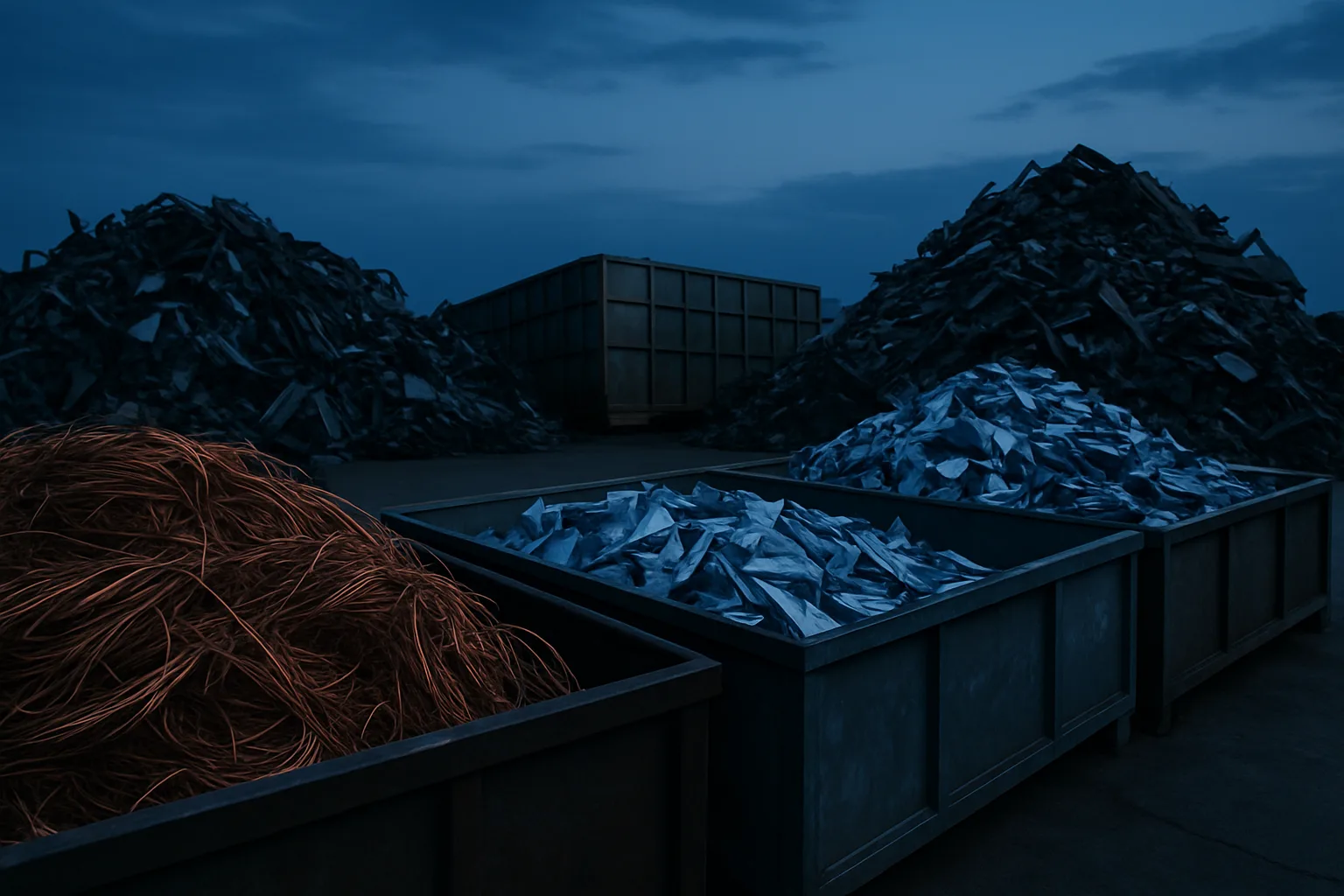
Most scrap yards won't tell you when prices are climbing. That's not cynicism — it's just how the old model works. One buyer, one price, take it or leave it. But scrap metal prices today are moving fast, driven by global manufacturing shifts, infrastructure spending, and tightening supply chains. If you're sitting on copper, aluminum, catalytic converters, or steel in Salt Lake City, understanding what's moving the market right now could mean the difference between a fair deal and leaving real money on the table.
This guide breaks down the trends shaping the 2026 scrap market, what metals to watch, and how sellers across Utah are getting smarter about when and how they sell.
---What's Driving Scrap Metal Prices in 2026
The scrap metal market in 2026 isn't operating in a vacuum. Several converging forces are pushing prices across ferrous and non-ferrous categories, and sellers who understand these drivers make better decisions.
Infrastructure and domestic manufacturing remain the biggest price engines. Steel demand has stayed elevated as road, bridge, and energy grid projects continue across the Mountain West, including major utility and transit work throughout Utah. When mills need feedstock and domestic scrap is competitive with imported alternatives, prices firm up — sometimes quickly.
Non-ferrous metals like copper and aluminum are closely tied to global demand, particularly from the electric vehicle supply chain, renewable energy buildouts, and data center construction. Copper wiring, bus bars, and #1 bare bright are all commanding stronger attention from buyers who need reliable volume. Aluminum — from cast auto parts to extruded profiles — has seen steady interest from both domestic smelters and export buyers.
A few specific factors worth tracking in 2026:
- Energy costs: When electricity prices rise, smelters get squeezed. That can temporarily dampen buying activity or suppress offered prices at the yard level.
- Currency shifts: Export-driven scrap pricing is sensitive to USD strength. A strong dollar can make U.S. scrap more expensive for overseas buyers, softening demand.
- Tariff and trade policy: Cross-border scrap flows between the U.S. and key trading partners continue to evolve. Stay current — policy changes in 2026 have already reshuffled some trade lanes.
- Seasonal patterns: Summer tends to bring more demolition and construction scrap to market. More supply can moderate prices even when demand stays firm.
Understanding these forces won't give you a crystal ball. But it helps you recognize when you're selling into a strong market versus when it makes sense to hold a load if storage allows.
---Key Metals to Watch: Copper, Aluminum, Steel, and Cats
Not all scrap moves together. Each metal category has its own supply and demand story right now, and knowing the difference matters when you're deciding what to prioritize.
Copper Scrap
Copper remains one of the most price-sensitive metals in the scrap stream. Scrap copper grades — bare bright, #1 copper, #2 copper, insulated wire — each price differently, and those spreads can be significant. The gap between bare bright and insulated wire with heavy insulation can be substantial per pound. Stripping wire yourself before you sell almost always pays off. In Salt Lake City, commercial demolition, HVAC changeouts, and electrical contractor scrap are consistent sources of copper volume.
Aluminum Scrap
Scrap aluminum demand has held up well through 2026. Cast aluminum from engine blocks and transmission housings, extruded aluminum from window frames and structural components, and sheet aluminum from roofing and auto body panels all have active buyers. The auto recycling sector in Utah generates consistent aluminum volume, and buyers are paying attention to cleanliness — mixed or contaminated loads price lower, so sorting pays.
Scrap Steel
Scrap steel pricing is more tied to domestic mill activity than non-ferrous metals. When electric arc furnaces are running hard to meet construction demand, scrap steel prices firm. When mill utilization drops, prices follow. Heavy melt, prepared steel, and shredded scrap all have separate price tiers. If you're moving large volumes of ferrous material, understanding where mills are operating is worth your time.
Catalytic Converters
Catalytic converters remain one of the highest-value items per unit in the scrap stream, thanks to the platinum group metals — platinum, palladium, and rhodium — contained inside. A single catalytic converter can range from almost nothing to several hundred dollars depending on the vehicle it came from. VIN lookup and serial tracking — features built into platforms like SMASH — help sellers document and verify converter specs, which gives buyers confidence and can improve price discovery. If you're a dismantler or shop generating cats regularly, proper documentation isn't optional anymore — it's how you command better offers.
---Why Single-Buyer Pricing Is Costing Salt Lake City Sellers Money
Here's the reality of the traditional scrap model: you call one yard, they quote you a price, and you either take it or make another call. Most sellers stop at one or two calls. That's not a market — that's a guessing game weighted in the buyer's favor.
The problem isn't that local scrap yards are dishonest. The problem is that without competition, there's no mechanism to surface the actual market price. If one yard is having a slow week, their offered price reflects that. If another buyer is actively looking for your exact material, you'd never know unless you happened to call them too.
This is exactly the gap that a scrap metal auction platform is designed to close. When multiple vetted buyers compete for your load, price discovery happens. You're no longer hoping you called the right yard — you're letting the market tell you what your material is actually worth today. That's not hype; it's just how competition works.
Platforms like North America's B2B scrap metal auction platform SMASH connect sellers with vetted buyers across the continent, so your load isn't priced against one local buyer's margin — it's priced against actual demand. For sellers in Salt Lake City moving consistent volume of copper, aluminum, or cats, that difference adds up fast.
---How to Use Market Trends to Time Your Sales in Utah
Timing a scrap sale perfectly is nearly impossible. But being informed puts you in a much better position than selling blind. Here's how to use what's happening in the market to make smarter decisions.
Watch the daily price benchmarks. Copper futures on the COMEX are publicly available and move daily. Non-ferrous scrap prices at the yard level tend to track these with a short lag. If copper spot has been climbing for two weeks, your local yard prices will eventually follow — or a buyer hungry for material will come in over the local price to secure volume.
Know your grades before you sell. A load that's graded down at the scale costs you money. If you're selling copper, know whether it's bare bright, #1, or #2 before the yard grades it for you. If you're selling catalytic converters, documented serial numbers and photos can prevent lowball grades on core value.
Some practical steps Utah sellers use to stay ahead:
- Check published scrap price indices weekly — several industry publications post grade-specific benchmarks.
- Build relationships with more than one buyer. Even if you prefer a local yard, knowing what the broader market is doing gives you leverage.
- Document your loads with photos and weights before drop-off. Disputes are harder to resolve after the fact.
- If you're generating consistent volume, consider a platform approach — auction-based pricing means buyers compete, not you.
- Factor in logistics. A slightly higher offered price from a distant buyer may not pencil out once you add freight. Know your numbers.
If you want to sell your scrap metal at top prices on Sell Scrap Metal, the first step is understanding what your material is worth before you pick up the phone. That knowledge is your negotiating position.
---What Vetted Buyers and Transparent Auctions Mean for Your Bottom Line
The scrap industry has a trust problem — not between every buyer and seller, but structurally. When pricing is opaque and relationships are informal, sellers are at a disadvantage. A buyer who knows you only call them has every incentive to hold the line on price. A buyer competing against three others for your load has every incentive to sharpen their pencil.
SMASH was built around that dynamic. The platform connects sellers with vetted buyers who have been screened for legitimacy and payment reliability. No subscription fees — SMASH only earns when a sale closes, which means the incentive is aligned with getting sellers a real market price, not just any price.
Features like inventory management tools, photo documentation, VIN lookup for catalytic converters, serial tracking, and auto-invoicing aren't just convenience. They're the infrastructure that makes buyers confident enough to bid competitively. A well-documented load of cats or a clearly graded lot of copper wire pulls stronger bids than a vague description and a verbal weight estimate.
For a scrap recycler, dismantler, or yard operator in Salt Lake City looking to move material more efficiently, this is the model that makes sense in 2026. The old way — cold calls, single offers, gut-feel pricing — was built for a market that moved slowly. Today's market doesn't move slowly. You shouldn't either.
Ready to stop guessing? Get a fair price for your scrap today and see what competitive bidding actually looks like for your material.
And if you're looking to go deeper on strategy and market context, explore scrap metal selling guides built specifically for U.S. sellers navigating today's market.
---Frequently Asked Questions
Q: What are scrap metal prices today in Salt Lake City, Utah?
Scrap metal prices fluctuate daily based on commodity markets, local supply, and buyer demand. Copper, aluminum, and steel all move independently. The best way to get accurate current prices is to check with multiple buyers or use a platform like SMASH where vetted buyers submit competitive offers. Always verify current rates before selling — posted prices can lag the spot market by days.
Q: How do I find a scrap metal buyer or yard near me in Salt Lake City?
Local scrap yards are a starting point, but they represent a single offer point. For higher-value loads — copper, catalytic converters, or large aluminum volumes — a broader platform approach gets more buyers looking at your material. Sellers in Salt Lake City can use sell-scrapmetal.com to connect with buyers without being limited to who happens to be down the road.
Q: Is it worth stripping copper wire before selling scrap metal?
In most cases, yes. The price spread between bare bright copper and insulated wire with heavy insulation can be significant per pound. If you have the time and volume, stripping wire yourself captures that spread. For small quantities, do the math on your time — it may not always pencil out, but for larger lots it almost always does.
Q: How does a scrap metal auction platform work?
A scrap metal auction platform like SMASH lets sellers list loads of scrap — whether copper, aluminum, steel, or catalytic converters — and receive competitive bids from vetted buyers. Instead of calling one yard and taking their price, multiple buyers compete for your material. The result is price discovery driven by actual market demand, not a single buyer's margin. No subscription fee is required to list.
Q: What documentation do I need when selling catalytic converters in Utah?
Utah, like most states, has tightened regulations around catalytic converter sales in recent years. You'll typically need to document the source of the converters, and buyers increasingly require VIN records or serial numbers for core verification. Platforms like SMASH support serial tracking and photo documentation, which not only keeps you compliant but gives buyers the confidence to bid more competitively on your inventory.
---If you're ready to stop taking the first offer you get and start selling into actual market competition, the tools are available right now. Sell your scrap metal at top prices — request a pickup at sell-scrapmetal.com and let real buyer demand set your price.
Prices referenced in this article are for general market context only. Scrap metal prices fluctuate daily. Always verify current rates with buyers before selling.
Stay current on scrap market trends and industry insights — follow SMASH on LinkedIn for regular updates built for serious scrap sellers and buyers across North America.