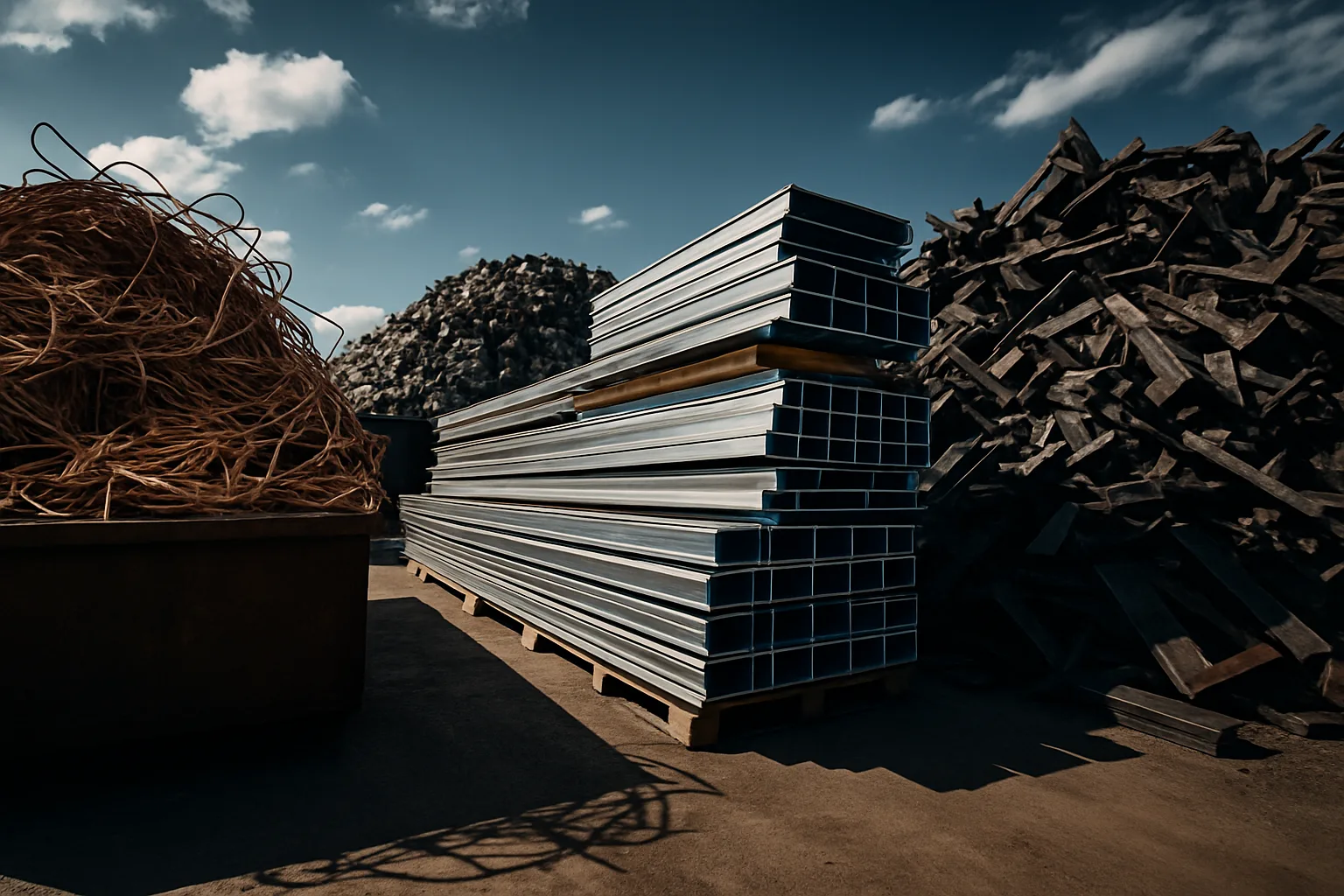
Most scrap yards won't tell you this: how you sort your metal before you sell it matters as much as the market price on the day you sell. Detroit yards see loads come in every day — mixed, dirty, unsorted — and buyers price that uncertainty into their offer. You leave money on the table before the negotiation even starts.
If you're chasing the best scrap metal prices Detroit has to offer in August 2026, preparation is your first competitive edge. This guide breaks down exactly how to sort and prep your scrap so you walk in — or call in — with confidence and a stronger position.
Why Sorting Scrap Metal Directly Affects Your Payout
Buyers price risk. Mixed loads are risky. When a buyer can't quickly identify what's in a load, they assume the worst-case metal mix and offer accordingly. Clean, sorted, identified material removes that guesswork — and the discount that comes with it.
Think about it from the buyer's side. A load of clean #1 copper wire is easy to value and easy to process. A bin of tangled wire mixed with insulation, steel fittings, and aluminum connectors? That's labor, contamination risk, and uncertainty. The buyer adjusts their offer down to cover all of that. You pay the price for their uncertainty.
- Sorted loads command better per-pound prices across copper, aluminum, and steel.
- Clean material (no oil, paint, insulation where removable) reduces dock deductions.
- Identified grades (e.g., #1 copper vs. #2 copper) allow buyers to bid on the actual grade, not a blended guess.
- Separated non-ferrous from ferrous prevents your high-value copper or aluminum from getting weighed in with low-value steel.
In a market where aluminium scrap value today and copper scrap price today per kg shift week to week, the grade you present is one of the few things fully in your control. Don't give it away through poor prep.
How to Sort the Four Major Scrap Metal Categories
You don't need a metallurgy degree. You need a system. Start with these four categories and separate everything before it hits the truck.
Copper
Copper is your highest-value non-ferrous metal, so sorting it carefully pays off most. The main grades buyers recognize:
- #1 Bare Bright Copper: Clean, uncoated, unalloyed copper wire — 16 gauge or thicker. No solder, no oxidation, no insulation.
- #1 Copper: Clean pipe and wire with minor oxidation allowed. No paint, solder, or fittings.
- #2 Copper: Includes soldered pipe, slightly coated wire, copper with fittings still attached.
- Insulated Copper Wire: Keep bundled and separated by insulation type where possible. Stripping high-grade wire before you sell can improve payout — run the numbers first.
Never mix copper grades in the same bin. A handful of #2 copper drops a full load of #1 down to the blended rate. That's a real per-pound hit on every pound in the bin.
Aluminum
Aluminum has more grades than most sellers realize, and mixing them costs you on aluminium scrap value today. Key separations to make:
- Cast aluminum (engine blocks, transmission housings) vs. sheet aluminum (siding, gutters, flashing)
- Aluminum rims — keep separate, they often get their own line price
- Aluminum wire — different from copper wire; keep in its own pile
- Cans — if volume is there, bale or crush them; loose cans are low-density and costly to handle
- Extrusions (window frames, door tracks) — separate from sheet and cast
Remove steel bolts and brackets where practical. Aluminum with significant steel contamination gets downgraded or weighed as a mixed load.
Steel and Iron (Ferrous Metals)
Ferrous metal is your volume play — lower per-pound value but often your heaviest category. Sort it like this:
- Prepared steel: Cut to size (typically under 5 feet), clean of non-metallic attachments
- Unprepared steel: Longer pieces, mixed iron — lower price, less processing on your end
- Cast iron: Separate from steel — it has its own pricing
- Stainless steel: Always separate; it carries a significant premium over regular steel
The magnet test is your friend here. If a magnet sticks, it's ferrous. Everything that doesn't stick — copper, aluminum, brass, stainless — needs its own pile.
Catalytic Converters
If you're a shop, a yard, or an auto dismantler in the Detroit area, cats deserve special attention. Catalytic converters contain platinum group metals (PGMs) — platinum, palladium, and rhodium. Their value varies widely by make, model, and year.
Don't let a general yard guess at your cat values. Use a platform with VIN lookup and serial tracking to identify what you have before you sell. Michigan auto salvage and repair shops sitting on a box of unidentified cats are leaving significant money on the table. A vetted catalytic converter buyer with proper assay data will outperform a spot-price guess every time.
SMASH's inventory tool includes serial tracking and photo documentation specifically for cats — so you're not selling blind. Find the best price for your scrap on SMASH and get competitive bids from vetted buyers instead of a single phone-call offer.
Physical Prep: Clean Metal Sells Better
Sorting by grade is step one. Physical prep is step two. "Clean" in scrap means free from materials that contaminate or reduce the value of the metal itself.
Practical prep steps that matter at the dock:
- Remove insulation where practical. Stripping copper wire isn't always worth the labor — calculate the price difference vs. your time. For larger-gauge wire in volume, stripping pays off.
- Drain fluids from parts. Oil, coolant, and other fluids on aluminum or steel components cause dock deductions at many yards.
- Cut or crush for density. Sheet aluminum that's been flattened or cut is easier to handle and quote than a pile of awkward whole pieces.
- Remove non-metal attachments. Rubber, plastic, glass, and wood attached to metal reduce your payout on the metal portion.
- Document your loads. Photo documentation and packing lists give buyers confidence and reduce disputes at the dock. This matters especially in a B2B scrap metal marketplace where buyers are bidding without physical inspection.
Detroit yards move volume. If your load is sorted, documented, and prepped, you're easier to work with — and easier to work with means better relationships and better prices over time.
How a B2B Scrap Metal Marketplace Changes Your Price Discovery
Here's the problem with the old single-buyer call: you get one price. You have no idea if it's fair. You have no leverage. You either take it or make another call and start over.
A B2B scrap metal marketplace like SMASH changes the dynamic entirely. Your sorted, documented load goes in front of multiple vetted buyers. They compete. Competition creates price discovery — you find out what your load is actually worth on the open market, not what one buyer feels like offering today.
For Detroit-area sellers — yards, dismantlers, industrial facilities, contractors — this is particularly relevant in 2026. Metal markets are moving. Copper, aluminum, and PGMs are all seeing demand pressure from EV manufacturing, infrastructure spending, and reshoring of industrial production. Your scrap has real value. Make buyers compete for it.
SMASH's auction format means no subscription fees. We only win when you win. More buyers means better price discovery — and documented inventory gives buyers more confidence to bid aggressively. You can sell your scrap metal at top prices on Sell Scrap Metal and get access to a buyer network that goes beyond whoever answers the phone at your nearest yard.
If you're in the Detroit market and want to explore what competitive bidding looks like for your loads, Detroit scrap metal services through our platform connect you with buyers who are actively looking for clean, sorted material.
Building a Sorting System That Works at Scale
If you're running a yard, a dismantling operation, or generating regular scrap volume in Michigan, ad-hoc sorting isn't good enough. You need a repeatable system that your team can follow consistently.
Here's what a basic sorting station setup looks like:
- Labeled bins for each major grade: bare bright, #1 copper, #2 copper, insulated wire, cast aluminum, sheet aluminum, rims, prepared steel, stainless, cats
- A magnet on a hook at the intake point — ferrous vs. non-ferrous separation starts there
- A camera or phone mount for quick photo documentation of high-value material
- A log or inventory tool that tracks material by type, weight, and date received
SMASH's inventory tool is built for exactly this workflow — log material as it comes in, attach photos, track serial numbers on cats and cores, and push loads to auction when you're ready. No spreadsheet archaeology. No guessing what's in the bin when a buyer calls.
If you're new to selling scrap systematically, explore scrap metal selling guides for step-by-step help on grading, prep, and getting the most from your loads. And when you're ready to move material, get a fair price for your scrap today with buyers who compete for your business.
The market in 2026 rewards sellers who show up prepared. Sort your metal, document your loads, and let competition do the rest. When you're ready to move your next load, request a pickup at sell-scrapmetal.com — and find out what your scrap is actually worth.
Frequently Asked Questions
Q: What's the best way to get top scrap metal prices in Detroit?
Sort your material by grade before you sell, remove contamination where practical, and get multiple buyers competing for your load. A single-buyer phone call gives you one data point. A competitive auction on a platform like SMASH gives you the market. Detroit has strong buyer demand — use it.
Q: How do I know if my copper is #1 or #2 grade?
#1 copper is clean, uncoated wire or pipe with no solder, paint, or fittings — minor oxidation is acceptable. #2 copper includes soldered joints, light coatings, or fittings that haven't been removed. When in doubt, separate anything that isn't bare and clean into the #2 pile. Mixing grades down hurts your per-pound price on the entire load.
Q: Is it worth stripping copper wire before selling?
It depends on wire gauge, insulation type, and your labor cost. High-gauge wire with thick insulation often pays off to strip — the jump from insulated wire price to bare bright can be significant per pound. For thin-gauge or communication wire, the labor rarely pencils out. Run the math on your specific material before committing time to it.
Q: What should I do with catalytic converters before selling in Michigan?
Don't sell them blind. Identify makes, models, and serial numbers before you approach a buyer. Use a platform with VIN lookup and serial tracking — like SMASH — to understand what PGM content you're sitting on. Michigan auto yards and shops that sell unidentified cats to a general scrap buyer routinely undervalue them.
Q: How often do scrap metal prices change in Detroit?
Prices move daily, sometimes multiple times per day on high-volume metals like copper. Aluminum and steel tend to move on a weekly basis, but market events can shift them faster. Always check current rates before you sell — never assume yesterday's price holds today. Disclaimer: All scrap metal prices fluctuate based on market conditions. Check current rates before selling.
Stay sharp on scrap metal markets — follow SMASH on LinkedIn for industry updates, price movement insights, and scrap selling strategy.