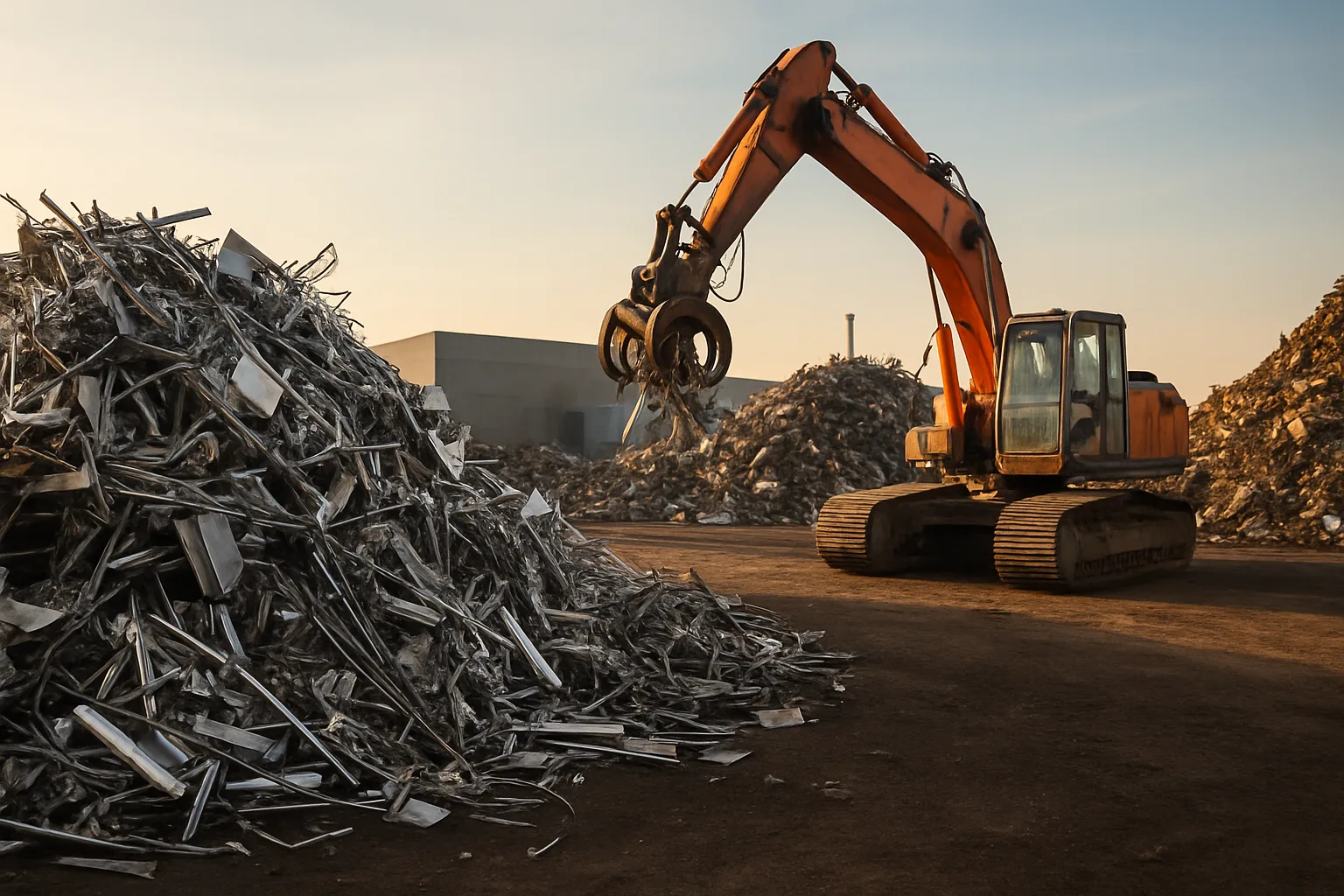
Stainless Steel Scrap Grades Explained — And Why the Grade You're Selling Determines the Price You Get
Most people selling stainless steel scrap assume it's all the same material. It isn't. The grade you're holding changes everything — the buyer pool, the mill it ships to, and the price per pound you walk away with. If you're sitting on a mixed pile and calling it "stainless," you're already leaving money on the table.
Whether you're a yard operator in Aurora, Illinois clearing industrial overstock, or a facility manager disposing of food-grade equipment, understanding stainless grades is how you stop guessing and start pricing with confidence. This week's roundup breaks it all down.
What Makes Stainless Steel Different From Regular Scrap Steel
Stainless steel isn't just shiny steel. It's a chromium-nickel alloy, and the nickel content is what drives the scrap value. Regular carbon steel trades on iron and carbon. Stainless trades on the alloy composition — specifically the nickel and molybdenum percentages. That's why scrap metal prices today for stainless can be three to five times higher per pound than shredded steel, depending on grade and market conditions.
The chromium content (minimum 10.5%) is what gives stainless its corrosion resistance. But from a scrap buyer's perspective, the nickel percentage is the number that moves the needle. Nickel is a globally traded commodity. When nickel prices swing on the LME (London Metal Exchange), stainless scrap prices follow almost immediately.
- Carbon/shredded steel: Priced on iron content, trades at lower per-pound values
- Stainless steel: Priced on nickel and molybdenum content, significantly higher value per pound
- Mixed or contaminated stainless: Buyers discount aggressively — sometimes treating it like carbon steel
The Most Common Stainless Scrap Grades — And What Buyers Pay For Each
Stainless steel has hundreds of grades, but in the scrap world, a handful of grades dominate the market. Knowing these will help you sort your pile, identify what you have, and negotiate from a position of knowledge rather than guesswork. Platforms like North America's B2B scrap metal auction platform have made it easier for sellers to connect with vetted buyers who understand grade-specific pricing — which means better price discovery than a single phone call to one local yard.
304 Stainless Steel
This is the most common grade in scrap yards across North America. It contains roughly 18% chromium and 8% nickel. You'll find it in kitchen equipment, food processing machinery, architectural trim, and industrial tanks. It's liquid — meaning buyers are easy to find — and it commands a solid premium over carbon steel. This is the benchmark grade most buyers quote when someone asks about "stainless scrap."
316 Stainless Steel
Step up from 304 and you're into 316 — which adds 2–3% molybdenum for enhanced corrosion resistance. It's common in marine applications, pharmaceutical equipment, and chemical processing. Because it contains more alloy content, 316 trades at a higher price per pound than 304. The spread between the two can vary, but sellers who correctly identify and segregate 316 from 304 consistently get better returns.
430 Stainless Steel (Ferritic)
This is where sellers get caught off guard. Grade 430 contains roughly 16–18% chromium but no significant nickel. It's magnetic and looks like stainless, but it doesn't carry the same value. Buyers pay considerably less for 430 because there's no nickel to recover. If you're in Aurora, Illinois and you have a mix of appliance scrap with shiny steel components, there's a good chance some of that is 430, not 304.
201 Stainless Steel
A lower-nickel grade (1–6% nickel) that substitutes manganese for nickel content. Common in lower-cost consumer goods and some Asian-manufactured equipment. Buyers price it below 304. If you're seeing low bids on what you thought was standard stainless, check whether the material might be 201.
310 and 317 High-Alloy Grades
Higher-end grades with elevated nickel and chromium content. Rarer in general scrap streams but highly valued when identified. These show up in heat-treating equipment, aerospace components, and specialized industrial applications. Proper identification means a significantly higher payout. Don't mix these into a general stainless pile.
How to Identify Your Stainless Grade Before You Sell
Sorting stainless by grade before you sell isn't just good practice — it's how you get paid more. A magnet is your first tool. Ferritic grades like 430 are magnetic. Austenitic grades like 304 and 316 are generally non-magnetic (though cold-worked 304 can show slight magnetism). If your "stainless" is sticking hard to a magnet, you're likely looking at 430 or a carbon steel contamination issue.
Beyond the magnet test, here's how experienced sellers sort their material:
- Check markings and tags: Equipment, piping, and fittings often have grade stamps. A 316L stamp means you have a low-carbon 316 alloy — a premium product.
- Know the source: Food processing equipment is almost always 304 or 316. Appliance trim is often 430. Marine fittings are usually 316.
- Use XRF analysis: Some larger yards in Illinois and across the Midwest offer handheld XRF testing on-site. It takes seconds and gives you the exact alloy composition.
- Weigh and document separately: Photo documentation and accurate weights by grade give buyers confidence. More confidence means more competitive bids.
This is where using a platform like SMASH changes the outcome. When you document your stainless grades properly — photos, weights, grade identification, BOLs — vetted buyers can bid on your load with full information. That's the difference between one buyer's guess and a competitive market price.
Stainless Steel Scrap Prices Today — What's Driving the Market in June 2026
Stainless scrap pricing in June 2026 remains tied to nickel volatility on the LME, global mill demand, and inventory levels at domestic stainless producers. While we won't invent specific price figures here, the structure of stainless pricing follows a consistent pattern sellers should understand.
Disclaimer: Scrap metal prices fluctuate daily based on commodity markets, buyer demand, and regional conditions. Always check current rates before committing to a sale.
Here's what's influencing scrap metal prices today for stainless in the US market:
- Nickel prices: The primary driver. Watch LME nickel spot prices as a leading indicator for 304 and 316 scrap values.
- Domestic mill capacity utilization: US stainless mills buying aggressively push spot prices up. Slow quarters depress bids.
- Export demand: When overseas buyers step in, competition for domestic scrap increases — which helps sellers.
- Grade purity and contamination: Clean, sorted, properly documented stainless consistently trades above blended or mixed loads.
- Regional supply levels: If industrial activity in Illinois and the greater Midwest is strong, stainless scrap generation increases and buyers get more selective on grade and condition.
Sellers in Aurora and across Illinois who understand these drivers don't have to accept whatever one buyer tells them the market is. They can verify, compare, and sell into actual competition. If you want to get a fair price for your scrap today, that starts with knowing what grade you have and selling to buyers who actually compete for it.
Selling Stainless Scrap the Right Way — Sorted, Documented, Competitive
The old way of selling stainless scrap: call one buyer, accept their bid, load the truck. The problem? You have no idea if that bid reflects the actual market. You're pricing based on a relationship, not competition. That gap between what you accepted and what the market would have paid is real money.
SMASH exists to close that gap. The platform connects sellers — yards, industrial facilities, demolition contractors — with vetted buyers across North America. Loads are documented with photos, weights, and grade details. Buyers compete. You see the market, not just one buyer's opinion of it.
For a seller in Aurora, Illinois with a load of sorted 304 and 316 stainless, that kind of documentation-backed competitive process can reveal price points that a single cold call never would. Explore scrap metal selling guides to understand how to prepare your loads before you bring them to market.
Whether you're selling copper, aluminum, catalytic converters, or stainless steel, the fundamentals are the same: know what you have, document it properly, and sell into competition rather than convenience. When you're ready to sell your scrap metal at top prices on Sell Scrap Metal, the process starts with a clear picture of what you're selling and who's competing to buy it.
If you've got stainless scrap ready to move — sorted, weighed, and documented — don't leave the price to chance. Request a pickup at sell-scrapmetal.com and put your load in front of buyers who know what it's worth.
Frequently Asked Questions
Q: What is the copper scrap price today, and how does it compare to stainless steel scrap?
Copper scrap prices fluctuate daily based on LME spot copper pricing and regional demand. As of June 2026, copper remains one of the highest-value non-ferrous metals in the scrap stream — typically priced per pound well above most stainless grades. However, high-alloy stainless like 316 with elevated molybdenum content can approach copper-level returns in strong nickel markets. Always check current rates before selling either material.
Q: How do I know if my stainless steel is 304 or 316 grade?
A magnet test rules out ferritic grades like 430 but won't distinguish 304 from 316. XRF (X-ray fluorescence) analysis is the most reliable method — many larger scrap yards in Illinois and across the Midwest offer this on-site. The presence of 2–3% molybdenum confirms 316. If you sourced the material from marine, pharmaceutical, or chemical processing equipment, 316 is more likely.
Q: Where can I sell stainless steel scrap in Aurora, Illinois?
Several scrap yards in the Aurora, Illinois area accept stainless steel. For larger loads or industrial quantities, platforms like SMASH put your load in front of multiple vetted buyers across North America — which typically results in more competitive pricing than a single local yard quote. Sorting your material by grade before selling gives you the best outcome regardless of where you sell.
Q: Why does my stainless steel scrap get a low price even though it looks clean?
Visual cleanliness isn't the main pricing factor — grade and alloy content are. If your stainless is 430 (no nickel), it will price significantly lower than 304 or 316 even if it's spotless. Contamination with carbon steel or mixed grades also drives prices down. Sort by grade, test with a magnet, and document with photos and weights to maximize your payout.
Q: Does scrap metal recycling in Aurora have different pricing than other parts of Illinois?
Regional pricing can vary based on local buyer competition, transportation costs, and proximity to mills. Aurora's location in the greater Chicago metro gives sellers access to a competitive industrial scrap market. That said, using a platform like SMASH expands your buyer pool beyond your immediate area, which can improve price discovery regardless of your local market conditions.
Stay current on scrap metal market trends and pricing insights — follow SMASH on LinkedIn at linkedin.com/company/scrap-metal-auction-sales-hub for weekly updates from across the North American scrap industry.