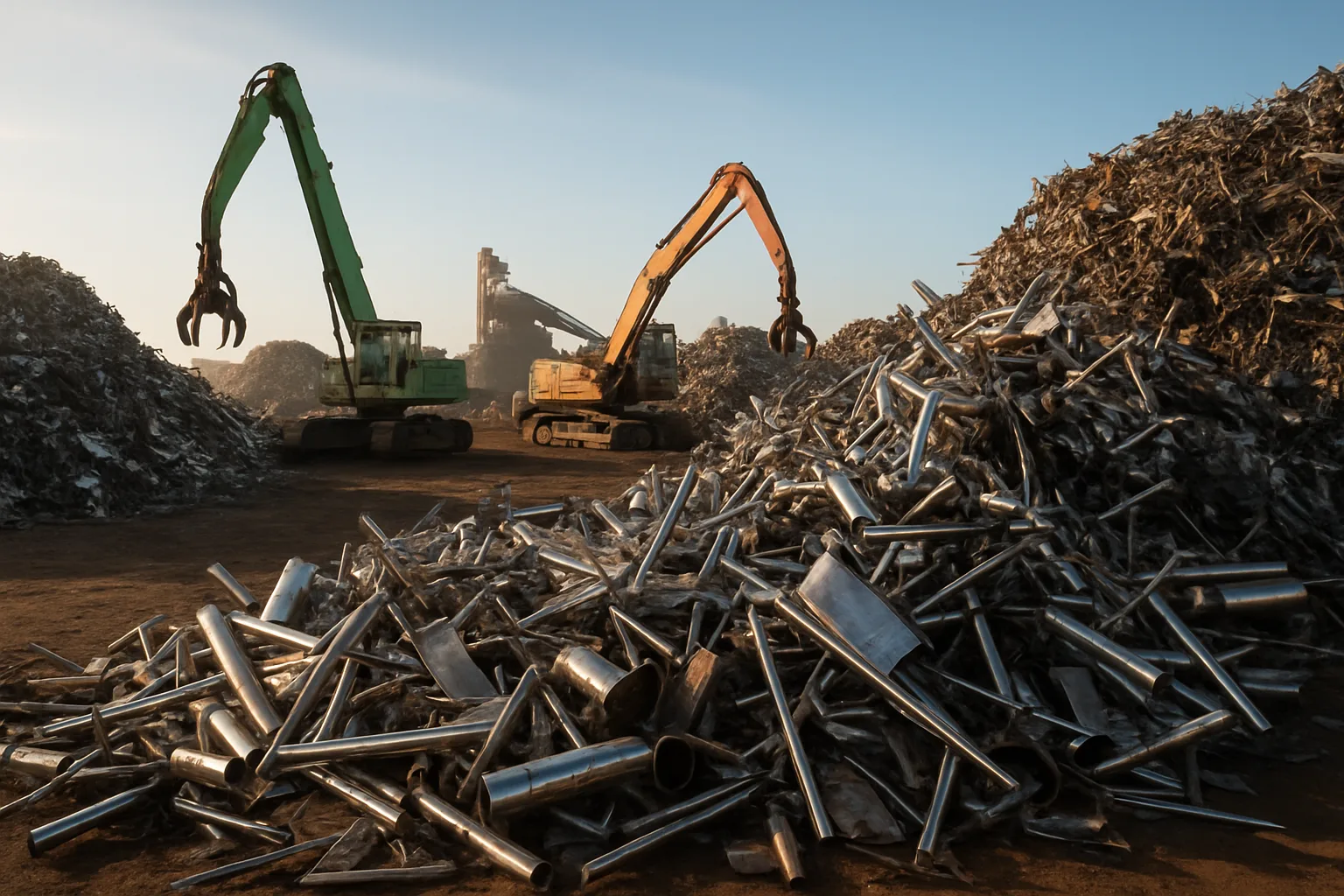
Most yards lowball stainless because sellers don't know what grade they have. That's not a knock on sellers — stainless steel grades are genuinely confusing, and the price spread between them is significant. If you're hauling stainless to a yard in Salt Lake City and accepting whatever number they throw at you, you're probably leaving money on the table. Understanding the grade you're holding changes the conversation entirely.
The steel scrap price today varies sharply depending on grade, nickel content, and buyer demand. A 304 stainless load and a 316 stainless load look nearly identical at a glance. But they don't price the same. Knowing the difference — and being able to document it — puts you in a stronger position every single time.
This breakdown covers the major stainless grades, what drives their value, and how platforms like SMASH Scrap — where verified buyers bid on your metal help sellers stop guessing and start getting real market prices.
---Why Stainless Steel Scrap Pricing Is More Complex Than Other Metals
Stainless steel isn't one material — it's a family of alloys. The price of any given stainless load hinges almost entirely on its alloy composition, specifically nickel and molybdenum content. Nickel is a traded commodity. When nickel prices move, stainless scrap prices move with them, sometimes dramatically within a single week.
Copper and aluminum scrap are simpler to grade. You're mostly sorting by purity and contamination. With stainless, two loads of nearly identical-looking metal can carry completely different values based on what's in the alloy. That's why a single buyer quoting a flat "stainless price" without asking what grade you have should be a red flag. Not every yard in Utah is equipped to test and differentiate properly — some just don't have the XRF analyzers to verify on the spot.
Key factors that determine stainless scrap value:
- Nickel content — the biggest price driver across grades
- Molybdenum content — relevant for 316 and specialty grades
- Grade purity — mixed or unconfirmed grades pay less
- Form factor — turnings, solids, and clips price differently
- Contamination level — paint, rubber, or attachments reduce value
- Load size and consistency — sorted, documented loads attract better bids
Getting the right number for your stainless scrap starts with knowing exactly what you have. That takes either a magnet test and some knowledge, or access to proper testing equipment at the yard.
---The Main Stainless Steel Scrap Grades — And What They're Worth Relative to Each Other
There are dozens of stainless steel grades, but the recycling market concentrates on a handful. Here's what actually matters when you're trying to understand today's scrap metal prices today for stainless.
304 Stainless Steel
This is the workhorse grade. It accounts for the majority of stainless scrap volume in circulation. 304 contains roughly 18% chromium and 8% nickel — that's where the "18-8" label you'll see stamped on some food-service equipment comes from. It comes from kitchen equipment, sinks, tanks, food processing machinery, and architectural components. Because 304 is so common, it has a liquid market with consistent buyer demand. It's your baseline stainless scrap price reference.
316 Stainless Steel
This grade adds molybdenum — typically 2-3% — on top of a similar chromium-nickel base. That addition makes it more corrosion-resistant in marine and chemical environments, which is why it commands a premium over 304. It comes from pharmaceutical equipment, marine hardware, chemical processing, and medical devices. If you're pulling stainless out of an industrial facility in Utah, there's a real chance some of it is 316. Sorting it separately rather than mixing it with 304 is worth the effort — the price spread matters.
201 Stainless Steel
Lower nickel content, manganese substituted in. 201 is common in consumer goods, appliances, and lower-cost fabrication. It pays less than 304 because the nickel content is lower. If you're buying or processing appliance scrap, don't assume it's all 304. Some of it is 201 and buyers will test for it.
430 Stainless Steel (Ferritic)
430 contains no nickel — it's a ferritic grade, which means it's magnetic. This throws off a lot of sellers who assume anything non-rusting is high-value stainless. 430 is widely used in automotive trim, appliances, and decorative applications. Because there's no nickel in the alloy, it prices significantly below austenitic grades like 304 and 316. A magnet sticking to your stainless is a strong signal you're dealing with 430 or another ferritic grade.
Specialty and Duplex Grades
Grades like 2205 duplex, 904L, and various high-alloy stainless steels come from specialized industrial applications. They often contain elevated nickel, molybdenum, or other alloy additions. These grades command premium pricing, but they also require proper identification. If you're processing scrap from chemical plants, offshore equipment, or specialty manufacturing, don't dump this material into a generic stainless pile. Document it, get it tested, and sell it to a buyer who will pay for the alloy content properly.
---How to Identify Stainless Grades Before You Sell
You don't need a lab to make a reasonable grade assessment. A few field methods help you sort accurately before you arrive at a Salt Lake City yard or list a load on a B2B platform.
The magnet test: Austenitic grades (304, 316) are non-magnetic or very weakly magnetic. Ferritic grades (430) are fully magnetic. This alone separates your highest-value material from your lower-value ferritic scrap. It's not foolproof — work-hardened 304 can show some magnetism — but it's a fast, useful first pass.
Markings and stamping: Equipment made from stainless often has grade markings on the plate, fitting, or product label. Food service equipment especially tends to be labeled. Take photos before you cut anything apart.
Source and application: Material from food processing facilities, pharmaceutical plants, or marine environments is frequently 304 or 316. Automotive trim and appliance exteriors often run 430 or 201. Knowing where your scrap came from is useful even without a test.
XRF testing at the yard: Reputable yards have XRF analyzers that identify alloy composition in seconds. If a yard won't test your material and just quotes you a flat stainless price, ask why. Either they don't have the equipment or they'd rather price everything at the low end.
For sellers in Salt Lake City putting together larger loads, documenting your sorting process with photos and grade estimates before you go to market strengthens your position with buyers. Platforms built for the B2B scrap metal marketplace — like SMASH — let you upload that documentation directly, giving buyers the information they need to bid confidently rather than discounting for uncertainty.
---What's Moving the Steel Scrap Price Today — June 2026
Nickel prices have been the dominant variable for stainless scrap pricing through the first half of 2026. Indonesian supply decisions and EV battery demand are creating volatility in the nickel market that flows directly into 304 and 316 scrap valuations. When nickel moves 5-10% in a month — which has happened multiple times this year — stainless scrap prices move with it.
Ferrous scrap markets more broadly have been influenced by domestic steel mill demand, infrastructure spending, and ongoing trade policy adjustments affecting imports. Utah's industrial and manufacturing base creates steady stainless generation from food processing, mining equipment, and construction — which means local supply is consistent, but buyer competition varies.
That's the core issue. In a market where one local buyer quotes your load, you get their number. In a competitive auction environment, buyers are motivated to price accurately because they know they're competing. More buyers means better price discovery — that's not a marketing line, it's how markets work. If you want to sell your scrap metal at top prices on Sell Scrap Metal, competition is your best tool.
Disclaimer: Stainless steel scrap prices fluctuate daily based on nickel prices, market conditions, and buyer demand. Always check current rates before finalizing a sale.
---Selling Stainless Scrap the Right Way — Documentation, Sorting, and Market Access
Whether you're a recycling yard in Utah or a manufacturer cleaning out an equipment room in Salt Lake City, how you prepare your stainless load affects what you get paid. Buyers price in uncertainty. Remove the uncertainty and you remove the discount.
Steps that consistently improve outcomes:
- Sort by grade before anything else. Don't mix 304, 316, and 430 in the same container if you can avoid it. Mixed stainless typically prices to the lowest grade in the mix.
- Remove non-stainless attachments. Rubber seals, plastic fittings, painted carbon steel brackets — strip them out. Contamination cuts value fast.
- Document with photos. Take pictures of the material, especially if you have a larger load or specialty grades. Buyers who can see what they're bidding on price more aggressively.
- Know your weight and form. Solids, heavy turnings, light turnings, and clips all price differently. Come in knowing which you have.
- Get multiple buyers in the room. A single phone call to one buyer is the least effective way to sell scrap in 2026. Use platforms that create competition.
SMASH is built for exactly this scenario. You list your load, document it properly, and vetted buyers compete for it. No subscription fees. The platform only works when you do. If you're ready to get a fair price for your scrap today, that's the model that makes sense.
For more guidance on navigating the scrap metal market, explore scrap metal selling guides built for sellers at every level — first-timers and experienced yard operators alike.
---Frequently Asked Questions
Q: What is the steel scrap price today for 304 stainless in Salt Lake City?
Stainless steel scrap prices fluctuate with nickel markets and can vary significantly week to week. For current 304 stainless pricing in Salt Lake City, contact local yards directly or list your load through a competitive platform like SMASH to see what multiple buyers will actually pay. Published spot prices are a reference point — what a buyer bids on your specific load is what matters.
Q: How do I know if my stainless scrap is 304 or 316?
The easiest field test is a magnet — both 304 and 316 are non-magnetic or weakly magnetic, while ferritic grades like 430 are fully magnetic. To confirm 304 vs. 316, you need XRF testing, which reputable yards can perform on-site. Equipment markings, source material, and application type are also useful clues.
Q: Does stainless steel scrap pay more than regular steel scrap?
Yes — significantly more, for austenitic grades like 304 and 316. The nickel content in those grades is what drives the premium. Ferritic stainless like 430 contains no nickel and prices much closer to carbon steel. Never assume all stainless pays the same rate.
Q: Can I sell mixed stainless grades together?
You can, but it almost always costs you money. Mixed or unidentified stainless loads are typically priced to the lowest grade in the mix, because buyers can't verify what they're getting without testing every piece. Sorting takes time, but the price difference between sorted and unsorted material is usually worth it on any meaningful volume.
Q: What's the best way to get competitive scrap metal prices today in Utah?
Don't rely on a single buyer quote. In Utah and across North America, the most effective approach is to document your load properly and put it in front of multiple vetted buyers simultaneously. Platforms like SMASH create that competition automatically. The more buyers competing for your load, the more accurately the market prices what you have.
---If you're sitting on a load of stainless — sorted or mixed, small or large — the worst move is accepting the first number you hear. Know your grade, document your load, and get it in front of buyers who compete. When you're ready to move it, sell your scrap metal at top prices — request a pickup at sell-scrapmetal.com.
Stay current on stainless scrap pricing trends and market moves — follow SMASH on LinkedIn for regular industry updates and scrap metal market insights.