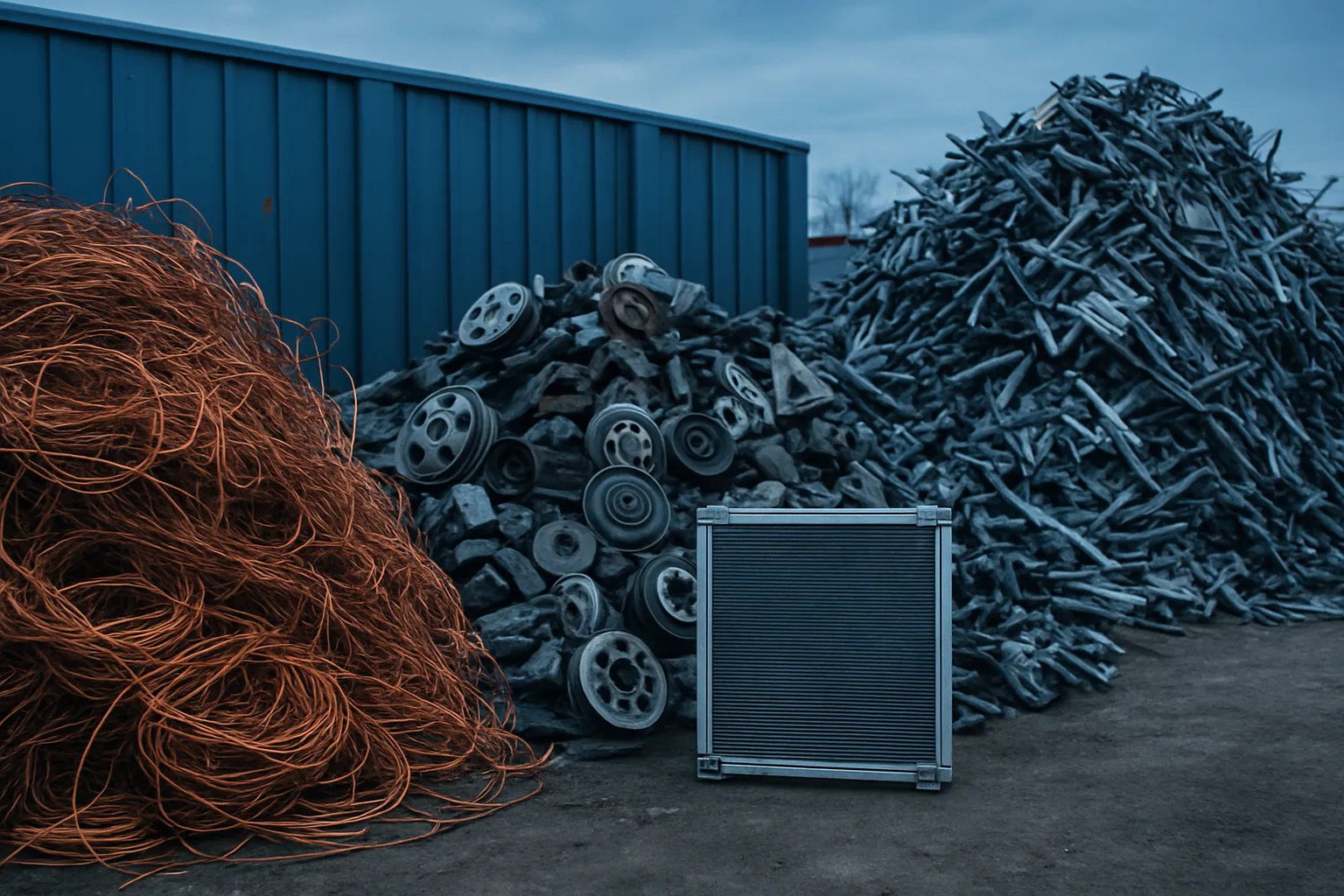
What Actually Happens to That Old Radiator or Alternator After You Scrap It
Most people drop off a box of old auto parts and walk away with cash. What they don't think about is what happens next — and why copper scrap prices Cincinnati yards quote you can swing dramatically depending on what's actually inside that part. Radiators and alternators aren't just "scrap." They're layered assemblies of copper, aluminum, steel, and brass. Understanding what's inside them helps you sell smarter.
This isn't a chemistry lesson. It's a practical breakdown of how these parts get recycled for metal, why buyers care about grades and condition, and how recyclers in Cincinnati and across Ohio are pulling real value out of parts that most people treat like garbage.
Why Radiators Are More Valuable Than They Look
A standard copper-brass radiator from an older vehicle is one of the more valuable parts a scrapper can bring in. The core — that grid of thin tubes and fins — is typically copper. The tanks on either side are usually brass. Strip out the plastic end caps and steel fittings, and you've got a clean, high-value non-ferrous assembly that buyers actively want.
Aluminum radiators, which dominate newer vehicles, are less valuable per pound than copper-brass but still worth separating from your steel pile. They're lighter, but the spread between what you get for a clean aluminum radiator versus throwing it in with mixed metal is real money if you're moving volume.
- Copper-brass radiators: Found in older trucks, heavy equipment, and industrial machinery. High copper content makes these a priority for non-ferrous buyers.
- Aluminum radiators: Standard in most post-2000 passenger vehicles. Still worth separating — don't mix them with steel.
- Contaminated radiators: Attached hoses, plastic tanks, and steel brackets reduce your grade and your price. Clean them before you sell.
- Radiator cores vs. whole units: Some yards pay a premium for stripped cores. Ask your buyer before you disassemble.
The recycling process for radiators typically involves shredding, then magnetic separation to pull out any ferrous contamination, followed by eddy current separation to isolate aluminum from copper. The cleaner your material going in, the better the downstream recovery — and buyers factor that into what they quote you upfront.
Alternators: More Copper Inside Than Most People Realize
An alternator looks like a lump of steel on the outside. Inside, it's wound with copper wire — the stator coil — and contains aluminum housings, steel rotors, and sometimes small amounts of other materials. That copper winding is what makes alternators worth more than their appearance suggests.
When a recycling facility processes alternators, they're typically shredded whole and run through a separation process. The copper wire gets recovered and refined. The aluminum housings go to the non-ferrous stream. The steel core goes to the ferrous pile. Nothing gets wasted — it's just sorted.
For sellers in Cincinnati, understanding this matters because scrap metal prices Cincinnati buyers quote on alternators can vary based on whether you're selling whole units or stripped cores. Some buyers pay a flat rate per pound for whole alternators — factoring in their processing cost. Others pay more for pre-stripped copper if you've pulled the stator yourself. Know your options before you commit to a price.
A Rough Breakdown of What's in a Standard Alternator
- Copper: 10–15% of total weight (stator windings, wiring harness connections)
- Aluminum: 40–50% of total weight (housing, end plates)
- Steel: 30–40% of total weight (rotor, shaft, fasteners)
- Other: Small amounts of plastic, rubber seals, and bearings
If you're running a repair shop or fleet operation in Ohio and accumulating alternators regularly, you're sitting on a consistent non-ferrous stream. A the SMASH scrap metal auction marketplace approach — where multiple vetted buyers compete for your load — can help you figure out what the actual market will pay, rather than taking a single quote and wondering if you left money on the table.
How Copper Scrap Prices in Cincinnati Are Set — And What Moves Them
Copper scrap prices Cincinnati buyers post aren't random. They track the COMEX copper futures market closely, then apply a discount based on grade, volume, contamination, and local demand. The spread between what the exchange trades at and what you get paid is called the "dealer discount" — and it varies by yard, by day, and by what the buyer's downstream processor is currently paying.
A few things push Cincinnati copper prices up or down in 2026:
- Global copper demand: EV production, grid infrastructure, and data center buildout are all copper-intensive. High industrial demand tightens supply and supports scrap prices.
- Grade quality: #1 bare bright copper wire gets the best price. Copper from radiator cores, #2 copper, and insulated wire all trade at different levels.
- Local competition: More buyers competing for your load means tighter spreads. Fewer buyers means the yard sets the price.
- Volume: Yards pay better per pound when you bring larger loads. A single radiator and a pallet of radiators don't get the same treatment.
This is exactly why competition matters. If you're relying on one buyer and one phone call to set your price, you're guessing. Platforms like SMASH create actual market competition for your material — buyers bid, you see the results, and price discovery happens in real time rather than through someone's gut feel. If you're looking to sell your scrap metal at top prices on Sell Scrap Metal, competition in your favor is the starting point.
Selling Auto Parts Scrap in Cincinnati: What B2B Sellers Do Differently
Shops, dealerships, and fleet operations in Cincinnati that sell scrap regularly don't treat it like an afterthought. They separate material by type. They document what they have before they call a buyer. They don't mix non-ferrous parts with steel just to make one trip. That preparation directly affects what they get paid.
Here's what separates a B2B approach from a one-off drop-off:
- Inventory before you sell. Know what you have — copper-brass radiators, aluminum radiators, alternators, starters, and any catalytic converters — before you contact a buyer. Buyers quote better when they know exactly what's coming.
- Separate your grades. Don't mix copper-brass with aluminum. Don't mix non-ferrous with ferrous. Every contamination point reduces your grade and your price.
- Document condition. Photo documentation and basic descriptions protect you and give buyers more confidence in what they're bidding on.
- Use a B2B scrap metal marketplace. The old model — calling one yard, taking one quote — costs you. A competitive auction format means buyers compete for your load instead of you competing for their attention.
- Know your volume thresholds. Understand what minimum load size triggers better pricing at your preferred buyers, and accumulate accordingly.
If you're in Cincinnati and want to understand your options better, Cincinnati scrap metal services through sell-scrapmetal.com connect you with buyers who work your market specifically. No guessing, no cold calls, no single-buyer pricing games.
Using SMASH to Move Auto Parts Scrap Without Leaving Money Behind
SMASH was built for exactly this situation. You've got a load of radiators, alternators, and maybe some cores sitting in your yard. You want to know what the market will actually pay — not what one buyer tells you the market pays. Those are often very different numbers.
The SMASH auction process puts your documented load in front of vetted buyers who compete. You're not guessing at price. You're watching real bids come in against real material. Serial tracking, photo documentation, and inventory tools mean buyers know what they're bidding on — which means they bid with more confidence. More buyer confidence typically means tighter spreads and better outcomes for sellers.
There are no subscription fees. SMASH only wins when you do. That alignment matters. You can explore scrap metal selling guides to understand how to prepare your load and what documentation helps buyers bid higher.
Whether you're a one-location shop in Cincinnati or a multi-yard operation across Ohio, the principle is the same: documented material in a competitive marketplace produces better price discovery than a phone call to your usual contact. That's not a pitch — it's just how markets work.
If you're ready to stop guessing at scrap metal prices and start seeing what your loads are actually worth, get a fair price for your scrap today — and let competition work in your favor for once.
Frequently Asked Questions
Q: What are current copper scrap prices in Cincinnati?
Copper scrap prices in Cincinnati fluctuate daily based on COMEX futures, local buyer demand, and material grade. #1 bare bright copper, #2 copper, and copper from radiator cores all trade at different levels. Always check current rates directly with buyers before selling — posted prices can change quickly. Disclaimer: Prices mentioned in this article are general market context only and should not be taken as current quotes.
Q: How do I find scrap metal buyers near me in Cincinnati who are open now?
Searching scrap metal near me open now in Cincinnati will surface local yards with current hours. Most full-service scrap yards in the Cincinnati metro area operate Monday through Saturday. If you need to move material quickly, platforms like SMASH connect you with vetted buyers who can work on your timeline rather than waiting for walk-in hours.
Q: Are alternators worth scrapping for the copper inside?
Yes — alternators contain copper stator windings that add real value to an otherwise modest-looking part. Whole alternators typically pay less per pound than stripped copper, but the processing effort needs to make sense for your volume. For shops accumulating alternators regularly in Ohio, separating and documenting them before selling improves your outcomes significantly.
Q: What's the difference between a copper-brass radiator and an aluminum radiator at the scrap yard?
Copper-brass radiators, common in older vehicles and heavy equipment, are valued primarily for their copper content and trade at a higher per-pound rate than aluminum radiators. Aluminum radiators are more common in newer vehicles and trade in the non-ferrous aluminum stream. Both are worth separating from steel — don't mix them into your ferrous pile and lose the value difference.
Q: How does a B2B scrap metal marketplace help me get better prices in Cincinnati?
A B2B scrap metal marketplace like SMASH puts your documented load in front of multiple vetted buyers who compete through an auction format. Instead of accepting a single quote from one buyer, you see real market demand for your specific material. More competition typically means tighter spreads and better price discovery — especially for non-ferrous loads like radiators, alternators, and copper scrap.
Ready to find out what your auto parts scrap is actually worth? Stop settling for single-buyer quotes. Sell your scrap metal at top prices — request a pickup at sell-scrapmetal.com and let the market compete for your load.
Follow SMASH on LinkedIn for scrap metal market updates, price trend insights, and industry news delivered straight to your feed.