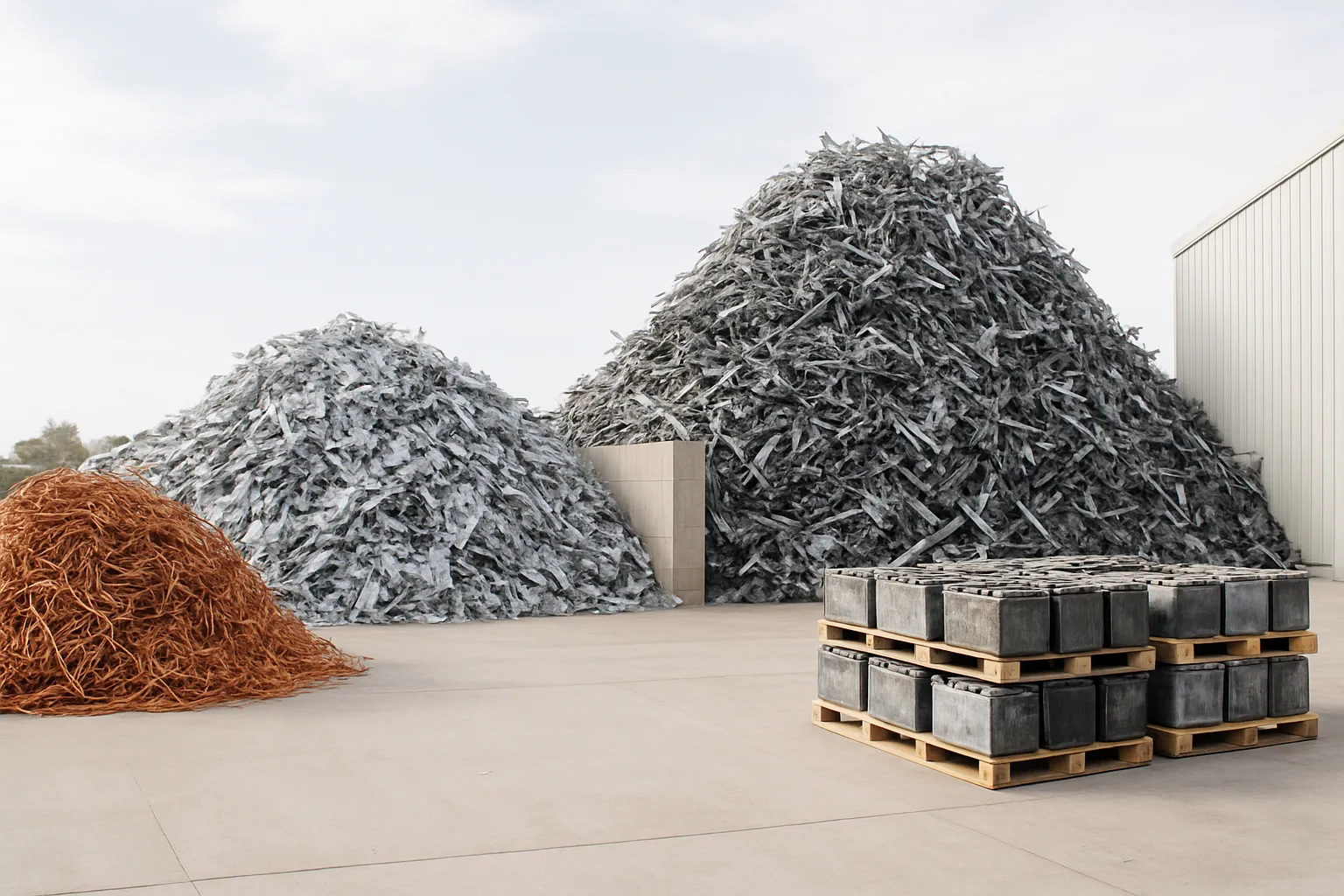
Most people don't realize that old car batteries sitting in a garage or shop corner are worth real money — and that lead is one of the most consistently recycled metals in North America. While everyone's watching the copper scrap price today, lead quietly holds its own in the secondary metals market. If you've got dead batteries stacking up, here's what you need to know before you haul them anywhere.
Why Lead-Acid Batteries Are Worth More Than You Think
A standard 12-volt automotive battery contains roughly 18–21 pounds of lead. A heavy-duty truck or commercial battery can weigh 50–60 pounds. When you've got a pile of them — from a shop, a fleet operation, or even a big cleanout — that weight adds up fast.
Lead is one of the few metals with a near-100% recycling rate in North America. About 99% of lead-acid batteries get recycled, mostly because the infrastructure is there and the economics make sense. Secondary lead smelters rely on used batteries as their primary feedstock. That demand keeps prices relatively stable compared to more volatile non-ferrous metals like copper or aluminum.
- Whole batteries typically pay at a per-pound or per-battery rate at most yards
- Drained and cracked batteries may be docked in price — intact cases are preferred
- Commercial and industrial batteries (forklift, UPS, telecom) carry more weight and often fetch better rates
- Pure lead scrap — pipe, sheet, wheel weights — typically pays differently than battery lead, so separate your material
If you're running a shop in San Antonio or anywhere across Texas, batteries from oil changes and replacements accumulate quickly. Most yards classify them separately from general scrap, so it pays to call ahead and ask the current rate before you load up the truck.
Lead Scrap vs. Copper and Aluminum: How Does It Stack Up?
Here's the honest comparison. Lead doesn't pay per pound what copper does — nobody's going to argue that. But lead-acid batteries are heavy, common, and the recycling channel is reliable. When you're looking at scrap metal prices today, you're usually checking copper, aluminum, and steel. Lead often gets overlooked, even though yards actively buy it.
Let's put it in plain terms:
- Copper — Highest price per pound of common scrap metals. Bare bright, #1 copper, and insulated wire all vary. The copper scrap price today is the benchmark most sellers watch first.
- Aluminum — Lower per-pound rate than copper, but aluminum shows up everywhere — cans, extrusions, cast auto parts, wheels. Volume is the play here.
- Steel and Iron — Measured in tons, not pounds. Price per ton matters more than price per pound for structural steel and plate.
- Lead (battery) — Mid-range per-pound rate, but the weight of batteries compensates. A pallet of 20 automotive batteries is serious poundage.
- Catalytic converters — Highest value per unit of almost anything in a salvage yard, driven by platinum, palladium, and rhodium content. A separate game entirely.
The point isn't that lead beats copper. The point is that leaving batteries unsold because you're focused only on non-ferrous prices is leaving money on the table. A well-run yard or platform doesn't treat your material as one category — everything gets priced.
What Drives Lead Scrap Prices — And What Doesn't
Lead prices move on a different set of factors than copper or aluminum. Understanding this helps you time your sales and avoid getting surprised at the scale.
What pushes prices up:
- High demand for new battery manufacturing (automotive, renewable energy storage)
- Reduced primary lead mining output
- Strong global demand from battery replacement cycles
- Seasonal peaks — extreme cold and heat push battery failures and replacements higher
What pushes prices down:
- Surplus battery scrap in the regional market
- Reduced smelter capacity or shutdowns
- Shifts toward lithium-ion technology (long-term pressure, not immediate)
- Contaminated or non-standard battery types that don't fit standard recycling streams
One thing worth noting for Texas yards and shops: summer in San Antonio means battery failures spike. That means more volume hitting the market simultaneously, which can soften prices temporarily. If you're sitting on a stockpile, don't wait for everyone else to dump at the same time. Market timing matters, even for scrap.
Platforms like get competitive bids for your scrap metal exist precisely because single-buyer quotes don't reflect the real market. When multiple vetted buyers see your load, price discovery works the way it's supposed to.
How to Prepare Your Battery Scrap Before You Sell
Showing up at a yard with loose, leaking batteries isn't going to get you a warm welcome — or a good price. Preparation matters, especially if you're moving volume. If you're searching for a scrap metal near me price list and trying to maximize what you walk away with, the condition and organization of your material makes a difference.
Here's how to do it right:
- Keep batteries upright. Acid leaks kill prices. Yards don't want to handle hazmat cleanup — and neither do you.
- Separate battery types. Automotive, marine, AGM, gel cell, and industrial batteries may pay at different rates. Don't mix them in one pile and hope for the best.
- Remove batteries from equipment first. A battery still bolted into a dead riding mower or forklift is harder to weigh and process. Pull it out, keep it separate.
- Document what you have. For larger loads — fleets, shops, cleanouts — having a rough count and weight estimate makes the quoting process faster and more accurate.
- Check for any non-standard batteries. Lithium-ion and nickel-metal hydride batteries are NOT the same as lead-acid. Mixing them creates safety issues and complicates recycling. Separate them before you arrive.
For shops in the San Antonio area, many yards have designated battery drop areas. Call ahead, ask if they're scrap metal near me open now, and confirm the current rate. Rates can shift week to week based on the secondary lead market.
If you're moving a significant volume of material — batteries plus other non-ferrous metal — sell your scrap metal at top prices on Sell Scrap Metal and let buyers compete for your load rather than taking the first number you're offered.
San Antonio Scrap Metal Recycling: What Local Sellers Should Know
San Antonio is one of the largest metro areas in Texas, and that means a real scrap ecosystem. Auto repair shops, fleet operations, commercial HVAC contractors, and industrial facilities all generate lead-acid battery scrap on a regular basis. The city has enough volume to support competitive pricing — but only if you're actually putting your material in front of multiple buyers.
The old way was simple: find the nearest yard, take their price, done. That works when you have one battery from one car. It doesn't work when you're managing ongoing scrap output from a business. You need San Antonio scrap metal services that treat your material seriously — with transparent pricing, documented weights, and buyers who are actually competing for your loads.
Local factors that affect your San Antonio scrap experience:
- Yard hours and battery acceptance policies vary — always confirm before hauling
- Environmental regulations around battery handling and acid disposal apply — reputable yards handle this, but you should know what you're handing off
- Texas heat accelerates battery degradation, which means more replacement volume year-round
- Commercial accounts often get better rates than one-time walk-ins — if you're a shop, ask about account pricing
SMASH works with yards and buyers across North America, including Texas, to bring competition to the selling process. More buyers seeing your load means the market sets the price — not one person behind a counter. For scrap metal recycling San Antonio sellers who move volume regularly, that difference adds up.
Getting the Most Out of Every Load You Sell
Battery scrap doesn't exist in isolation. Most sellers who have lead-acid batteries also have other material — scrap copper wire from an electrical job, aluminum castings from an engine teardown, a few catalytic converter cores, or steel from structural work. Selling it all through one channel that values each material correctly is the goal.
That's where documentation and competitive pricing converge. When you have a mixed load with batteries, copper, and aluminum, a single buyer quoting you a blended rate may be averaging down on everything. Itemized pricing on each metal type — based on actual market rates — gives you a clearer picture and usually a better outcome.
SMASH's platform handles inventory documentation, photo documentation, and serial tracking for higher-value items like cats and cores. That same discipline applied to your battery and non-ferrous loads means you know exactly what you sold, at what price, and to whom. Explore scrap metal selling guides to understand how to approach different material types before you sell.
The copper scrap price today gets the headlines, but your total payout depends on every item in your load being priced right. Battery lead included.
When you're ready to stop guessing and start selling with real price discovery, get a fair price for your scrap today — whether it's batteries, copper, aluminum, or a full mixed load. Sell your scrap metal at top prices and request a pickup at sell-scrapmetal.com.
Disclaimer: Scrap metal prices — including lead, copper, and aluminum — fluctuate based on market conditions. Always check current rates before committing to a sale.
Frequently Asked Questions
Q: What is the scrap price for lead-acid batteries today?
Lead-acid battery prices change regularly based on the secondary lead market. Rates are typically quoted per pound or per battery unit. Contact your local yard or use a platform like SMASH to get current competitive quotes rather than relying on posted rates that may be outdated.
Q: How does lead scrap compare to the copper scrap price today?
Copper consistently pays more per pound than lead — that's true across most market conditions. However, lead-acid batteries are heavy, so the total payout on a large volume of batteries can still be substantial. The two metals serve different purposes in your scrap mix, and both deserve accurate pricing.
Q: Where can I sell scrap metal in San Antonio, Texas?
San Antonio has multiple recycling yards that accept lead-acid batteries, non-ferrous metals, and steel. For competitive pricing on larger loads, platforms like SMASH connect sellers with vetted buyers across North America, including Texas, so you're not relying on a single yard's quote.
Q: Do I need to drain my batteries before taking them to a scrap yard?
Most yards accept intact batteries with acid still inside — that's standard. What you want to avoid is cracked or actively leaking cases, as these create handling issues and may reduce your payout. Keep batteries upright and intact for the best result.
Q: Can I sell mixed scrap — batteries, copper, and aluminum — in one transaction?
Yes, and you should. The key is making sure each material type is quoted and priced separately, not blended into one rate that shortchanges higher-value metals. Document your load, separate material types, and use a platform or yard that itemizes pricing clearly.
Stay current on scrap metal market movements and industry updates — follow SMASH on LinkedIn for insights that help you sell smarter.